

The best woodworking files balance sharp teeth, durable steel, and ergonomic grips.
You shape a chair leg, and the curve looks close but not perfect. Sandpaper clogs, and power tools feel too aggressive. This is where the right file set saves time and saves the piece.
The best woodworking files remove stock fast, then refine edges with control. They fit the hand. They track straight. They leave clean cuts. I test file sets like these on soft pine and hard maple. I look at bite, finish, and fatigue. Below, I break down five great options for different needs and budgets.
5 Best Woodworking Files
TARIST 3-Piece 8″ Wood Rasp Set

This compact trio covers the core shapes I reach for most. You get an 8-inch flat, half-round, and round rasp. Each one moves wood fast and tracks well on both curves and flats. The teeth feel aggressive without tearing out too much, which helps on softer woods.
The handles feel solid and give good control. I like the balance on pull strokes when refining a tight radius. The round rasp leaves a surprising clean surface for a coarse tool. For quick shaping on chair spindles, tool handles, and spoon blanks, this set is nimble and easy to carry.
Pros:
- Three essential shapes for most shaping jobs
- Fast material removal with decent surface finish
- Comfortable handles reduce hand fatigue
- Good control on curves and edges
- Compact set that fits in a small tool roll
Cons:
- No fine-cut file for smoothing
- Not ideal for metal or plastics
- Round rasp diameter may be small for large hollows
My Recommendation
If you want a simple, effective trio, this TARIST set works. It is a great start for shaping and roughing. If you often carve curves, the half-round and round rasps do the heavy lifting. Pair them with sandpaper or a fine file for final passes. For many users, this set alone can rank among the best woodworking files for fast shaping on a budget.
| Best for | Why |
|---|---|
| Beginners | Covers flat and curved work with three tools |
| Quick shaping | Aggressive bite speeds up stock removal |
| Portable kits | Lightweight and easy to store |
Libraton 31-Piece File Set for Wood & Metal

This large kit gives you a full spread of file styles, plus extras. You get standard files, twelve needle files, a riffler, sandpapers, and a steel brush for cleanup. It suits wood, soft metals, and small hardware work. The range helps when a project has many small edges and complex shapes.
The needle files shine for detail on inlays and tight corners. The longer files help flatten edges on boards and tool jigs. I like the included brush; it clears chips fast and keeps teeth sharp. If you handle mixed tasks, this set replaces several one-off tools and feels like a full bench kit.
Pros:
- Wide range of files for wood and metal
- Needle files cover fine detail work
- Includes sandpapers and a cleaning brush
- Riffler reaches into tight or odd curves
- Great value compared to buying items alone
Cons:
- Sheer variety may overwhelm new users
- Case can feel cramped when packed
- Some pieces may duplicate functions for simple projects
My Recommendation
If you want one kit for many tasks, choose this. It supports furniture work and small shop fixes. I like it for hobbyists who also tune tools, file brass parts, or work on hardware. It is easy to call this one of the best woodworking files sets for mixed-material shops that need range over single-task speed.
| Best for | Why |
|---|---|
| All-in-one buyers | Covers detail and general filing in one case |
| Mixed materials | Handles wood, soft metals, and plastics |
| Fine detail | Needle and riffler files for tight work |
19-Piece Wood & Metal File Kit with Case

This 19-piece set aims at core shapes with a few extras. You get flat, round, half-round, triangle files, and needle files. There is also a brush and a carry case. For beginners, it offers a solid mix without too many duplicates.
The triangle file helps with inside corners and careful notch work. The carry case lays the tools flat, which protects edges. I used this on hard maple and found the cut consistent. It is not the fastest set, but it is steady and easy to control.
Pros:
- Balanced mix of common file profiles
- Triangle file handles inside corners well
- Includes a brush for file care
- Carry case keeps tools organized
- Good price-to-coverage ratio
Cons:
- Less variety than big kits
- Coarse cuts may need extra sanding
- Handles may feel basic for long sessions
My Recommendation
Choose this if you want a useful starter kit. It covers most shaping and edge work with simple choices. I see it shine in small shops and for project kits. It can qualify as one of the best woodworking files sets for first-time buyers who want value, order, and enough tools to learn.
| Best for | Why |
|---|---|
| Starters | Core profiles cover common tasks |
| Budget builds | Good coverage at a lower cost |
| Simple shops | Less clutter with tools you will use |
CLAHJQX 8-Piece Wood Riffler Rasp Set
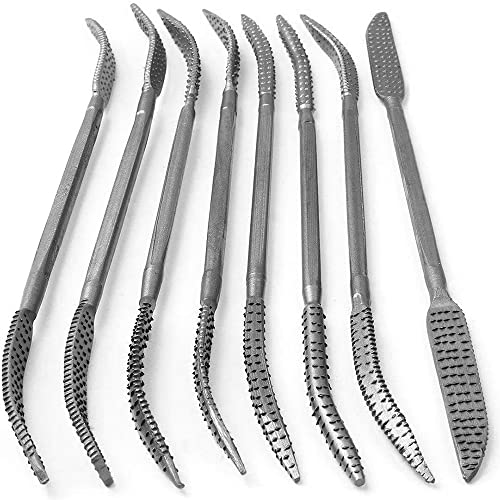
Rifflers shine when nothing else can reach. This set includes double-ended riffler rasps with special profiles. They get into tight coves, leaf carvings, and decorative reliefs. They also help when you need to tune inside curves that a standard rasp cannot touch.
Each end is shaped different, so one tool does two jobs. The bite is strong enough to shape, but with control for detail work. I use rifflers in small strokes, and these hold a line well. For carvers, this set bridges the gap between the gouge and sandpaper.
Pros:
- Double-ended profiles for maximum reach
- Ideal for carving details and tight spaces
- Good bite with controllable strokes
- Helps refine inside curves without tear-out
- Compact tools for on-bench use
Cons:
- Not for large flat work
- May need follow-up with fine files
- Learning curve for best grip and angle
My Recommendation
Get these if you carve or restore ornate pieces. They help when normal rasps fail to reach. The set makes sense as an add-on to a base kit. If you chase details often, this can be part of the best woodworking files mix for fine, tricky work and sculpted shapes.
| Best for | Why |
|---|---|
| Wood carving | Special shapes reach small details |
| Restoration | Works in tight moldings and corners |
| Instrument making | Controls curves on thin parts |
YANMAKE 8″ Wood Rasp Set with Sandpapers

This set mixes large rasps with a pack of sandpapers. It targets shaping and finishing in one bundle. The flat and round profiles handle the bulk of contour work. I like that I can shape and then step down grits right away.
The rasps have a strong bite yet leave a decent surface. The included sandpapers help remove file marks and smooth the grain. For chair parts, tool handles, and shop jigs, the combo is handy. If you build by hand, you will reach for these often.
Pros:
- Includes sandpapers for quick finishing
- Large rasps move stock fast
- Flat and round shapes cover many tasks
- Good balance for longer sessions
- Cost effective as a shaping-and-smoothing kit
Cons:
- No needle files for tight detail
- Sandpaper grits may not cover all steps
- Large size can feel bulky on small parts
My Recommendation
Pick this if you want shaping and smoothing in one purchase. The rasps cut fast, and the sandpapers clean up the surface. It suits furniture parts and shop fixtures. For many hand-tool users, this earns a place on the shortlist of the best woodworking files because it reduces steps between rough and ready-to-finish.
| Best for | Why |
|---|---|
| Hand tool builds | Shape and smooth with one kit |
| Furniture parts | Large rasps handle curves and edges |
| Quick workflow | Included grits remove file marks fast |
How I Judge the Best Woodworking Files?
I test files on soft pine, poplar, and hard maple. I look at bite, track, and the finish left behind. I also watch how fast the teeth clog with dust. A good file cuts clean, clears chips, and does not skate on hard grain.
Balance and handle shape matter. A file must feel stable on push and pull strokes. A safe edge helps when working into corners. I also check how long the teeth stay sharp. Good teeth save time and cut effort.
I keep chalk on hand. I rub it into the file before use. It helps prevent loading. I also use a file card or a steel brush to clean the teeth. Clean files cut cooler and last longer.
Which Types Do You Need?
Start with a flat file and a half-round rasp. They cover most tasks. Add a round rasp for holes and deep curves. Include a triangle file for notches and inside corners.
Needle files help with small parts and inlays. Riffler rasps handle fine curves and tight places. If you shape a lot, a mix of coarse and fine teeth helps. Coarse removes stock fast; fine leaves a smoother face.
Care and Safety Tips
Use a handle on any file with a bare tang. It prevents slips and injury. Keep a steady angle and light pressure to avoid chatter. Let the teeth do the work.
Clean often with a file card. Use chalk before cuts to reduce clogging. Store files so teeth do not rub together. I keep them in sleeves or a case. This extends life and keeps the cut true.
Value, Materials, and Longevity
Heat-treated high-carbon steel is the norm for good files. Some sets use alloy tweaks for wear resistance. You do not need to chase brand hype. Focus on sharpness, cut pattern, and feel.
A budget set can perform well for hobby work. If you carve every day, invest in better teeth and handles. Remember, clean teeth cut like new. Care can double the life of your files.
FAQs Of best woodworking files
How do I choose the right file cut?
Use coarse teeth for fast shaping. Use finer teeth for smoothing. Mix both to move fast and finish clean.
Can I use woodworking files on metal?
Some sets work on soft metals. Check the product notes. For hard steel, use metal files made for that job.
How do I stop files from clogging?
Rub chalk on the teeth before use. Clean with a file card often. Avoid heavy pressure that compacts dust.
Do I need needle files?
They help with small parts and tight corners. If you do detail work, yes. If not, you can skip them at first.
What is a safe edge and why use it?
A safe edge has no teeth. It protects adjacent surfaces. It is helpful near corners and shoulders.
Final Verdict: Which Should You Buy?
The TARIST set is simple and fast for shaping. The Libraton kit covers almost every profile and detail. The 19-piece kit is a smart starter. The CLAHJQX riffler set is for tight curves.
If you want shaping and smoothing in one, go with the YANMAKE set. Each offers a path to the best woodworking files for your shop. Match the set to your work and budget.