

The best finishing sanders for woodworking deliver flat, swirl-free results fast.
You sand a cabinet door for an hour and it still shows lines. Dust clouds. Numb hands. I’ve been there. The right sander fixes that pain at once. It runs smooth, keeps dust in check, and leaves a clean, even scratch. Edges stay crisp. Panels glow after the first pass.
In this guide, I break down the best finishing sanders for woodworking that I trust in the shop. I focus on clean pads, low vibration, and smart dust control. Each pick is tested against real tasks that most woodworkers face every week.
5 Best Finishing Sanders for Woodworking
Makita BO4556K 1/4-Sheet Finishing Sander

Makita’s BO4556K is a palm-size 1/4-sheet sander that feels smooth from the first touch. The pad sits flat and tracks true on long grain. The clamping system is tight and quick, so paper swaps take seconds. With a sealed switch and a tough case, it holds up to daily shop use.
The dust port works with the included bag or a shop vac. That keeps the scratch pattern clean and the air safer. I like how the grip fits a wide range of hands. It makes controlled passes easy on frames, rails, and narrow parts.
Pros:
- Very low vibration for its class
- Flat pad leaves a uniform scratch pattern
- Fast, secure paper clamps reduce downtime
- Effective dust collection with bag or vac
- Durable case adds protection and portability
- Compact size excels on edges and trim
Cons:
- No variable speed
- Requires cutting 1/4 sheets of paper
- Dust bag is small for long sessions
My Recommendation
If you want clean, fine finishes on doors, drawer parts, and rails, this is a strong pick. It delivers the control many folk need for real woodworking tasks. It is easy to guide and kind to your hands. I count it among the best finishing sanders for woodworking for anyone who values a flat, repeatable finish.
| Best for | Why |
| Trim, rails, and frames | Small pad and low vibration give great control |
| Fine finish work | Flat pad and consistent scratch reduce swirl |
| Dust-aware indoor jobs | Good dust capture with bag or vac |
Bosch GSS20-40 1/4-Sheet Orbital Finishing Sander
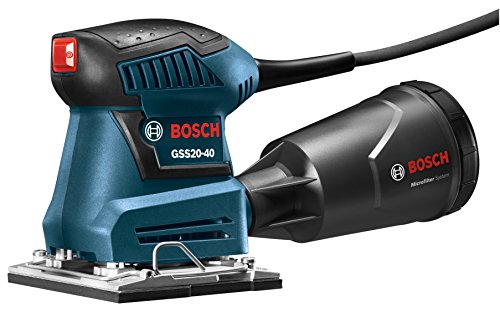
The Bosch GSS20-40 has a solid pad and secure clamps that keep paper flat. The 12,000 OPM speed is tuned for fine sanding, not stock removal. Its microfilter dust canister does a good job in small rooms or on site work. The body shape supports a natural grip, so it stays stable on wide edges.
Build quality stands out. The pad feels stout and the bearings are well shielded. Paper lines up fast and stays tight. That means fewer re-clamps and more time on the wood.
Pros:
- Very flat pad for glass-smooth finishes
- Effective microfilter dust canister
- Secure paper retention with strong clamps
- Comfortable grip for long sessions
- Durable housing and sealed switch
- Good balance for vertical use
Cons:
- Fixed speed only
- Canister adds length at the rear
- Requires 1/4-sheet paper cutdowns
My Recommendation
Choose this if your work calls for crisp, flat results on frames and flat panels. It shines at final passes before stain or topcoat. I find it reliable in busy shops and tidy in small apartments. It ranks with the best finishing sanders for woodworking when dust capture and pad flatness matter most.
| Best for | Why |
| Paint prep and refinishing | 12,000 OPM and tight paper control give even scuffing |
| Flush sanding near edges | Square pad reaches close to corners |
| Indoor work with low dust | Microfilter canister captures fine dust well |
Makita BO3710 1/3-Sheet Finishing Sander
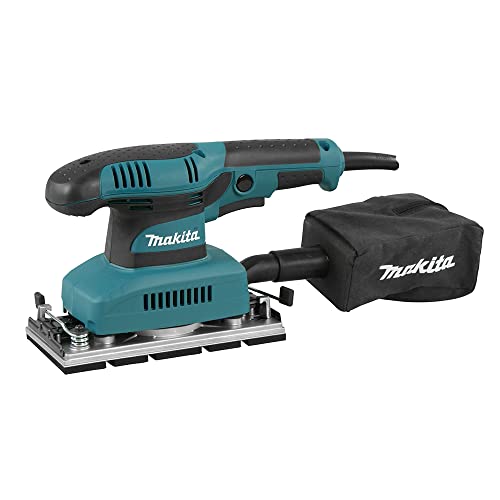
The BO3710 steps up to a larger 1/3-sheet pad. That means more coverage on doors, shelves, and tabletops. The front handle helps control the tool on long passes. It stays flat and moves with ease along the grain for a refined finish.
Dust collection is strong with a vac attached. The paper clamp is robust, so sheets hold firm. I like it for leveling between coats and for prep on big panels. It brings shop-grade pace to home projects.
Pros:
- Large pad covers wide surfaces fast
- Front handle adds steering control
- Good dust capture with bag or vac
- Low vibration for a larger sander
- Great for leveling between coats
- Reliable Makita build and support
Cons:
- No variable speed
- Too large for tight corners
- Requires paper alignment and punch pattern
My Recommendation
If your workbench sees more tabletops than trim, get this. It shortens sanding time on case goods and wide parts. The results are flat and ready for stain or paint. It earns a spot among the best finishing sanders for woodworking when a bigger pad gives you a clear edge.
| Best for | Why |
| Doors and tabletops | 1/3-sheet pad sands more area per pass |
| Between-coat leveling | Even pressure and flat pad reduce cut-through |
| Cabinet sides and shelves | Front handle helps guide long strokes |
Toolok 5-Inch 3A Random Orbital Sander

This Toolok random orbital sander brings variable speed from 6,000 to 13,000 OPM. It includes 15 discs, a dust bag, and a vac adapter. The 3A motor is strong for light to medium tasks. Hook-and-loop pads make disc swaps fast and easy.
I like it for budget builds and quick refinishing jobs. It can blend stain touches, feather paint, and prep furniture parts. The pad brake is decent if you release it on the work, not in the air. For the price, it is a handy tool to have on hand.
Pros:
- Variable speed for more control
- Hook-and-loop discs save time
- Includes discs and vacuum adapter
- Good value for new woodworkers
- Decent dust capture when used with a vac
- Compact size fits small hands well
Cons:
- More vibration than premium brands
- Dust bag is small and fills fast
- Long-term durability is not proven in heavy shop use
My Recommendation
On a tight budget or just starting out? This is a smart first buy. It brings random orbit results to furniture and DIY tasks. It can stand in for more costly picks and still land in the talk for best finishing sanders for woodworking for value seekers.
| Best for | Why |
| Budget builds and repairs | Low cost with useful extras included |
| Furniture refinishing | Variable speed protects thin veneers |
| General prep and paint removal | Random orbit blends and feathers edges |
Metabo HPT SV13YST 5-Inch Random Orbit Sander

The Metabo HPT SV13YST offers a 2.8A motor and a variable dial from 9,000 to 13,000 RPM. The palm grip is low and easy to hold. It tracks smooth and keeps swirls at bay when used with light pressure. A hose connector helps pull dust to a vac with less fuss.
This is a strong choice for fine finish and general prep. It works well on face frames, tabletops, and case sides. The speed range helps tune the cut to soft pine or hard maple. I see it as a good balance of comfort, control, and performance.
Pros:
- Smooth variable speed control
- Low profile grip for better feel
- Hose connector improves dust capture
- Pad and bearings feel durable
- Refined finish with proper technique
- Good value in the mid-tier range
Cons:
- No hard case included
- Bag fills fast without a vac
- Can swirl if you press too hard
My Recommendation
If you want one sander that can do almost all finish tasks, this is it. It blends fast stock leveling with fine final passes. It is easy to guide on large and small parts. It sits near the top of the best finishing sanders for woodworking if you prize control and comfort.
| Best for | Why |
| All-around shop sander | Variable speed and smooth orbit fit many tasks |
| Fine finish on solid wood | Low profile grip aids delicate passes |
| Dust-aware sanding | Hose connector keeps the air cleaner |
How I Chose the Best Finishing Sanders?
I focus on finish quality first. A good finisher leaves a uniform scratch pattern. It should reduce swirl and not burnish the surface. I test with common grits from 80 to 220 on pine, oak, maple, and walnut.
Control is next. A finish sander should feel calm and steady. It must track straight with gentle pressure. I look at pad flatness, vibration, and grip shape.
Dust collection matters. Clean sanding reduces rework. It keeps pores open for stain and reduces nibs in topcoat. I test both bags and vacuum setups.
Finally, I weigh value. That means cost, durability, and the price of paper or discs. The best finishing sanders for woodworking should be easy to feed with common abrasives and last for years.
Sheet Sander vs. Random Orbit: Which Finish Is Better?
Sheet sanders use straight orbital motion. They excel at edges and corners. They are great for between-coat scuffing and uniform grain sanding. They also use cheap paper torn from full sheets.
Random orbit sanders spin and orbit. They remove material faster and hide scratch patterns better. They are ideal for panels and broad faces. They do not reach into sharp corners.Use a random orbit for bulk work and flat fields.
Use a sheet sander for edges, corners, and final touch-ups. Many pros keep both because that gives the fastest, cleanest finish. This combo is often the secret to the best finishing sanders for woodworking setups in real shops.
Expert Tips for a Flawless Finish
- Let the tool’s weight do the work. Pressing hard adds swirl and heat.
- Vacuum between grits. Dust clogs paper and scratches the surface.
- Step through grits. Do not jump from 80 to 220. Go 80–120–150–180–220.
- Mark the surface with pencil lines. Sand until they vanish to track progress.
- Keep the sander flat. Tipping burns edges and rounds profiles.
- Use fresh paper. Dull abrasives polish instead of cut.
- Slow your strokes. A steady pace leaves an even scratch field.
- Finish with the grain by hand on open-pore woods for best look.
FAQs Of best finishing sanders for woodworking
Do I need both a finishing sander and a random orbital sander?
It helps. A 1/4- or 1/3-sheet sander excels on flat panels and edges. A random orbital sander blends and removes swirls on curves and mixed grain. Together they cover most needs.
What grit should I finish with before stain or clear coat?
Stop at 180–220 on most hardwoods. On softwoods, 150–180 often helps stain take better. Test on scrap. The best finishing sanders for woodworking leave a uniform scratch at that grit.
How do I avoid swirl marks?
Use light pressure and let the pad do the work. Keep the tool moving at a steady pace. Vacuum dust often. With random orbital models, lift off while spinning down on the work.
Is dust collection worth it if I already have a bag?
Yes. A vacuum captures more fine dust and helps the abrasive cut cleaner. It can also lower heat and extend disc life. The best finishing sanders for woodworking pair well with a shop vac.
When should I choose 1/3-sheet over 1/4-sheet?
Pick 1/3-sheet for larger panels and doors. It covers more area per pass. Choose 1/4-sheet for trim, rails, and tight spots. Both can deliver fine finishes.
Final Verdict: Which Should You Buy?
For pure finish quality with hand-friendly control, the Makita BO4556K and Bosch GSS20-40 are hard to beat. For larger panels, the Makita BO3710 speeds up the job with a flat, wide pad.
If you want random orbit with great control, go Metabo HPT SV13YST. On a budget, the Toolok gives strong value. Any of these can be the best finishing sanders for woodworking for your needs.