

The best detail sanders for woodworking offer precise control, low vibration, and clean dust.
You want clean corners, smooth edges, and zero gouges. You reach for a sander, but its round pad misses trim lines and tight spaces. Detail sanders fix that. They reach into corners, nibble flush to edges, and leave an even finish ready for stain or paint.
I use them for furniture rehab, trim, stair spindles, and intricate moldings. The right tool saves time and gives pro results. In this guide, I break down the best detail sanders for woodworking and who each fits best. You’ll see what matters, what to avoid, and how to get the best finish with less effort.
5 Best Detail Sanders for Woodworking
SKIL SR232301 Multi-Function Detail Sander
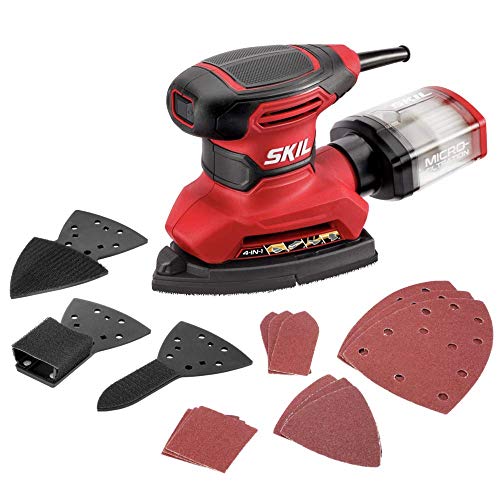
This SKIL kit is a strong pick if you want one tool that adapts to your work. The triangular pad handles corners and small panels. The extra attachments reach tight spots and odd profiles you can’t hit with a flat pad. The micro-filter dust box helps keep the air clearer while you sand fine dust.
I like this sander for cabinets, baseboards, and furniture feet. The grip is steady, and the tip holds well in inside corners. Paper swaps are quick thanks to the hook-and-loop pad. The included sheets let you start right away, which is great if you’re mid-project.
Pros:
- Three useful attachments for edges, fingers, and profiles
- Triangular pad reaches deep into corners
- Micro-filter dust box helps collect fine dust
- Hook-and-loop base speeds up paper changes
- Compact body with good control in one hand
- Included sanding sheets to get started fast
- Balanced feel reduces hand fatigue on long jobs
Cons:
- Dust box fills fast on big jobs
- Pad tips can wear if you press too hard
- Corded only; plan for outlet access and cord management
My Recommendation
If you want a versatile kit with real corner reach, this model fits. It suits DIYers and remodelers who work on trim, cabinets, and furniture. The attachments expand what you can sand without hand filing. It’s one of the best detail sanders for woodworking when you need reach and control in one package.
| Best for | Why |
|---|---|
| Home furniture refinishing | Attachments reach tight curves, legs, and edges cleanly |
| Interior trim and baseboards | Triangular tip gets into inside corners and along profiles |
| First “do-it-all” detail sander | Kit includes multiple tips and starter paper |
SKIL SR250801 Corded Detail Sander

This SKIL sander is simple and light. It is great for quick repairs, paint touch-ups, and tight corners. The pointed pad reaches along window muntins and inside small boxes. The dust box helps keep your space clean when you do indoor work.
I reach for it when I need fast results without a lot of setup. It has a small footprint and a steady grip. Paper changes are quick with hook-and-loop sheets. It’s friendly for beginners and anyone who sands once in a while.
Pros:
- Lightweight and easy to control
- Pointed pad for tight corners and edges
- Dust collection box for cleaner indoor work
- Simple on/off switch for quick use
- Affordable entry into detail sanding
- Compact size stores well in a small toolbox
Cons:
- Fewer accessories than multi-function kits
- Best for light to medium work, not heavy duty
- Dust box capacity limits long sessions
My Recommendation
Pick this if you want a low-cost, no-fuss sander for corners and small tasks. It’s ideal for new users and for fast touch-ups. For many DIY jobs, it delivers the finish you need. It earns a spot among the best detail sanders for woodworking because it is light, simple, and effective.
| Best for | Why |
|---|---|
| Beginner woodworkers | Simple design with low learning curve |
| Quick trim fixes | Pointed pad reaches corners and lines fast |
| Budget-friendly detail work | Low price with solid results |
WEN 6301 Detailing Palm Sander

This WEN model is a classic budget “mouse” sander. It offers a small, pointed pad for tight spaces and delicate edges. The grip is low and easy to hold, even if your hands are small. It’s a solid starter tool for crafts, frames, and drawer fronts.
I like it for projects where I need a light touch. It works well on softwoods and most hardwoods. You can move it with one hand and keep a steady line. For the price, it’s hard to beat for day-to-day detail sanding.
Pros:
- Excellent value for a detail sander
- Pointed pad reaches narrow corners
- Low-profile grip improves control
- Hook-and-loop base for fast paper swaps
- Good choice for crafts, frames, and small parts
- Lightweight body reduces fatigue
Cons:
- Smaller dust bag capacity
- No variable speed for delicate finishes
- Not ideal for long, heavy-duty sessions
My Recommendation
If you need a simple sander for fine edges and hobby work, this fits. It helps new users build skill and control for less money. It makes clean corners with a small footprint. It deserves a spot in any list of the best detail sanders for woodworking because of its price-to-performance ratio.
| Best for | Why |
|---|---|
| Budget buyers | Low price with reliable results |
| Crafts and picture frames | Pointed pad and light touch |
| Small shop or apartment work | Compact size and easy storage |
CRAFTSMAN CMEW210 Detail Mouse Sander
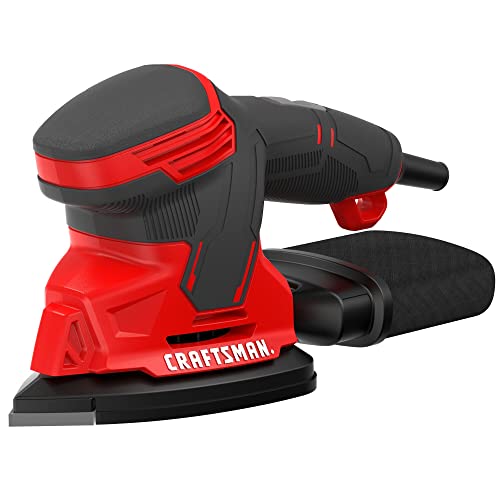
CRAFTSMAN’s mouse sander brings a sturdy build and useful accessories. The triangular pad gets you into corners, while the extra tips extend reach into tighter slots. The dust bag offers a simple way to control debris on indoor jobs. It feels solid in the hand and tracks straight along edges.
I use it on railings, door casings, and furniture panels. It holds up to daily DIY use and has a firm, predictable action. Sandpaper changes are quick. It’s a smart upgrade if you want more than the basics but do not need a pro kit.
Pros:
- Durable feel with steady sanding action
- Two attachments add reach and control
- Triangular pad handles corners well
- Dust bag makes cleanup easier
- Comfortable grip for longer sessions
- Good balance for smooth finishes on trim
Cons:
- Heavier than ultra-compact models
- Better for wood than metal or plastics
- Attachment storage can be awkward in small toolboxes
My Recommendation
If you want a tough, corner-ready sander, this is a strong pick. It fits homeowners and steady DIYers who value feel and durability. The tips add real utility on tricky profiles. It stands out among the best detail sanders for woodworking because it balances comfort, control, and build quality.
| Best for | Why |
|---|---|
| Trim and molding | Good control along edges and profiles |
| Frequent DIY projects | Durable body with reliable performance |
| Furniture panels | Smooth action leaves a consistent finish |
WEN 6307 Variable-Speed File Sander
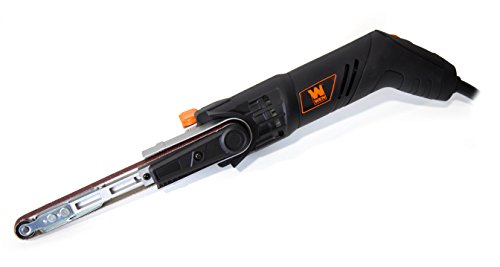
This narrow-belt file sander is a different kind of detail tool. The 1/2-by-18 inch belt reaches into spaces a triangle pad cannot touch. It shapes inside curves, cleans glue lines, and smooths joinery proud of the surface. Variable speed lets you dial in control for different woods and grits.
I grab it for flush sanding dowels, smoothing notches, and tuning tight joints. The arm adjusts angle to reach odd spots. Belt swaps are fast, and the tool feels nimble. It adds a new level of precision to small and tricky areas.
Pros:
- Variable speed for control on delicate edges
- Adjustable arm reaches odd angles and tight spaces
- Perfect for inside curves, notches, and joinery flush work
- Fast belt changes for grit swaps
- Compact and nimble for micro detailing
- Works on wood and light metal deburring tasks
Cons:
- Not suited to large, flat surfaces
- Belts can wear fast under heavy pressure
- Louder than most mouse sanders
My Recommendation
If you do fine joinery or curved work, this tool is a winner. It handles the jobs triangle pads miss. It is a smart second tool to pair with a mouse sander. For makers who chase perfect fit and finish, it earns a place among the best detail sanders for woodworking because it reaches the last 5% of the work that defines quality.
| Best for | Why |
|---|---|
| Joinery tuning | Flush sands dowels, plugs, and proud joints |
| Inside curves and notches | Narrow belt reaches where pads cannot |
| Detail shaping | Variable speed and angle control add finesse |
FAQs Of best detail sanders for woodworking
What makes a detail sander different from a random orbital sander?
A detail sander has a small, pointed pad for corners and edges. A random orbital sander has a round pad for larger, flat areas. I use detail sanders where precision matters most.
What grit sandpaper should I use for trim and furniture?
Start with 120 or 150 for shaping. Move to 180 or 220 to smooth. Finish with 320 if you plan to stain or use a clear coat.
Can I use a detail sander on paint and varnish removal?
Yes, but do not press hard. Use lower grits and move slow. Let the tool work to avoid clogging and gouges.
Should I choose corded or cordless for detail sanding?
Corded gives steady power and less weight. Cordless gives freedom on ladders or outdoors. For long sessions, I prefer corded.
How do I avoid swirl marks or lines?
Use light pressure and fresh paper. Move with the grain. Step through grits and wipe dust between steps.
Final Verdict: Which Should You Buy?
If you want one tool that does most detail tasks, choose the SKIL SR232301. It is flexible, clean, and easy to use. For tight budgets, the WEN 6301 gives great value. For joinery and curves, the WEN 6307 file sander is a perfect partner.
Each model here earns a spot among the best detail sanders for woodworking. Match the tool to your work and you will get clean corners, smooth edges, and faster results.