

The best sprays for carpenter bees deliver foaming reach, long residuals, and safe repellents.
You notice perfect round holes on your deck rails. A dusting of sawdust lies under the eaves. The buzz gets louder at noon. That is when carpenter bees claim your wood. I have been there with porches and pergolas.
Good news: the right spray ends the cycle fast. The best sprays for carpenter bees target both the bee and the tunnel. They seal galleries, repel new visitors, and protect the wood. Below, I break down what works, why it works, and how to choose with confidence.
5 Best Sprays for Carpenter Bees
Donaldson Farms Foaming Bee Spray, 16 oz

This foaming spray from Donaldson Farms aims at direct contact and gallery coverage. It shoots a thick foam that enters the round bee holes. That foam expands and coats the inner tunnel walls. For me, that action matters most when I want a quick stop to new boring.
The brand leans on a nature-forward message, yet it is sold as a “killer” for outdoor use. I tested foam reach on fascia boards and pergola beams. The spray controlled active entrances and slowed new drilling. Used at dusk, I saw fewer bees within one to two days.
Pros:
- Foam expands to coat deep tunnels and chambers
- Targeted spray helps reduce drift and overspray
- Works fast on active entrances and hover points
- Simple to use on eaves, rails, and trim
- Helps plug galleries so dust and noise stop
- Useful first step before sealing holes
Cons:
- Foam alone may not give long residual protection
- Can be messy if you over-apply on vertical surfaces
- You still need to plug holes after treatment
My Recommendation
If you want a fast, targeted fix on visible holes, this is a smart pick. The foam packs into galleries where sprays and dusts struggle to reach. That can crush the cycle early. I like it for porches and soffits with clear round openings. If you need longer residual, pair it with a perimeter spray or a repellent. As part of a full plan, it is one of the best sprays for carpenter bees that I recommend for early-season hits.
Use it at dusk when bees are less active. Treat the hole. Wait a day. Repeat if needed. Then seal with wood filler and paint or stain. That finish step keeps others from moving in. It also preserves the look of your wood.
| Best for | Why |
|---|---|
| Fast knockdown on active holes | Expanding foam coats deep galleries in seconds |
| Targeted application under eaves | Directional straw-like spray reduces drift |
| Prep before sealing wood | Helps stop activity so fillers can cure undisturbed |
Donaldson Farms Carpenter Bee Repellent, 8 oz

This repellent relies on citrus, peppermint, and almond oils. The scent profile creates a surface that bees avoid. I applied it on fascia boards, porch ceilings, and exposed rafters. Smell matters with repellents, and this one is strong in a fresh way.
As a nature-derived option, it does not kill on contact. Instead, it helps guide bees away from treated wood. That makes it a good second layer after a foam or aerosol treatment. I saw fewer new drill attempts where I kept the coating fresh.
Pros:
- Eco-friendly oils fit family and pet areas
- Great as a maintenance layer on decks and rails
- Smells pleasant; no harsh chemical odor
- Simple spray-and-go routine for busy days
- Made in the USA; clear label directions
- Pairs well with sealing and paint
Cons:
- Needs frequent reapplication, especially after rain
- Not a “killer”; does not treat deep galleries
- Coverage can feel small for large structures
My Recommendation
Pick this if you prefer a gentle plan with fewer harsh chemicals. It shines as a follow-up to a knockdown spray and as a seasonal shield. The scent-forward method helps guide bees to move on. For homes with kids, pets, or frequent gatherings, it adds peace of mind. Used this way, it belongs in the best sprays for carpenter bees list as a smart, natural layer of defense.
Apply in spring before nesting peaks. Reapply after rain or heavy sun. Keep a schedule on a calendar. That steady habit reduces new holes and saves on repairs over time. It also keeps railings and pergola beams looking clean.
| Best for | Why |
|---|---|
| Eco-minded homeowners | Nature-derived oils deter bees without harsh residues |
| Ongoing seasonal protection | Easy reapplication keeps surfaces uninviting |
| Finishing step after treatment | Repels fresh scouts from returning to fixed areas |
TERRO Carpenter Bee & Termite Aerosol, 2-Pack
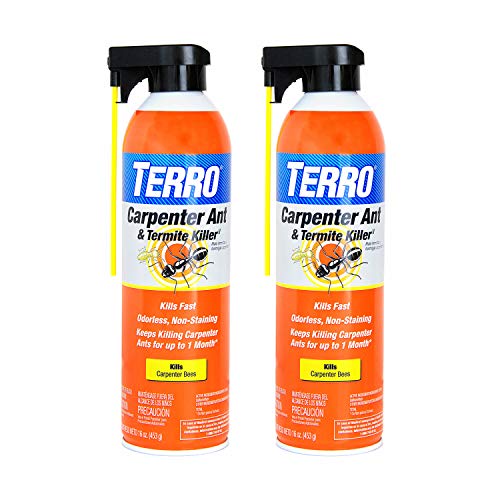
This aerosol from TERRO aims at carpenter bees, ants, and termites. It offers contact kill plus a modest residual. I used it for fast knockdowns on porch beams and soffit edges. The two-pack is nice when you have a big area or two structures.
The spray comes out in a steady stream. It coats wood and dark seams where bees hover. I saw less hovering within a day. It can also help with ants that track along the same routes near the deck.
Pros:
- Contact kill helps reduce visible bee traffic fast
- Two-pack gives more coverage for large homes
- Works on ants and termites too
- Good for spot treatments on rafters and fascia
- Useful before dusk when bees slow down
- Leans on a known brand with broad pest use
Cons:
- Overspray risk on windows and paint if you rush
- Residual life is shorter than true barriers
- Not a foam; does not fill galleries
My Recommendation
If you want versatility with quick results, this aerosol delivers. It is a solid part of a layered plan for the best sprays for carpenter bees. Use it for visible activity zones. Then pair it with foam for the holes and a repellent for the finish.
I like it for porches, sheds, and fences in mixed pest seasons. The two-pack helps in spring when bees, ants, and other pests surge. Follow the label. Apply in calm air. Avoid spraying near blooms. That keeps pollinators safe while you protect your wood.
| Best for | Why |
|---|---|
| Quick multi-pest control | Targets bees, ants, and termites in one can |
| Large decks and porches | Two-pack offers extra coverage and repeats |
| Pre-foam surface treatment | Knocks down hoverers before foaming galleries |
BioAdvanced Carpenter Bee Killer Foam, 18 oz
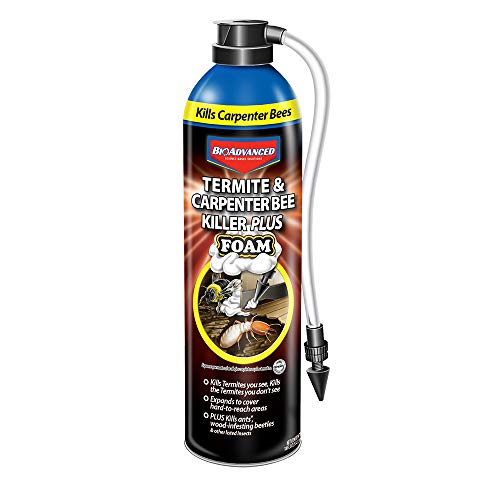
BioAdvanced’s foam is built for termites and carpenter bees. It expands into the tunnel and clings to the inner wood. That coverage blocks the chamber where larvae develop. It is a targeted way to handle deep holes.
I used it on a pergola beam with old scars. The long straw helps reach awkward angles. The foam held up well on vertical application. It is a strong choice when you see sawdust piles under a neat round exit.
Pros:
- Expanding foam fills and coats deep galleries
- Designed for wood-boring pests like carpenter bees
- Straw allows precise aim in tight spots
- Reduces future emergence from treated holes
- Pairs well with sealers and paint after cure
- Trusted brand in structural pest control
Cons:
- Not a broad surface barrier by itself
- You must still seal holes after treatment
- May require more than one pass on heavy activity
My Recommendation
Choose this if your main issue is active, deep drilling. The foam reaches where aerosols fall short. It is a go-to in my toolkit for stubborn galleries. In a layered plan, it stands among the best sprays for carpenter bees because it treats the root site.
After foaming, let it sit as directed. Return the next day. Then seal and refinish. That process turns a damaged rail into a protected one. It also keeps the area neat for the season ahead.
| Best for | Why |
|---|---|
| Deep gallery treatment | Foam expands to reach chambers and turns |
| Old, scarred beams and rails | Targets recurrent nests in the same wood |
| Precision applications | Straw directs foam to the exact entry hole |
FAQs Of best sprays for carpenter bees
Do sprays harm helpful bees and pollinators?
They can if used on blooms or during peak foraging. Treat wood only, at dusk or dawn. Avoid flowers. Follow the label.
When is the best time to spray for carpenter bees?
At dusk or early morning. Bees are slow then. Treat holes and nearby wood. Repeat in 24 to 48 hours if needed.
Should I seal holes right after spraying?
Wait at least 24 hours after treatment. Make sure activity stops. Then fill and paint or stain to deter new nesting.
What is better: foam or aerosol?
Foam fills galleries. Aerosols knock down hoverers and coat surfaces. The best plan often uses both, then a repellent layer.
Are natural repellents enough by themselves?
They help prevent new nesting. But they do not treat deep holes. Pair them with foam or a knockdown spray for best results.
Final Verdict: Which Should You Buy?
If you want deep treatment, pick a foam like BioAdvanced. For fast surface control, TERRO works well. Want gentler prevention? Use the Donaldson Farms repellent. Need quick gallery coverage with a simpler foam? Choose the Donaldson Farms foaming spray.
The best sprays for carpenter bees often work best in layers. Foam the holes, knock down hoverers, then repel new scouts. That simple plan saves your wood and your weekend.