

The best circular saw blades for woodworking balance clean cuts, long life, and safety.
You want smooth edges, tight joints, and no tear-out. But the wrong blade can burn wood, chip veneer, or stall your saw. I have tested many options on miter saws, table saws, and handheld circular saws. In this review, I break down what matters.
I focus on tooth count, grind, material, and value. If you make cabinets, frames, or built-ins, this guide will help. You will see which blade fits your saw and your work. Most of all, you will see how to pick the right blade the first time.
5 Best Circular Saw Blades for Woodworking
WEN BL1080 10-Inch 80T Ultra-Fine Finish Blade

This 80-tooth, 10-inch blade aims for glass-smooth cuts. It suits miter saws and table saws that need clean crosscuts. Carbide-tipped teeth hold an edge and resist wear. The 5/8-inch arbor fits most 10-inch benchtop and contractor saws.
Use it for trim, crown, cabinet parts, and veneered plywood. It also helps when you cut hardwood end grain. Expect neat edges with minimal sanding. For rips in thick stock, it can work, but it will be slow.
Pros:
- Very smooth crosscuts in hardwood, softwood, and plywood
- Carbide tips offer solid edge life with proper care
- Great for trim, molding, and picture frames
- Reduces chip-out on veneered panels
- Works well on miter saws for precise angles
- Fits most 10-inch saws with a standard 5/8-inch arbor
- Good control for delicate parts and narrow stock
- Predictable results for paint-grade and stain-grade cuts
- Balanced feel with less chatter when supported well
- Strong value for fine-finish performance
Cons:
- Slower feed rate for ripping thick hardwood
- Pitch build-up can dull the cut if not cleaned
- Not ideal for non-ferrous metals or plastics
My Recommendation
If you need a finish blade that stays true, this is a smart pick. It shines on crosscuts, miters, and trim. It helps you get tight joints and smooth edges. For those who want the best circular saw blades for woodworking in fine work, it is a strong choice. Pair it with a 24T or 30T rip blade for fast rips, and you will cover all bases.
Keep it clean and aligned, and it will reward you with crisp results. I like it for paint-grade trim and hardwood face frames. It leaves little fuzz on plywood and MDF. That saves time on sanding and touch-ups. If your work demands neat cuts more than speed, this 80T blade delivers day after day.
| Best for | Why |
|---|---|
| Fine crosscuts and miters | 80T count reduces tear-out and leaves smooth edges |
| Veneered plywood panels | Clean top surface cuts with careful feed and support |
| Finish carpentry | Reliable, neat cuts suit trim, casing, and crown |
WEN BL1040 10-Inch 40T General-Purpose Blade
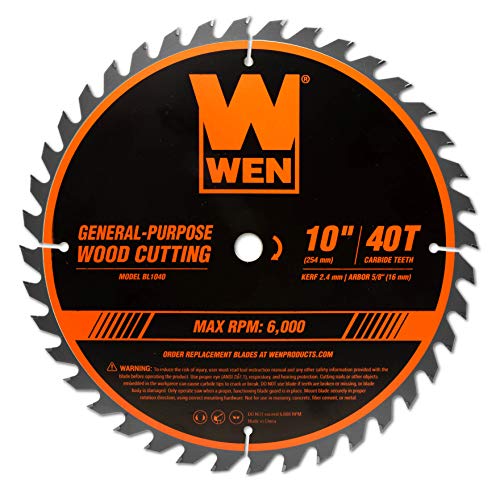
This 40-tooth, 10-inch blade is a classic general-purpose option. It balances cut speed and surface quality. It is a fit for table saw ripping and crosscutting. The carbide tips support steady use with good edge life.
Use it for framing lumber, sheet goods, and shop projects. It handles light rips in 4/4 and 5/4 hardwoods. It also crosscuts studs, plywood, and MDF with fair finish. For glue-line rips or ultra-smooth miters, step up to 60T or 80T.
Pros:
- True general-purpose performance in many materials
- Faster rips than higher-tooth blades
- Cleaner crosscuts than 24T framing blades
- Carbide teeth extend life compared to steel blades
- Good value as a daily shop blade
- Stable tracking on most jobsite and shop saws
- Works for both crosscuts and light rips
- Easy to set up and use out of the box
- Reasonable cut quality for cabinet carcass parts
- Less likely to burn than very high-tooth blades on rips
Cons:
- Not a true finish blade for detailed trim
- May leave some saw marks on dense hardwoods
- Can still chip veneers without zero-clearance support
My Recommendation
This 40T blade is a workhorse for mixed tasks. If you rotate one blade for most cuts, it is a solid pick. It is not the absolute best circular saw blades for woodworking in fine finish. But it is one of the most practical choices for a small shop. I suggest this for hobbyists and pros who cut many materials in a day. Pair it with a fine-finish blade to cover trim and veneered panels.
I also like it for jobsite work where speed matters. It tracks well on contractor saws. It is forgiving when lumber is not perfect. If you build cabinets often, also keep a 60T or 80T blade on hand to step up the finish when needed.
| Best for | Why |
|---|---|
| All-around shop blade | Balanced tooth count handles rips and crosscuts |
| Framing and utility cuts | Faster feed rate and durable carbide tips |
| Cabinet carcasses | Acceptable finish on plywood with support |
TOYAKI 10-Inch 120T Fine-Finish Saw Blade
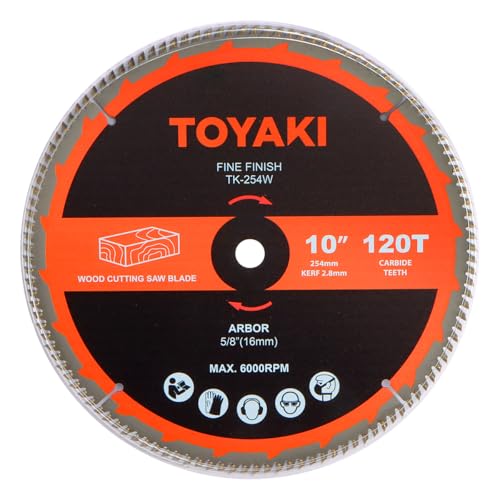
This 10-inch blade packs 120 teeth for ultra-fine cuts. It is built for clean edges on miter saws and table saws. With this many teeth, it aims to leave a ready-to-finish surface. The 5/8-inch arbor suits most standard saws.
Use it on veneered plywood, melamine, and delicate trim. It can make picture frames and small parts look sharp. Slow feeds help avoid heat on dense woods. For heavy ripping, swap to a lower-tooth blade.
Pros:
- Ultra-smooth crosscuts with minimal tear-out
- Great for veneers, thin stock, and delicate molding
- Ideal for crisp miters and tight joinery
- Carbide tips maintain fine edges when kept clean
- Excellent on pre-finished or coated panels with care
- Reduces sanding and scraping on show faces
- Good control on small or narrow workpieces
- Pairs well with a zero-clearance insert for plywood
- Dependable for cabinet doors and face frames
- Strong choice for trim carpentry and built-ins
Cons:
- Slow in thick rips due to high tooth count
- More prone to heat if pushed too fast
- Requires clean stock support to show best results
My Recommendation
If you chase show-quality edges, this blade belongs in your rack. It targets the best circular saw blades for woodworking niche where finish is king. I reach for it when I cut fragile veneers and small moldings. It gives a crisp cut on miters that need to close without gaps. Keep your feed smooth and steady. Let the blade do the work and you will see the difference.
For a two-blade setup, match this 120T with a 24T rip blade. That gives you speed and polish on demand. If you build panels, doors, and face frames, this high-tooth blade will earn its keep. It is a strong upgrade for anyone who hates post-cut sanding.
| Best for | Why |
|---|---|
| Veneers and melamine | Very high tooth count limits chip-out |
| Precision miters | Clean edges promote tight, gap-free joints |
| Finish carpentry | Less sanding needed on show surfaces |
TOYAKI 8-1/4-Inch 80T Ultra-Fine Saw Blade
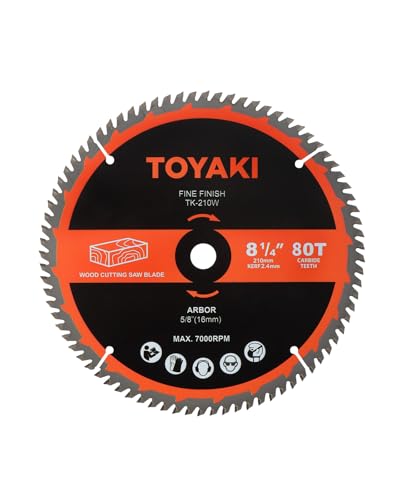
This 8-1/4-inch blade targets compact saws and jobsite tools. With 80 teeth, it aims for very fine cuts. It suits miter saws, portable table saws, and many circular saws with 5/8-inch arbors. It offers a neat finish in a smaller diameter.
Use it where portability meets precision. It helps when you trim on-site but want shop-quality edges. It also works well for thin stock and picture frames. In thick hardwood, slow the feed to keep heat in check.
Pros:
- Fine finish from a compact, 8-1/4-inch blade
- Great for trim on portable saws
- Smooth crosscuts in hardwood and softwood
- Carbide-tipped teeth support long service life
- Good choice for small parts and narrow moldings
- Pairs well with a zero-clearance insert
- Easy to control on handheld circular saws when guided
- Less tear-out on plywood edges with tape or backing
- Clean edges reduce finish touch-ups on site
- Compact size can feel more nimble and safe
Cons:
- Not ideal for fast rips in thick lumber
- Smaller diameter reduces max cut depth
- Needs careful feed to avoid burning dense woods
My Recommendation
This blade is for makers who move. If you run a compact table saw or 8-1/4-inch miter saw, it fills a key gap. It brings a fine-finish edge to small, portable tools. For pros on the go, it may be the best circular saw blades for woodworking in a compact size. It helps punch above the weight of a jobsite setup without losing speed on simple cuts.
It is also a smart add for DIYers in tight spaces. It keeps edges neat, which makes paint and stain look clean. For the best results, use sharp pencils, zero-clearance, and slow feeds. Good technique plus this blade equals pro-grade results.
| Best for | Why |
|---|---|
| Portable saw precision | 80T finish in a compact diameter |
| On-site trim work | Clean edges reduce finishing time |
| Small stock and frames | Fine teeth control tear-out on delicate pieces |
WEN BL1060 10-Inch 60T Fine-Finish Blade
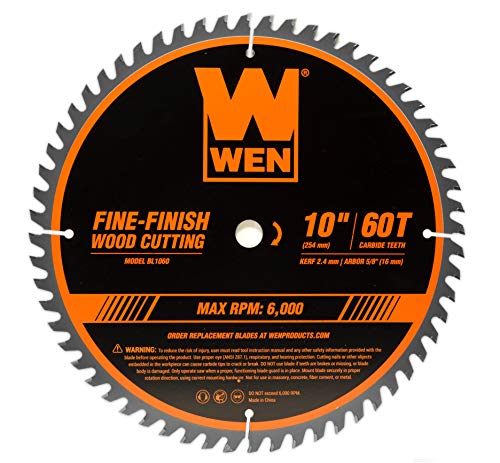
This 60-tooth blade strikes a useful middle ground. It offers a clean cut with better rip speed than an 80T. It handles hardwood crosscuts and sheet goods well. The standard 5/8-inch arbor covers most 10-inch saws.
Use it as your “finish-capable generalist.” It is great for face frames, door parts, and carcass panels. It can rip 4/4 hardwood with a steady feed. For thick stock or glue-line edges, pair it with a dedicated rip or higher-tooth blade.
Pros:
- Clean finish with reasonable feed speed
- Versatile across hardwoods, softwoods, and sheet goods
- Carbide teeth balance durability and cost
- Better at rips than 80T yet still smooth on crosscuts
- Reliable on table saws and miter saws
- Solid for cabinet parts and shop furniture
- Good daily blade for small cabinet shops
- Leaves less tear-out with proper support
- Easy to keep sharp with cleaning and care
- Strong value for a “one-blade” approach
Cons:
- Not as fast as a 24T rip blade in heavy rips
- Not as silky on miters as 80T or 120T
- Can leave slight marks on very dense exotics
My Recommendation
I call this the “do-more” blade. It is a fine pick for a small shop or a first upgrade from a stock blade. It will not match a 120T for veneer edges, but it gets very close on many cuts. It also moves through rips better than 80T fine blades. If you want one of the best circular saw blades for woodworking that mixes speed and finish, this is the sweet spot.
It delivers clean, quick work with fewer blade swaps. If you build utility cabinets, furniture, and trim with clear edges, start here. Keep a 24T rip blade on hand for thick stock. Keep an 80T or 120T for pre-finished panels and fragile veneers. With that trio, you can handle almost every cut in the shop.
| Best for | Why |
|---|---|
| Daily shop cuts | Balanced finish and speed in one blade |
| Cabinet parts | Clean results on rails, stiles, and panels |
| Mixed-material runs | Handles hardwood, softwood, and plywood well |
FAQs Of best circular saw blades for woodworking
How many teeth do I need for clean cuts?
For crosscuts and miters, try 60T to 80T on 10-inch blades. For ultra-fine cuts, go 100T to 120T. For fast rips, use 24T to 30T. Match tooth count to the cut for the best result.
What tooth grind should I use?
ATB (Alternate Top Bevel) is common for wood. It gives clean crosscuts and fair rips. TCG (Triple Chip Grind) shines on melamine and composites. It also works on non-ferrous if the blade is rated for it.
How do I reduce tear-out on plywood?
Use a sharp, high-tooth blade. Support the cut with a zero-clearance insert. Add painter’s tape on the cut line if needed. Feed steady and avoid forcing the stock.
How often should I clean my blade?
Clean when you see pitch or hear more noise. A dirty blade cuts hot and rough. Use a blade cleaner and a soft brush. Dry and store it well to protect the teeth.
Can one blade do it all?
One blade can do most jobs but not all at once. A 40T or 60T is a solid all-rounder. Add a 24T for ripping and an 80T to 120T for fine cuts. That trio covers almost everything with better results.
Final Verdict: Which Should You Buy?
If you want the best circular saw blades for woodworking, match the blade to your work. For refined finish cuts, pick the WEN BL1080 or the TOYAKI 120T.
For one-blade versatility, choose the WEN BL1060 or BL1040. Need compact precision? The TOYAKI 8-1/4-inch 80T is ideal.