

Cut boards to size, assemble a simple frame, attach top, then sand and finish.
I have built many sofa tables in tight spaces, and I know what works. This guide shows how to make a behind the couch table that fits your room, hides cords, and looks custom.
You will learn every step, from design to finish. You will get clear tips, common pitfalls, and real shop advice you can trust.
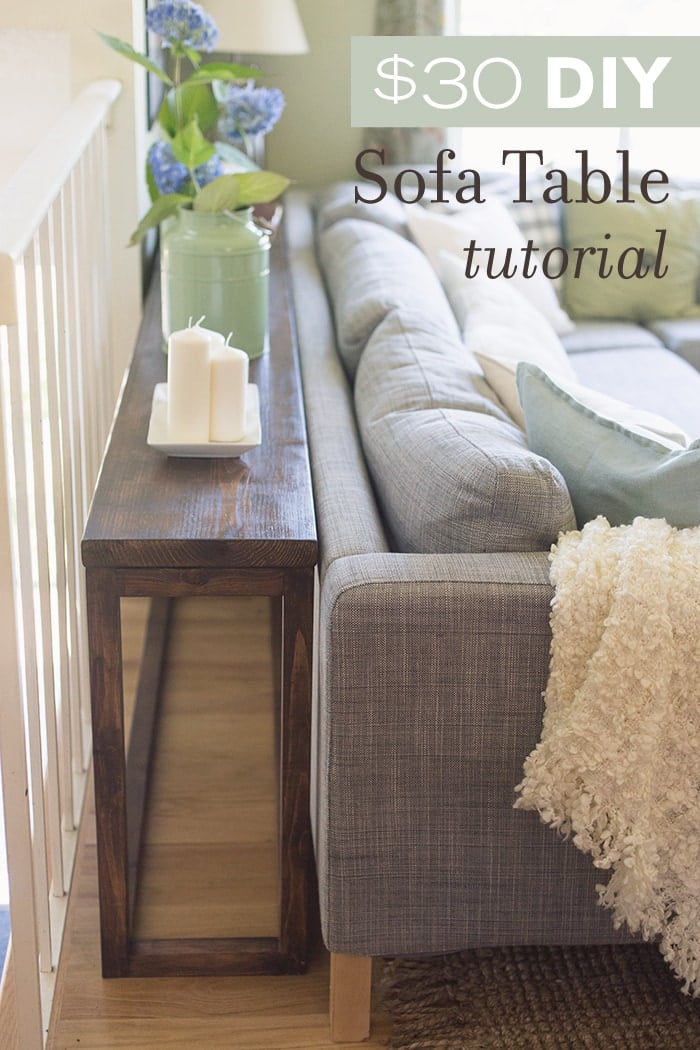
Key Design Decisions
Start with your couch. Measure the height at the back. Aim for a table that is level with the back or up to 1 inch lower. This keeps drinks, lamps, and remotes at a natural reach.
Length should match the couch or be 2 to 6 inches shorter. Depth can be 8 to 14 inches. Smaller rooms do well at 8 to 10 inches. Larger rooms can handle 12 to 14 inches. This guide explains how to make a behind the couch table that fits these sizes with ease.
Pick a look that fits your style. A simple top with square legs looks clean. A waterfall edge looks modern. Reclaimed wood brings warmth. Choose the plan that works for your space and tools.
Set your budget and time. Softwood is cheaper and easy to cut. Hardwood costs more but lasts longer. Metal legs save time if you do not want to build a frame.
Tools and Materials
Here is what I use on most builds. You can swap tools based on what you own. You can also scale the design. This list supports how to make a behind the couch table with basic tools.
Tools
- Tape measure, pencil, and square for layout
- Miter saw or circular saw with a straight edge for cuts
- Drill and driver bits for holes and screws
- Pocket hole jig for fast, strong joints
- Random orbit sander and sanding block
- Clamps, at least four, 12 to 24 inches
- Safety glasses, hearing protection, and dust mask
Materials
- Top: two 1×10 boards or one 1×12 board in pine or hardwood
- Legs and rails: 2×2 lumber or 1×3 boards
- Screws: 1.25 inch and 2.5 inch pocket hole screws
- Wood glue and wood filler
- 120, 180, and 220 grit sandpaper
- Finish: stain plus oil-based or water-based polyurethane, or hardwax oil
- Felt pads and optional cord grommets or a cable raceway
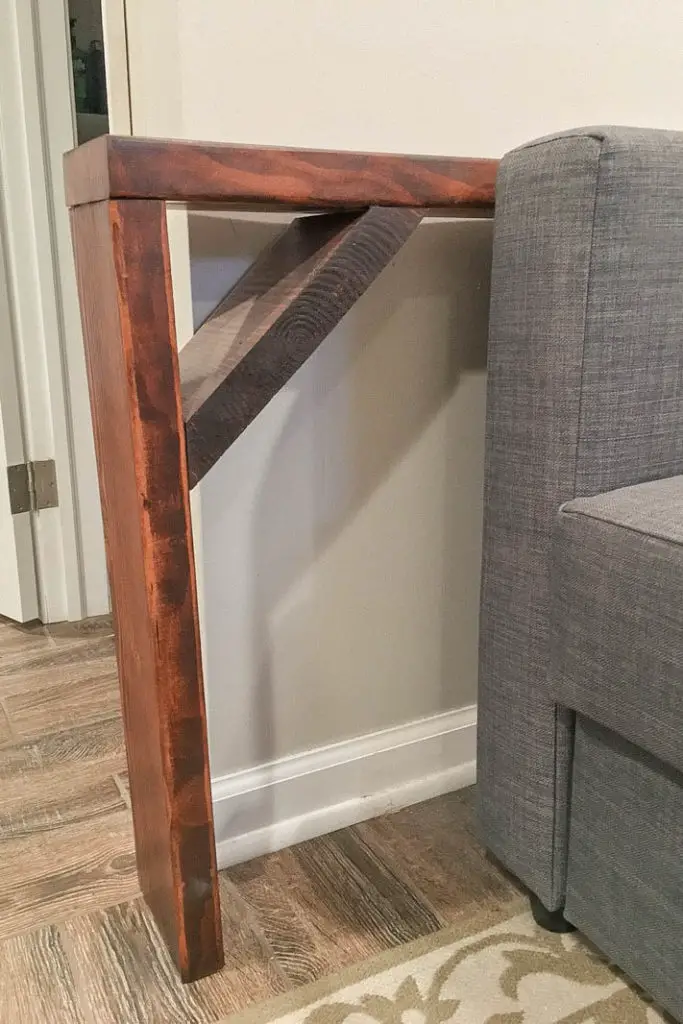
Standard Dimensions and Cut List
Use this sample for a standard 84 inch sofa. Adjust to match your couch. This gives you a clear path on how to make a behind the couch table that feels built-in.
Target size
- Length: 78 to 84 inches
- Depth: 10 to 12 inches
- Height: couch back height minus 0 to 1 inch
Example cut list for a 80 x 11 x 31 inch table
- Top: two 1×6 x 80 inch boards edge-joined, or one 1×12 x 80 inch board
- Legs: four 2×2 x 30 inches
- Long rails: two 2×2 x 74 inches
- Short rails: two 2×2 x 7.5 inches (for 11 inch top, minus overhang)
- Optional lower stretcher: one 2×2 x 74 inches
Tip: If you use a single wide board for the top, check for cup and twist. If you join boards, alternate grain to limit warp.

Step-by-Step: Build Process
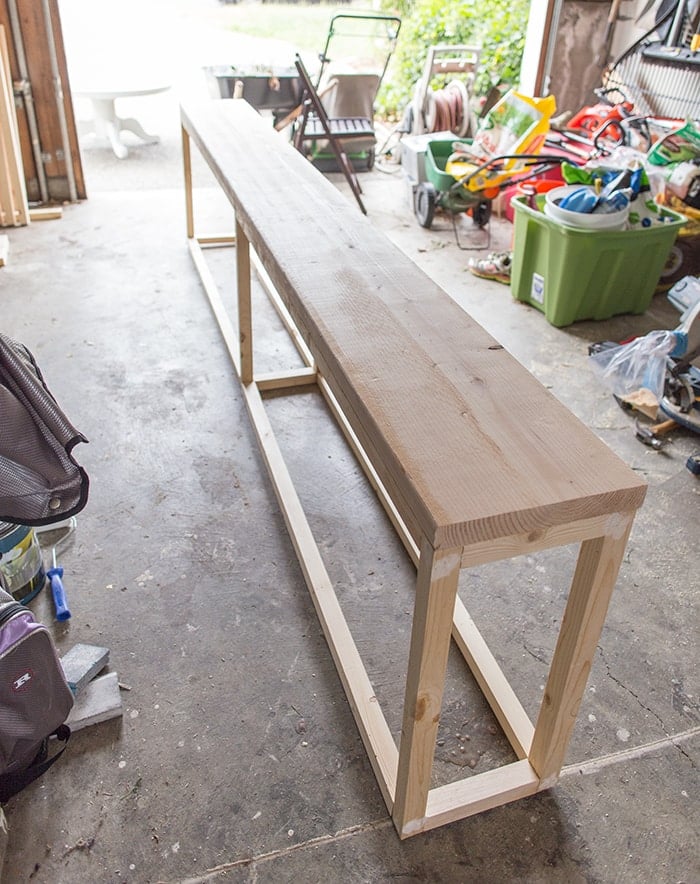
Follow these steps to learn how to make a behind the couch table with strong joints and a clean finish. Take your time. Dry fit parts before glue.
- Measure the couch. Mark height, length, and depth. Confirm walking space behind the couch.
- Cut the top board or boards to final length. Break sharp edges with 120 grit.
- If joining boards, mark biscuit or dowel locations. Or use pocket holes on the underside. Glue and clamp the top. Check for flat. Wipe squeeze-out now.
- Cut legs and rails to size. Label each part. Small labels help you avoid mix-ups.
- Drill pocket holes in rails. Place holes on the inside faces so they hide.
- Dry fit the frame. Check for square with a speed square or by measuring diagonals.
- Glue and screw the short rails to the legs. Keep the top of the rail flush with the leg top.
- Attach the long rails to form a rectangle frame. Re-check square. Adjust clamps as needed.
- Add a center stretcher if the table is over 72 inches long. This stops sag and adds strength.
- Sand the top. Start at 120 grit. Move to 180, then 220. Keep the sander flat. Do not tilt.
- Attach the top to the frame. Use figure-8 fasteners or pocket screws from below. Leave room for wood movement if using solid wood.
- Do a final sand at 220 grit. Vacuum dust. Wipe with a damp cloth to raise the grain. Light sand again.
You now know how to make a behind the couch table that is both sturdy and neat. The steps stay the same even if you change the look or size.
Finishing and Protection
Good finish makes the table last. It also adds depth to the wood. You can keep the look light or go dark and rich. Here is a simple plan on how to make a behind the couch table finish hold up.
- For a natural look: use a water-based poly. It dries fast and stays clear.
- For a rich tone: use an oil-based stain. Wipe on, wait, then wipe off. Seal with poly.
- For a hand-rubbed feel: use hardwax oil. It is easy to repair. It feels warm to the touch.
Apply thin coats. Sand light with 220 grit between coats. Two to three coats is enough for most homes. Add felt pads under the legs to protect floors.
Wire Management and Power Options
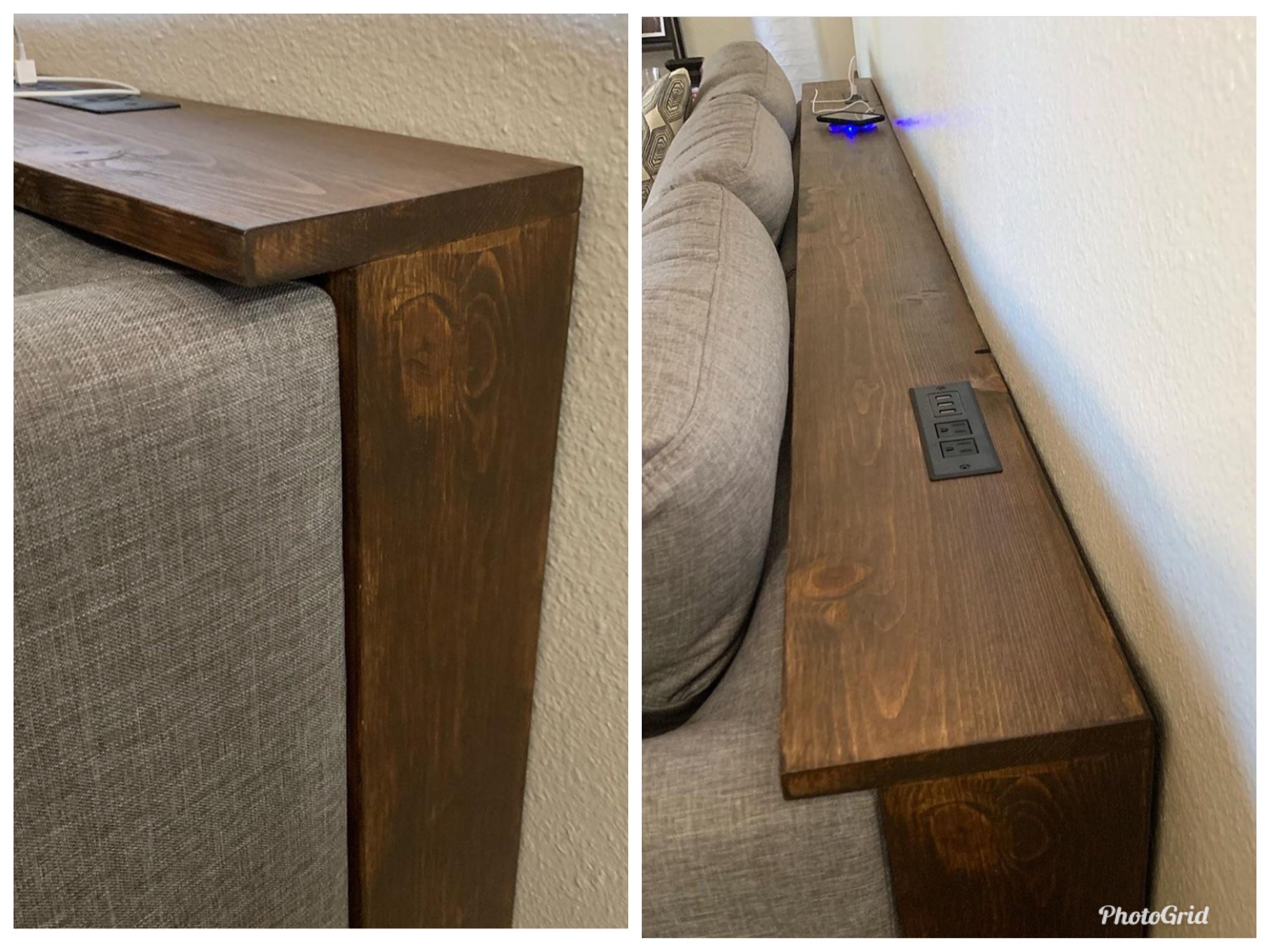
A sofa table is a great spot for lamps, chargers, and smart hubs. Plan how cords will flow. This is part of how to make a behind the couch table that works day to day.
- Add a 1.5 inch grommet at the back corner of the top.
- Mount a cable raceway to the back rail. Hide the power strip there.
- Use rubber grommets where cords pass through wood to avoid wear.
- Follow safety rules. Do not overload power strips. Keep cords clear of heat.

Style Variations and Upgrades
There are many ways to change the build. Pick one that fits your tools and taste. These ideas fit well with how to make a behind the couch table for any decor.
- Hairpin or box-section steel legs for a modern look
- Waterfall edge with 45 degree miters for clean lines
- Plywood top with edge banding for a budget build
- Live-edge slab for a natural vibe
- Floating console with steel L-brackets if floor space is tight
Safety, Mistakes to Avoid, and Pro Tips
Safety first. Use eye and ear protection. Work slow and steady. Here is what I learned while teaching folks how to make a behind the couch table.
Common mistakes
- Cutting all parts at once without a plan. Measure twice. Mark each board.
- Skipping the dry fit. This hides problems until it is too late.
- Over-sanding edges. It can make joints look uneven.
- Screwing a solid wood top tight across the grain. Wood moves. Use slots or figure-8s.
Pro tips
- Scribe the back edge to the wall if the wall is not straight.
- Use pre-stain conditioner on softwoods for even color.
- Clamp cauls keep panel tops flat during glue-up.
- A shallow roundover (1/8 inch) on the top edge feels nice in hand.
Cost, Time, and Skill Level
You can build this in a weekend. Most folks can do it with basic tools. This is a simple way to learn how to make a behind the couch table without stress.
- Cost: 60 to 250 dollars, based on wood and finish
- Time: 4 to 8 hours of work, plus finish dry times
- Skill: Beginner to intermediate. Pocket holes keep it easy.
Save money by using pine and a water-based topcoat. Spend more for oak, walnut, or maple.
Maintenance and Styling Ideas
Keep it clean with a soft cloth. Avoid harsh cleaners. Refresh a wax or oil finish as needed. Check screws once a year if kids climb or lean on it.
Style ideas
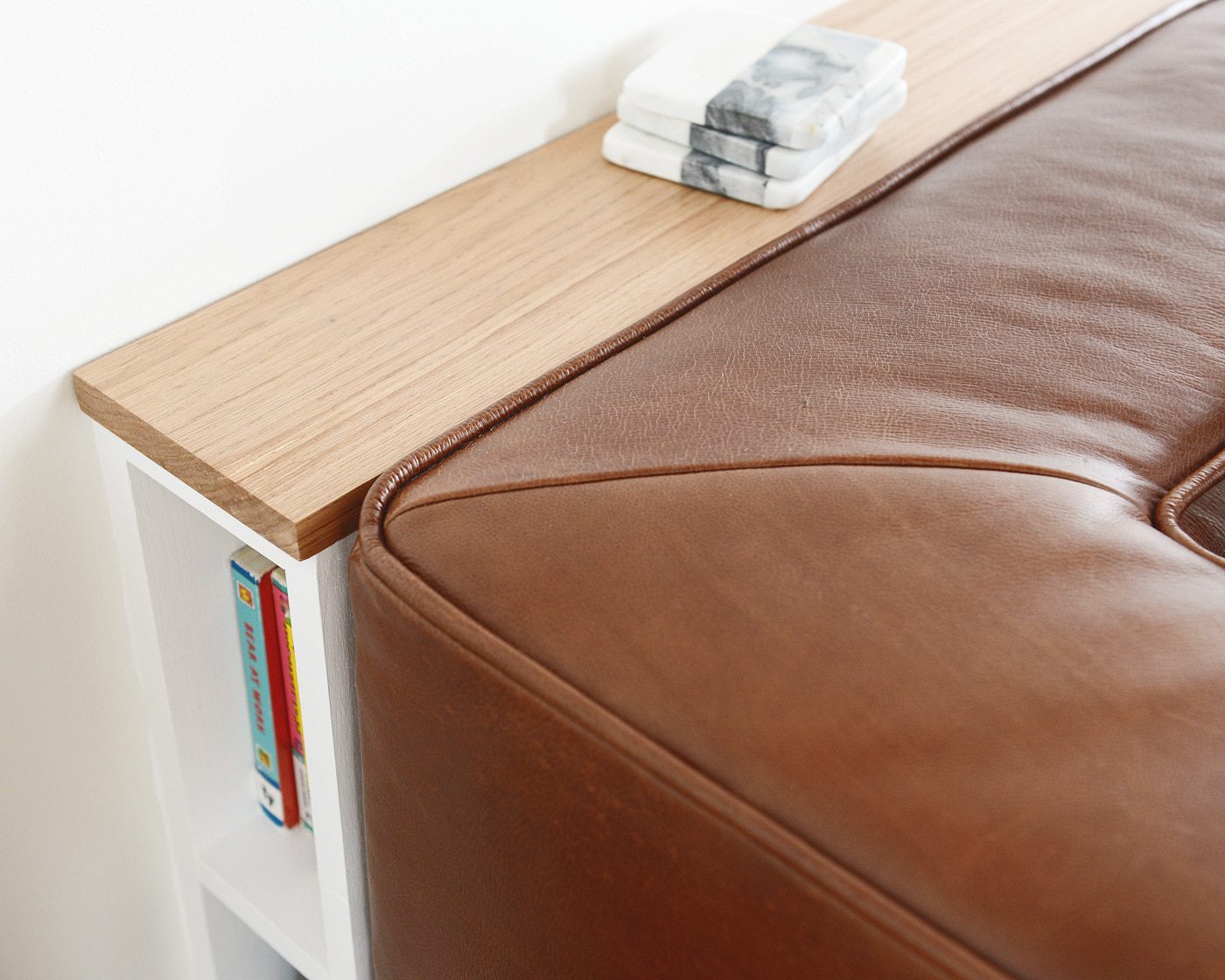
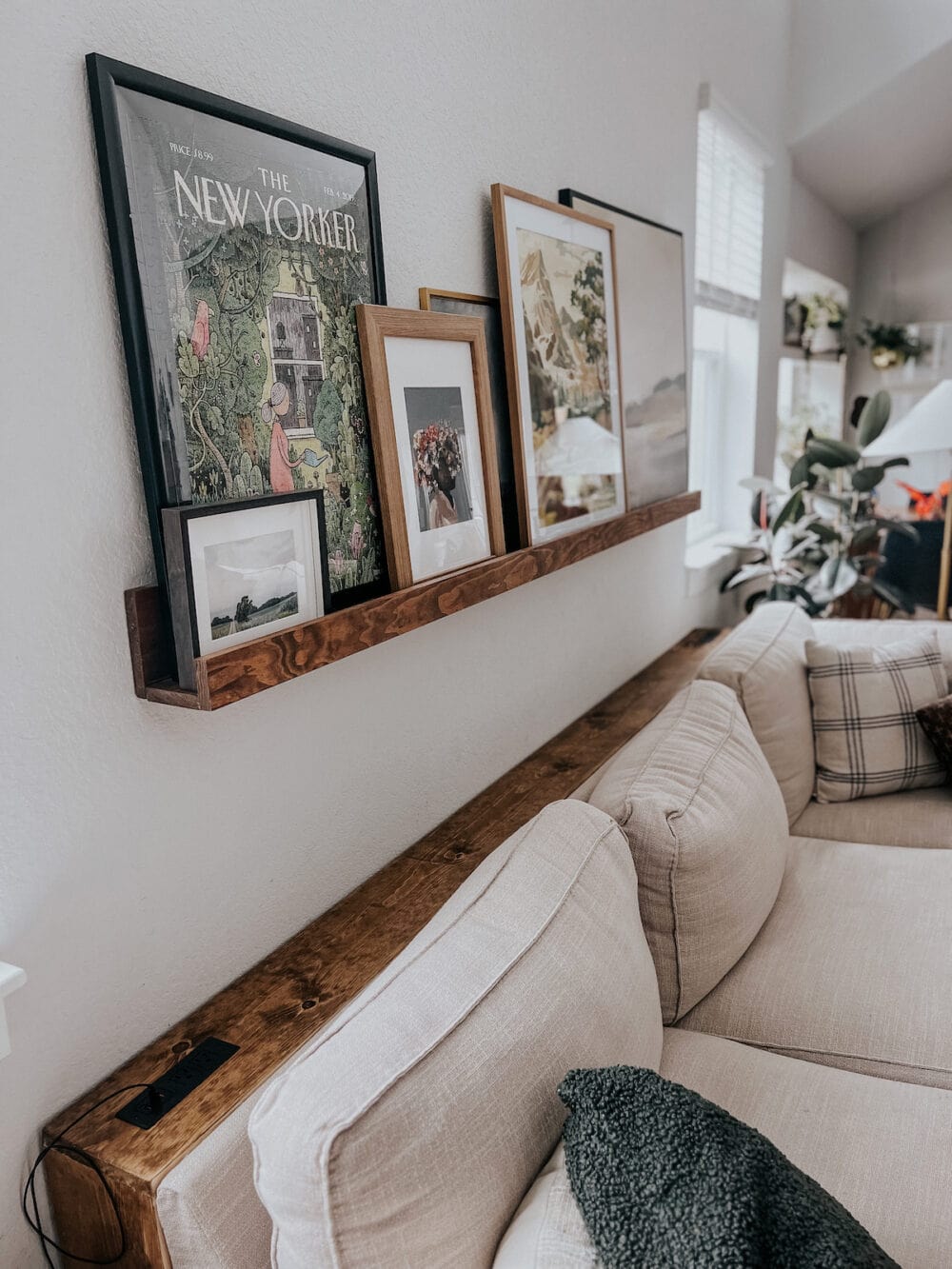
- Use a tray for remotes and coasters
- Add a lamp and a small plant for balance
- Stack a few books to add height and color
- Keep pathways clear for safe foot traffic
These small touches round out how to make a behind the couch table that looks custom and feels right at home.
Frequently Asked Questions of how to make a behind the couch table
How tall should a behind the couch table be?
Match the couch back height or go up to 1 inch lower. This keeps items within easy reach and looks clean.
What is the best depth for tight spaces?
Use 8 to 10 inches for narrow rooms. Go 12 to 14 inches if you have space and want more surface area.
Can I build it without a pocket hole jig?
Yes. You can use metal brackets, dowels, or biscuits. Pocket holes are simple, fast, and strong for this project.
What wood is best for beginners?
Pine is cheap and easy to cut. Poplar is a nicer paint-grade choice and stays stable.
How do I stop the top from warping?
Seal all sides with finish. Add a center stretcher on long spans. Allow for wood movement when you attach the top.
How can I add outlets safely?
Use a UL-listed power strip fixed to the back rail. Route cords through grommets and avoid overloading circuits.
How do I stain without blotches on pine?
Use a pre-stain conditioner. Wipe it on, wait as directed, then apply stain in thin, even coats.
Conclusion
You now have a clear plan, from size and parts to steps and finish. You saw how to make a behind the couch table that fits your home, hides cords, and stands up to daily use. Start with a simple frame, use clean joints, and protect the wood well.
Pick your materials, set your cuts, and build with care. Share your results, ask a question, or subscribe for more build guides and design tips.