

Build a round mold, pour reinforced concrete, cure, demold, and seal.
If you want to learn how to make round concrete table top, you are in the right place. I have poured dozens for clients and my own home.
This guide gives you a clear plan from design to sealing. Follow along to avoid cracks, chips, and stains, and get a smooth, strong top that lasts.
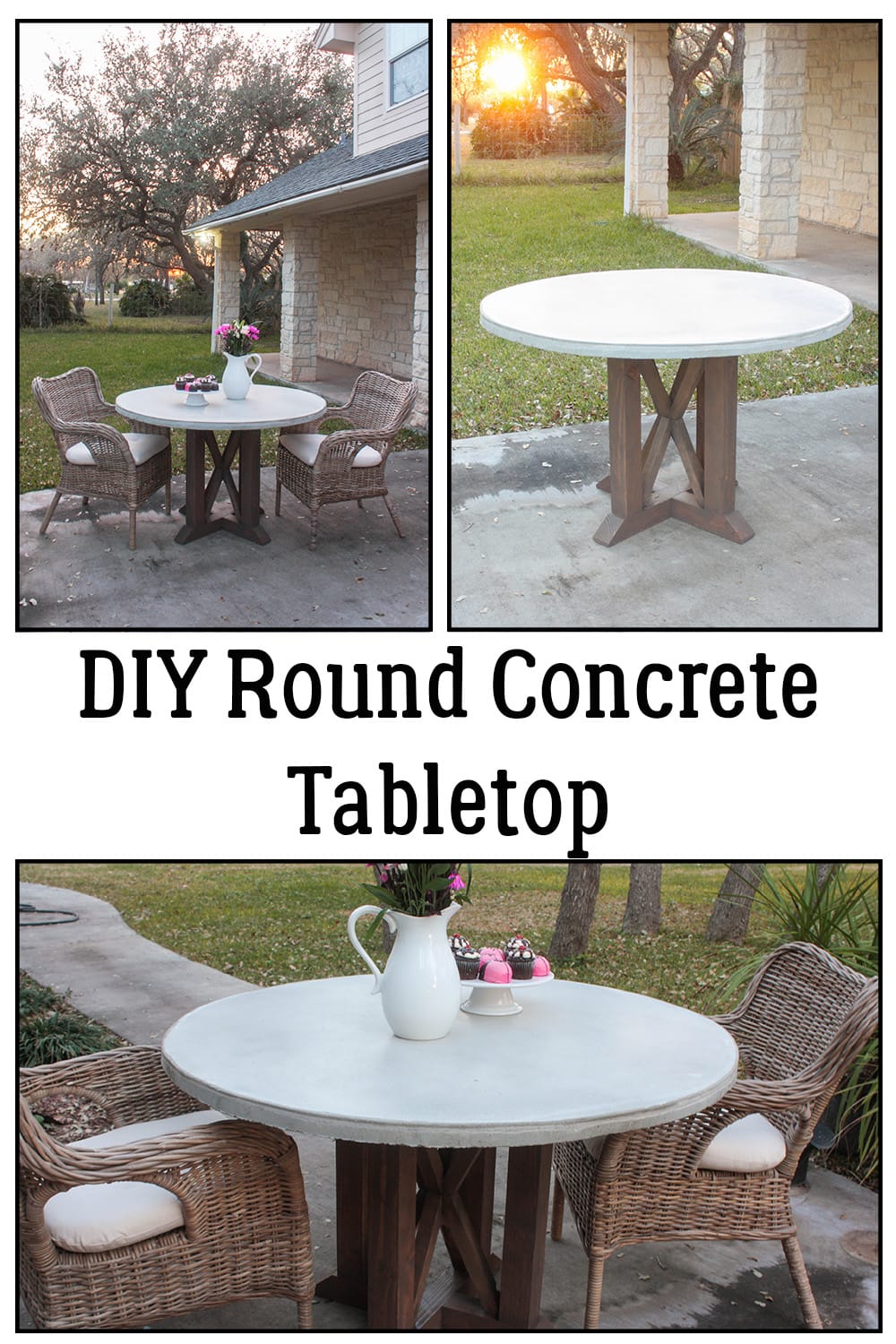
What You Need: Tools and Materials
Knowing how to make round concrete table top starts with the right gear. Good prep saves time and prevents flaws. You can build a beautiful top with basic tools and a smart mix.
Tools
- Circular saw or table saw for cutting the base board
- Jigsaw or router with a circle jig for perfect rounds
- Drill/driver and screws
- Random orbital sander (great for vibration and finishing)
- Margin trowel, finishing trowel, and a straight screed board
- Caulk gun and silicone
- Mixing tub, buckets, and a sturdy drill with a paddle
- Diamond polishing pads (50 to 1500 grit) and a variable-speed polisher
- Safety gear: gloves, eye protection, ear protection, dust mask or respirator
Materials
- Melamine-coated particleboard or MDF as the mold base
- Flexible form edge: hardboard strip, flexible PVC, or kerf-cut plywood
- 100% silicone for sealing mold seams
- Form release: cooking spray, paste wax, or a commercial release agent
- Countertop concrete mix (high-strength, 5000+ PSI) or a blend of cement, sand, and admixtures
- Water reducer/plasticizer to get flow without excess water
- Fibers: alkali-resistant glass or synthetic microfibers
- Reinforcement: welded wire mesh, rebar ring, or GFRC scrim
- Pigment or integral color, if desired
- Slurry mix (cement + polymer) for pinholes
- Sealer: food-safe penetrating or high-performance hybrid
- Non-staining construction adhesive or inserts for mounting
Sizing guide for a common build
- 36 inch diameter, 1.5 inch thick: about 0.88 cubic feet of concrete, roughly 120 to 140 lb
- 42 inch diameter, 2 inch thick: about 1.9 cubic feet, roughly 270 to 290 lb
Planning, Size, and Structural Considerations
A smart plan is the backbone of how to make round concrete table top. Decide where it will live and how it will be used. This shapes your design and thickness.
Key choices
- Diameter: 30 to 48 inches fits most rooms. Larger tops need stronger bases.
- Thickness: 1.5 inches is common. Go 2 inches for large spans or outdoor use.
- Overhang: Keep 8 to 12 inches overhang from base for comfort and support.
- Weight: Concrete is about 145 lb per cubic foot. Plan for safe lifting and a strong base.
- Edge style: Straight, chamfer, or soft roundover. This affects your mold and finish.
Mix targets that work
- Water-to-cement ratio around 0.42 to 0.50 for strength and workability
- Use a water reducer for flow without weakening the slab
- Aim for a smooth but not soupy mix to reduce pinholes

Build a Perfect Circular Mold (Formwork)
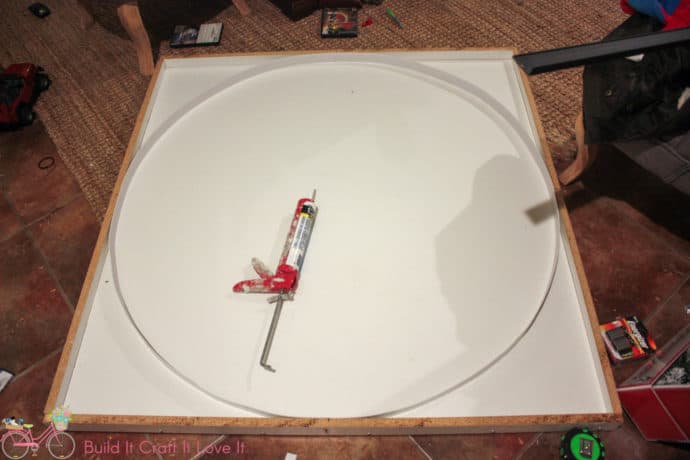
A great form is vital in how to make round concrete table top. The mold sets your size, edge, and finish. Take your time here, and the pour goes smooth.
Steps to make the mold
- Cut a melamine base at least 6 inches larger than your final diameter.
- Draw the circle with a string compass or use a router circle jig for accuracy.
- Rip a 2 to 3 inch tall strip of flexible material for the sidewall. Bend and screw it to the base along the circle line.
- Caulk the seam inside the mold with silicone. Tool it into a small cove for a clean edge.
- Apply a light coat of form release so the top releases cleanly.
Pro tip: I use a router jig to cut both the base circle and a matching ring. This yields a dead-true edge with less sanding later.

Reinforcement Strategy
Reinforcement is the safety net in how to make round concrete table top. It fights cracks from stress and movement. Pick a method that fits your tools and skill.
Reliable options
- Welded wire mesh: Cut to shape and keep 0.75 inch from all edges.
- Rebar ring: Bend a ring 1 inch inside the edge and tie to the mesh.
- Fibers: Add alkali-resistant glass or synthetic fibers to reduce microcracks.
- GFRC: A face coat plus fiber-backed coats. This is light and strong but needs more skill.
Placement tips
- Suspend mesh in the top third of the slab once poured halfway.
- Use screws in the base with zip ties to hold the mesh off the melamine.
- Keep at least 0.75 inch cover above and below the steel.
Mix Concrete Like a Pro
Mixing well is central to how to make round concrete table top. The goal is flow, strength, and fewer voids. Follow a simple order and keep water in check.
Mix sequence
- Dry blend the bag mix, pigment, and fibers until even.
- Add 80 to 90% of the water and start mixing.
- Add water reducer per the label. Mix for 3 to 5 minutes.
- Adjust with a little water only if needed. Aim for a thick, creamy flow.
- Let it rest for 2 minutes, then remix to release air.
Practical tips
- Cold water slows set; warm speeds it up. Plan for your weather.
- Do not overwater. Extra water weakens the slab and causes shrink cracks.
- Wear PPE and mix in a well-ventilated space.
Pouring, Vibrating, and Leveling
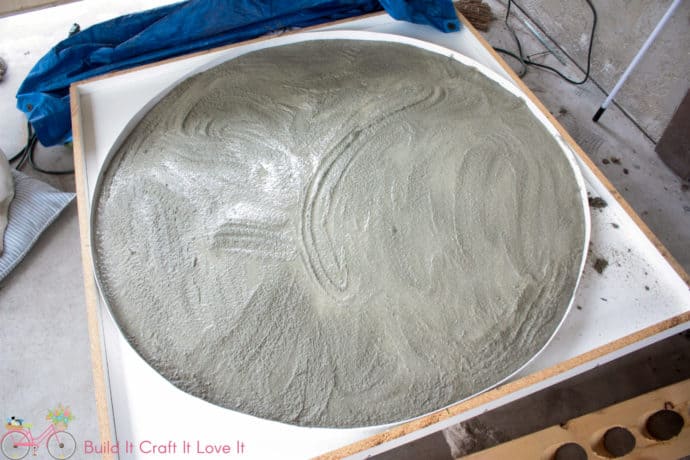
This is the moment that defines how to make round concrete table top. Work steady and clean. Air control and level are key.
Pour sequence
- Pour to half depth and spread. Tap the form sides to release air.
- Place reinforcement and tie if needed. Keep it off the base.
- Fill to full depth. Screed across the top in arcs to level.
- Use an orbital sander against the outside of the form to vibrate. Do not overdo it.
Finish the surface
- Float gently to bring up paste for a smooth skin.
- Do a light trowel pass once bleed water disappears.
- Cover with plastic to hold moisture.

Curing, Demolding, and Handling
Strong curing is the quiet secret of how to make round concrete table top. Moist cure makes the top denser and tougher. Patience pays off here.
Curing steps
- Keep covered and damp for 3 to 7 days. Mist as needed.
- At 24 to 48 hours, you can demold with care if edges are firm.
- Support the slab from below when lifting. Use two or three people.
Timing notes
- You can do light sanding after 3 to 5 days.
- Full strength takes about 28 days. Plan heavy grinding after one week or more.
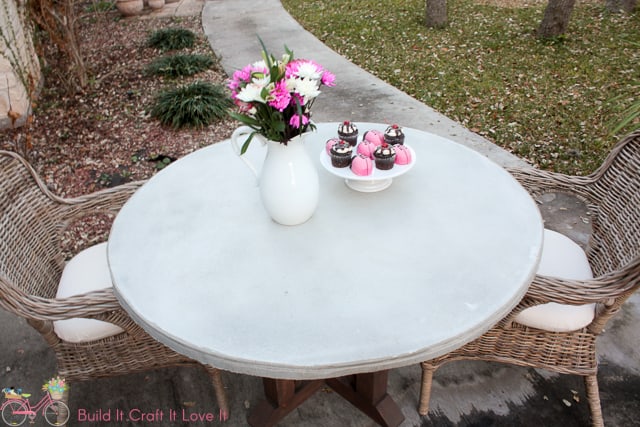
Surface Finishing: Grinding, Slurry Fill, and Polishing
Finishing is where how to make round concrete table top becomes art. Choose a cream finish, salt-and-pepper, or full aggregate exposure. Move slow and step through grits.
Finish steps
- Start with 50 or 80 grit to flatten. Keep the pad moving to avoid swirls.
- Fill pinholes with a slurry of cement, pigment (if used), and polymer. Let it cure.
- Sand through 120, 220, 400, 800, and 1500 for a satin to glossy sheen.
- Ease the edge with a diamond hand pad or a small roundover profile.
Practical tip: I do two rounds of slurry. The second pass fixes tiny voids that appear after the first polish.
Sealing and Maintenance
Smart sealing locks in your work in how to make round concrete table top. It protects from stains, etching, and daily wear. Pick a system that fits your use.
Sealer choices
- Penetrating sealers: Natural look and food safe. Good stain resistance, low sheen.
- Topical urethane or epoxy: High build and strong barrier. Can look plastic if heavy.
- Hybrids: Balanced look with solid protection. Often ideal for dining tables.
Application basics
- Apply thin, even coats per the label. Do two to four coats.
- Allow full cure (often 24 to 72 hours) before use.
- Clean with pH-neutral soap. Avoid harsh acids and strong bleach.
Mounting the Tabletop to a Base
Safe mounting is part of how to make round concrete table top that many skip. You need strong support and some movement control. Plan the attachment during the pour if you can.
Mounting options
- Embedded inserts: Set threaded inserts in the mold before pouring for bolted legs.
- Adhesive pads: Use silicone or non-staining adhesive with rubber pads for slip control.
- Brackets or Z-clips: Screw to wood or steel frames and secure into inserts.
Leveling and spacing
- Use shims or adjustable feet to level.
- Leave small gaps for airflow and to avoid trapped moisture, especially outdoors.
Cost, Time, and Common Mistakes
Budget and timing matter in how to make round concrete table top. A clear plan makes the project smooth and less costly. Learn from common errors.
Typical costs
- Concrete mix, fibers, and admixtures: 40 to 120 dollars
- Melamine and form parts: 30 to 80 dollars
- Reinforcement and fasteners: 10 to 40 dollars
- Sealer and slurry: 30 to 100 dollars
Timeline
- Day 1: Build the mold and stage tools
- Day 2: Mix, pour, and initial finish
- Days 3 to 7: Cure, demold, and begin finishing
- Days 7+: Polish, seal, and mount
Mistakes to avoid
- Adding too much water to the mix
- Poor vibration, which causes voids near the edge
- Thin edges with little cover over steel
- Demolding too early
- Skipping a high-quality sealer
Troubleshooting: Fixing Chips, Cracks, and Stains
Even with care, fixes may be needed in how to make round concrete table top. Most issues have simple solutions. Keep calm and repair with the right method.
Quick fixes
- Pinholes: Slurry fill, cure, and repolish the area.
- Edge chips: Patch with a color-matched cement paste and sand flush.
- Hairline cracks: Fill with tinted CA glue or a fine slurry; monitor for growth.
- Oil stains: Use a poultice with baking soda and mild solvent, then reseal.
- Rust spots: Dab with a mild oxalic acid solution, rinse well, and reseal.
Frequently Asked Questions of how to make round concrete table top
What thickness is best for a round concrete tabletop?
Most DIY tops work well at 1.5 inches. Go to 2 inches for large diameters or outdoor use.
How heavy will my 36 inch round top be?
At 1.5 inches thick, expect about 120 to 140 pounds. Plan for two or three people to lift.
Can I pour directly on my patio or floor without a form?
Use a melamine form for a clean edge and easy release. Pouring in place on a floor is risky and messy.
Do I need reinforcement for a small top?
Yes. Mesh or fibers limit cracks and add strength. Even small tops benefit from both.
What sealer is food-safe for dining tables?
Choose a certified food-safe penetrating or hybrid sealer. Follow cure times for full protection.
Can I add stones or glass for a terrazzo look?
Yes. Seed clean aggregates into the surface and grind to expose. Use a quality slurry to fill gaps.
How long should I cure before sealing?
Wait at least 7 days before heavy grinding and sealing. Longer cures increase strength and reduce moisture issues.
Conclusion
You now have a full plan for how to make round concrete table top. Start with a solid mold, mix with care, and cure the slab well. Finish with patience, then seal and mount with confidence.
Set a weekend for the build and the next week for curing and finish steps. Take your time and enjoy each phase. Ready to start? Share your questions below, subscribe for more pro guides, and show your finished table to inspire others.