

I’ve planted marigolds in veggie beds, patio pots, and front yard borders for years. People often ask me this: do marigolds keep bees away? Here’s the short, honest answer. Marigolds do not reliably repel bees.
They may reduce bee visits in some spots, but they won’t clear your yard of pollinators. In this guide, I’ll explain why, when they might help, and how to use them smartly if your goal is fewer bees near seating areas. I’ll also share what has worked for me and what to avoid.
What Science Really Says About Marigolds And Bees
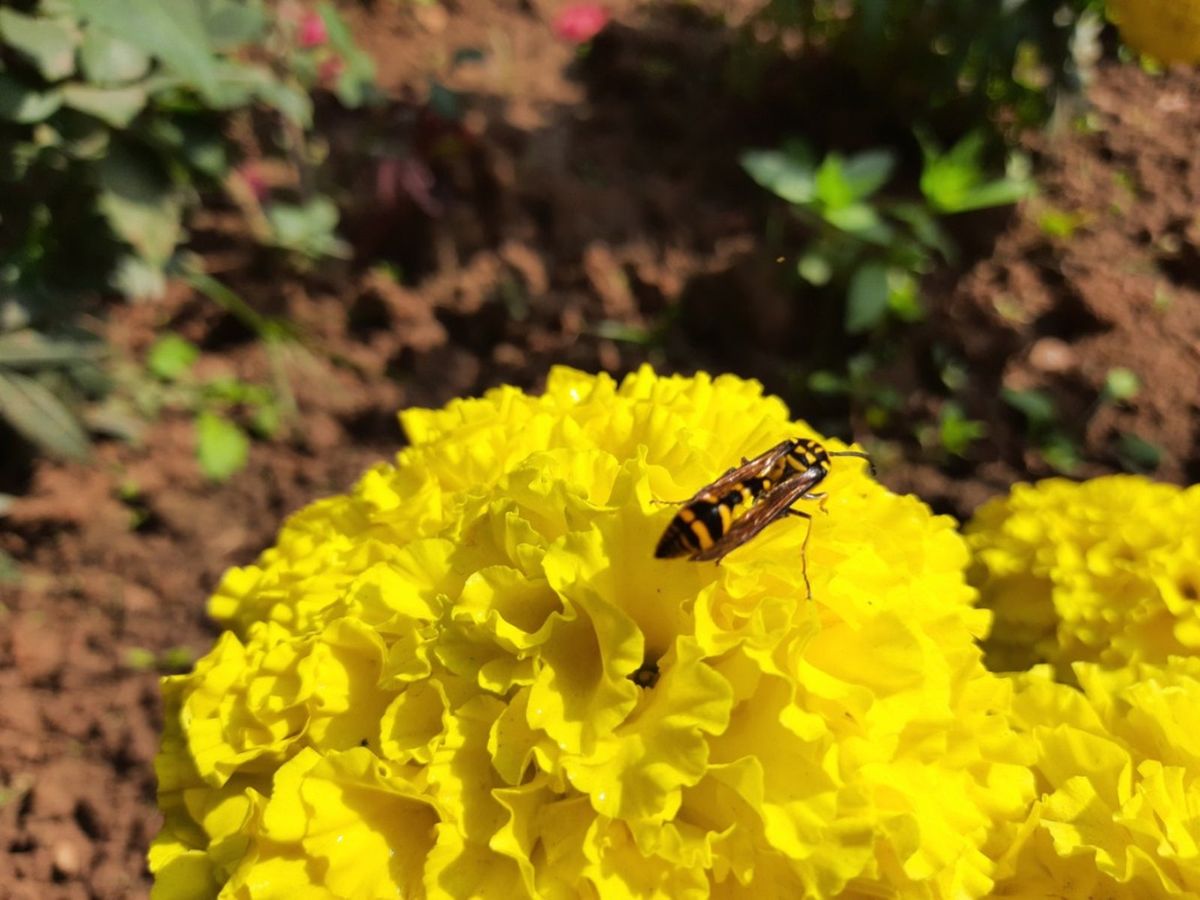
Marigolds produce pollen and nectar. Many bee species will visit them. Research on pollinator behavior shows bees choose flowers based on color, scent, nectar, and location. Marigolds fit that pattern. So a blanket claim that marigolds repel bees is a myth.
That said, some marigold types are less attractive to bees. Strongly scented French marigolds can draw fewer bee visits than open-faced, nectar-rich flowers. The dense, double blooms also make access harder for small bees. That can lower visits in mixed plantings.
But marigolds cannot act as a force field. If you remove better food sources nearby, bees may check marigolds anyway. If you plant marigolds next to very bee-friendly blooms, bees will still come for those. Results depend on the whole garden, not one plant.
How Marigold Traits Affect Insects?
Marigolds are famous for their scent. The aroma comes from compounds like terpenes and thiophenes. These can bother some pests, like certain nematodes and aphids. That is why gardeners use marigolds for companion planting.
Bees are different. Their sense of smell helps them find food, but they are not uniformly repelled by marigold scent. They also use sight.
Bright orange and yellow petals can draw casual interest. If the flower is a double form with less nectar access, the bee may move on fast. If the flower is a single form with easy access, the bee may stay.
In short, marigolds can deter some pests but not pollinators as a group.
When Marigolds May Reduce Bee Traffic
Based on field notes and common patterns, marigolds can reduce bee presence in a few cases.
- Near seating areas with few other blooms: If marigolds are the only flowers and have dense, double blooms, bees may not linger.
- In cooler mornings or evenings: Lower nectar flow can mean fewer visits overall.
- In windy spots: Bees avoid battling wind. Marigolds planted in breezy edges may see fewer bee stops.
- In designs that limit contrast: If you avoid mixing marigolds with high-nectar magnets, like lavender, coneflower, or basil in bloom, fewer bees will gather.
These are small effects. They can help in patio edges or narrow walkways but will not “repel” bees from your yard.
Garden Strategies If You Want Fewer Bees Near People
You can guide bee activity with smart layout. Here are simple, low-risk steps I use for family patios and play zones.
- Cluster bee-friendly flowers far from seats: Place lavender, salvia, mint blooms, basil, thyme, and coneflower 20–30 feet away.
- Use marigolds as a buffer ring: Plant French marigolds with dense, double blooms along the patio edge to reduce casual bee stops.
- Favor foliage near chairs: Choose herbs before bloom, coleus, ferns, hostas, or ornamental grasses close to people.
- Time your deadheading: Remove spent blooms on nearby plants to slow nectar draws by the patio.
- Water sources away from seating: Bees need water. Put shallow water dishes with pebbles near your pollinator beds, not on the deck.
- Avoid floral perfumes and bright floral prints outdoors: These can draw curious bees.
- Keep food covered: Sweet drinks invite wasps and bees. Use lids and clean spills fast.
These steps shift traffic rather than fight nature. They are humane, simple, and effective in real yards.
Choosing The Right Marigolds For Your Goal
Not all marigolds are equal for this purpose.
- French marigolds (Tagetes patula): Strong scent, many double forms. Often see fewer bee visits than single forms.
- African marigolds (Tagetes erecta): Large pom-poms. Dense petals can limit access, so fewer lingering bees.
- Signet marigolds (Tagetes tenuifolia): Small, single flowers with accessible nectar. These attract more small bees and hoverflies.
If you want fewer bees near a seating area, lean toward French or African types with double blooms. If you want to help pollinators elsewhere, plant signet marigolds in a sunny, separate bed.
Real-World Lessons From My Gardens
I once ringed a small patio with mixed marigolds and lavender. The lavender stole the show and bees came in waves. The marigolds did not change that.
We moved the lavender 25 feet away and kept double French marigolds near the patio. Bee visits around the chairs dropped fast.
I also learned that food and drink matter more than flowers for stings. Open soda cans drew wasps, not bees. Covered pitchers and quick cleanup made the biggest difference.
Mistakes to avoid:
- Planting bee magnets by the grill or table.
- Letting herbs bolt to flower near seats.
- Expecting marigolds alone to repel bees. They won’t.
Simple wins:
- Use marigolds as color near people and place nectar-rich plants farther out.
- Deadhead often.
- Keep scented trash sealed.
Safer Alternatives And Complements To Manage Bee Presence
If you need even fewer bees near a door or play area, try these humane methods.
- Screens and netting: Use fine mesh around gazebos for meals without buzzing.
- Decoy plantings: Make a bright “pollinator buffet” far from people. Mix coneflower, cosmos, zinnias, borage, and signet marigolds.
- Essential oil deterrents for short events: Lightly use citronella or lemongrass candles to mask scents near tables. Avoid direct use on plants.
- Habitat planning: Keep nest-friendly spots, like brush piles, away from patios.
- Consistent maintenance: Clean fallen fruit, seal trash, rinse recyclables.
Avoid sprays or dusts labeled as insecticides on blooms. These can harm bees and other helpful insects.
Common Myths About Marigolds And Bees
- Myth: Marigolds repel all bees. Reality: Many bees still visit, especially single-flower types.
- Myth: Strong scent keeps bees away. Reality: Scent affects some pests more than bees.
- Myth: One pot of marigolds will protect a whole patio. Reality: Garden layout matters far more than one plant.
- Myth: Fewer bees means fewer stings. Reality: Most stings at picnics come from wasps, not honey bees. Food control is key.
- Myth: All marigolds are the same. Reality: Form and nectar access vary a lot.
Frequently Asked Questions Of Do Marigolds Keep Bees Away
Do marigolds repel bees?
No. Marigolds do not reliably repel bees. Some forms may get fewer visits, but they will not clear bees from a space.
Which marigolds attract fewer bees?
French and African marigolds with dense, double blooms tend to draw fewer bee visits than single, open-faced signet marigolds.
Will planting marigolds around a patio stop stings?
No. Most outdoor stings near food are from wasps. Cover sweet drinks, clean spills, and move nectar-rich plants away from seating.
Do marigolds help with other pests?
Yes. Marigolds can deter some soil nematodes and may reduce some sap-sucking pests. This effect varies by species and planting density.
Can I keep bees away without harming them?
Yes. Use layout design, decoy flower beds, clean food areas, and screens. Avoid insecticides on flowers.
Do marigolds attract any pollinators?
Yes. Single-flower marigolds can attract small bees, hoverflies, and butterflies, especially in sunny beds.
Wrap-Up And Next Steps
So, do marigolds keep bees away? Not in a reliable, all-purpose way. They can reduce bee stops near seats if you pick dense, double varieties and design your space with pollinator plants set farther away.
The real wins come from smart layout, clean food areas, and gentle, humane tactics. Try a patio edge of French marigolds, keep bee magnets in a sunny bed across the yard, and enjoy your space without harsh chemicals.
Want more? Test a small area for two weeks, track bee activity, and adjust. Share what works for you in the comments or subscribe for more practical garden guides.