

The best crosscut saws for woodworking deliver clean, fast, and accurate cuts.
You want silky-smooth shoulders on a tenon. You want boards cut to length without tear-out. You want control, speed, and a tool that feels right in your hands. That is what the best crosscut saws for woodworking solve.
I have tested pull saws and Western crosscut saws for years, from delicate joinery to rough timber work. In this guide, I break down real performance, easy wins, and a few trade-offs. I keep the language simple and the advice practical so you can pick a saw today and use it with confidence tomorrow.
5 Best Crosscut Saws for Woodworking
SUIZAN Ryoba 9.5-Inch Double-Edge Pull Saw

This SUIZAN Ryoba is a go-to tool for anyone who needs both rip and crosscut in one compact saw. The pull stroke is smooth and light, so the blade tracks straight with little effort. The kerf is thin, which saves wood and leaves a crisp face that needs less cleanup. On small to medium stock, it feels fast and exact.
The tooth geometry on each edge fits its task well. One edge handles crosscuts across the grain with a clean finish. The other edge rips with control when you split boards or cut joinery cheeks. The handle is grippy and balanced. The blade is replaceable, which keeps long-term costs in check and performance sharp.
Pros:
- Dual edges for crosscut and rip in one tool
- Thin kerf for low waste and smooth surfaces
- Pull action reduces binding and effort
- Easy to start, even on hard maple or oak
- Replaceable blade for simple upkeep
- Great value for accuracy and speed
Cons:
- Learning curve if you only used Western push saws
- Fine teeth can chip if forced through knots
- Not ideal for very deep cuts due to plate flex
My Recommendation
If you want one saw that does most tasks well, this is a smart pick. It is compact, light, and fast. It shines in clean crosscuts on furniture parts and still rips when needed. For many woodworkers, it is the daily driver in the shop.
For shoppers asking for the best crosscut saws for woodworking, this Ryoba covers the widest range. It is friendly for beginners but stays in the kit of pros. It fits tight shops and apartment work too. Stock replacement blades are easy to find, and that keeps results consistent over time.
| Best for | Why |
| All-around shop use | Dual edges handle crosscut and rip with one tool |
| Clean crosscuts | Thin kerf leaves smooth faces with less tear-out |
| Small shops and beginners | Light pull stroke, easy control, simple maintenance |
Temple Tool Co. 9.5-Inch Ryoba Pull Saw

The Temple Tool Co. Ryoba offers the same two-in-one concept at a friendly price. The crosscut side leaves a neat face, and the rip side moves fast on softwoods and many hardwoods. The blade is thin, and the pull action keeps cuts straight. The handle has a secure wrap that grips well with or without gloves.
This saw shines as a budget pick for joinery practice, trim work, and cutting boards to length. It is light, nimble, and easy to guide to a line. Replacement blades are often available, and that keeps your cut feel fresh. If you are getting your first pull saw, this is a low-risk start.
Pros:
- Good value for a dual-edge Ryoba
- Clean crosscuts with steady tracking
- Thin kerf reduces effort and tear-out
- Comfortable wrapped handle for control
- Works on many hardwoods and softwoods
- Lightweight for long sessions without fatigue
Cons:
- May dull quicker than premium blades under heavy use
- Quality can vary slightly from batch to batch
- Replacement blade choice may be more limited
My Recommendation
If you want a starter tool that still makes precise cuts, choose this Ryoba. It gets close to the feel of higher-end options. It holds a line well and leaves tidy faces on most boards. It is great for school shops, weekend builds, and tight budgets.
For many buyers searching for the best crosscut saws for woodworking, price and performance must meet. This Temple Tool Co. pick hits that mark. It is simple to use, easy to store, and quick to maintain. It is a smart backup even if you later add a premium saw.
| Best for | Why |
| Budget-minded makers | Low cost with solid cut quality |
| First pull saw buyers | Gentle learning curve, light and forgiving |
| Jobsite backup | Reliable, compact, easy to toss in a bag |
Kings County Tools 3-Foot One-Man Crosscut Saw

This is a classic Western one-man crosscut saw with Great American tooth pattern. It is built to move through large logs, beams, and green wood. The gullets clear waste by design, so the saw stays free and fast. The auxiliary handle screws on for a second hand or a helper when you need extra power.
It is not a joinery saw. It is a work saw for trail work, off-grid builds, or timber framing. The plate has enough heft to stay true in long cuts. The teeth can be filed and set with the right tools and skill, which keeps the saw useful for many years.
Pros:
- Great American teeth clear chips in green and dry wood
- Auxiliary handle adds leverage or two-person use
- Sharpenable teeth for long service life
- Stiff plate tracks well on long cuts
- Fast on big rounds and heavy timbers
- Good tool for off-grid or no-power work
Cons:
- Bulky for small shops or fine joinery
- Requires sharpening skills and time
- Needs space and good body stance to use well
My Recommendation
If your work includes logs, beams, or trail clearing, this saw earns its keep. It eats through big stock with a steady rhythm. The aux handle helps you control angle and power. It is a serious hand tool for serious crosscuts in rough stock.
For those seeking the best crosscut saws for woodworking where large timbers are common, this is the right style. It is not delicate, but it is very effective. Pair it with a fine joinery saw for complete coverage. Keep a file handy so you can tune the teeth as needed.
| Best for | Why |
| Logs and beams | Tooth pattern and gullets keep cuts fast and free |
| Trail and off-grid work | No power needed, rugged and dependable |
| Timber framing tasks | Stiff plate aligns long, straight crosscuts |
SUIZAN Dozuki 9.5-Inch Crosscut Saw
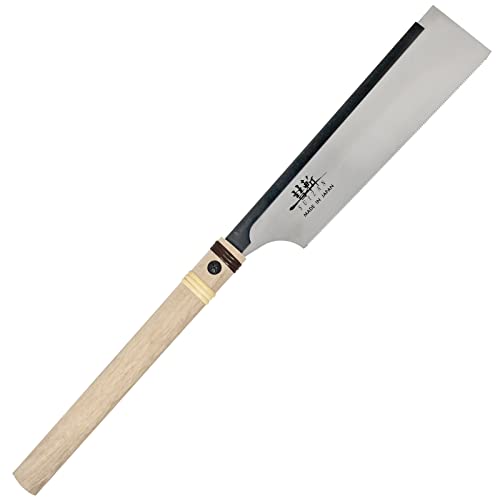
The SUIZAN Dozuki is a precision crosscut saw made for dovetails, tenon shoulders, and trim. The rigid spine guides the blade and locks your line. The teeth are fine and sharp, so starts are smooth and surfaces are clean. The kerf is very thin, which delivers that “surgical” feel in delicate work.
I reach for a Dozuki when layout lines matter. The back limits depth, but that is the trade-off for laser-straight control. The handle is secure, and the saw feels balanced in one hand. Replacement blades help you keep that like-new cut without a full retool.
Pros:
- Rigid spine for straight, accurate cuts
- Fine crosscut teeth for glassy shoulders
- Very thin kerf supports tight joinery
- Excellent line control for layout-critical work
- Replaceable blade supports consistent results
- Light and easy on the wrists
Cons:
- Limited cut depth due to the back
- Not intended for heavy ripping
- Teeth can chip if forced through knots or nails
My Recommendation
If you cut dovetails, miters, or fine shoulders, this is a star. It shines when every line must be perfect. The rigid back and thin plate make that possible. It also pairs well with a Ryoba, which can handle the rip work.
Many readers ask which tool tops the list of the best crosscut saws for woodworking in joinery. For fine crosscuts, the Dozuki is hard to beat. Use light pressure and let the teeth do the work. Keep a spare blade ready so your finish never slips.
| Best for | Why |
| Dovetails and tenon shoulders | Rigid spine and fine teeth give clean, straight cuts |
| Precision trim and miters | Thin kerf leaves crisp, ready-to-glue surfaces |
| Small parts work | Light, controllable, easy to guide to a line |
SUIZAN Dozuki 6-Inch Crosscut Saw

This smaller Dozuki is a finesse tool for tiny joints, boxes, and trim. The short blade gives great control in tight spaces. The rigid back helps the saw stay on a knifed line. The teeth are fine, so starts are gentle and exits are neat.
It is ideal for small dovetails, inlay work, and thin stock. The kerf is very narrow, which means less cleanup and tighter fits. If you make models, musical parts, or jewelry boxes, it feels precise and calm. Keep cuts slow, and the finish will look machine-perfect.
Pros:
- Compact size for close-up control
- Fine teeth for delicate crosscuts
- Rigid back ensures tracking on a line
- Lightweight for one-handed work
- Great for thin stock and small joinery
- Easy to store and carry
Cons:
- Shallow depth of cut limits use
- Slow on thick materials
- Not made for ripping
My Recommendation
If your work is small and precise, this saw is perfect. It makes careful crosscuts in thin stock simple and repeatable. It pairs well with a larger Ryoba or a 9.5-inch Dozuki. That gives you range without giving up control.
When people ask me about the best crosscut saws for woodworking with tiny joinery, this compact Dozuki is on my short list. It hits tight lines with ease and leaves a polish-like face. It is kind to beginners and exact for experts. It is a keeper for detail-focused builds.
| Best for | Why |
| Small boxes and inlay | Short blade and fine teeth give gentle, clean cuts |
| Tight spaces | Compact form gives better sightlines and control |
| Beginner joinery | Rigid back and thin kerf help you stay accurate |
How to Choose the Right Crosscut Saw?
Start with your main tasks. If you cut furniture parts to length and make joints, you need clean crosscuts with little tear-out. A Dozuki or a Ryoba excels. If you work with beams or logs, choose a Western crosscut saw with large teeth. Tool style must match the size and texture of your stock.
Consider pull saws versus push saws. Japanese pull saws cut on the pull stroke. They feel light and tend to track straight with less effort. They make very thin kerfs and smooth faces. Western saws cut on the push and often have thicker plates. They feel stout and can take more abuse in rough stock.
Look at tooth geometry. Crosscut teeth slice the fibers across the grain. They leave smooth faces. Rip teeth split the fibers along the grain. They remove waste fast. A Ryoba gives both on one blade. A Dozuki focuses on fine crosscuts. Choose based on your balance of speed and finish.
Check kerf and plate thickness. Thinner kerfs mean less effort and a cleaner face. They also require less correction to stay on line. Thicker plates are more forgiving when cutting large or dirty wood. Pick the thinnest kerf that still matches your work demands. This is a key trait in the best crosscut saws for woodworking.
Think about blade care. Many modern pull saws use impulse-hardened teeth. They cut clean but are not meant to be hand-sharpened. You replace the blade when it dulls. Western teeth can be filed and set. This takes skill, but it pays off over years. Both paths work. Decide how you want to maintain the tool.
Handle feel and length matter. Wrapped or ergonomic handles help you grip and guide the saw. Blade length guides how deep or long your cut can be in one stroke. Short blades feel precise. Long blades feel faster on big stock. Hold the saw if you can, and picture your common tasks before you buy.
How I Test Crosscut Saws in 2026?
I aim for simple, repeatable checks. I crosscut common boards: pine for softness, oak or maple for hardness, and some plywood to test thin veneers. I mark a line with a knife and pencil. I track how fast the saw reaches depth, how straight it stays, and the face quality after the cut.
I also count strokes to finish a set depth. I check the kerf width with calipers. I rate the start of the cut, because a clean start prevents blowout. I note how much cleanup is needed with a block plane or sandpaper. I place extra value on accuracy and control. That is what you feel every day in the shop.
Comfort is part of the test. I run longer sessions to see if the handle or stroke causes fatigue. I also note whether the saw binds under light pressure. The best crosscut saws for woodworking should be easy to start, track true, and leave a ready-to-glue face.
Care, Setup, and Safety Tips
Use a light touch. Let the teeth do the work. This keeps your line clean and the blade safe. Start with short, gentle strokes. Once the kerf is set, lengthen the stroke. This habit delivers straighter cuts and smoother faces.
Keep blades dry and clean. Wipe off pitch and dust after use. Store in a sleeve to avoid tooth damage. If the saw has a replaceable blade, change it before you fight tear-out. If it is a fileable Western saw, learn basic filing and setting. Small steps keep the cut quality high and your effort low.
Clamp your work. Support both sides of the cut. This avoids pinching and splinters. Stand in a stable stance. Pull or push in a straight line with your forearm aligned to the blade. These simple moves increase accuracy, safety, and joy in use.
FAQs Of best crosscut saws for woodworking
What makes a saw “crosscut” versus “rip”?
Crosscut teeth slice fibers across the grain. They leave a smooth face. Rip teeth split fibers along the grain. A Ryoba has both. That is why it is often in the best crosscut saws for woodworking lists.
Are Japanese pull saws better than Western saws?
They are different tools. Pull saws have thin plates and very clean cuts. Western saws feel tougher in rough stock. Pick the one that fits your work and comfort. Many shops use both.
Can I sharpen a Japanese pull saw?
Most use impulse-hardened teeth. They last a long time but are not easy to file. Replace the blade when it dulls. Western saws with soft teeth can be filed and set at home.
What size saw should I buy first?
A 9.5-inch Ryoba is a safe first buy. It handles crosscuts and rips on small to medium stock. It is a common entry in the best crosscut saws for woodworking because it covers many tasks.
How do I prevent tear-out on crosscuts?
Use a sharp saw, light starts, and back up the exit with scrap. Knife the line for clean fibers. The right saw and a gentle stroke solve most issues.
Final Verdict: Which Should You Buy?
For most buyers, the SUIZAN Ryoba 9.5-Inch is the best balance of speed, control, and value. Pair it with the SUIZAN Dozuki 9.5-Inch if you do fine joinery.
If you cut large timbers, the Kings County Tools 3-Foot One-Man Crosscut wins. All five picks rank among the best crosscut saws for woodworking in 2026.