

The best carpenter bee baits pair natural pheromones with smart traps.
You see fresh holes in trim. Sawdust sits under the eaves. Spring hits, and the buzzing begins. Carpenter bees are back and ready to tunnel. I know that sting of dread. Damage grows fast if you wait.
The best carpenter bee baits help you win early. They draw bees to a trap and away from your wood. The right lure boosts catch rates. It also keeps the process simple and safe. Below, I break down the top options and how to use them well.
5 Best Carpenter Bee Baits
Bee-Licious Carpenter Bee Bait, 10 ml Tube

This all‑natural pheromone bait is built for one job. It brings carpenter bees to your trap fast. The 10 ml squeeze tube is neat and simple. A few drops help your trap start working on day one. I like it for porches, barns, and eaves.
It works well in early spring and peak season. The scent profile targets their mating drive, which is the key. Use it with a carpenter bee trap for best results.
I apply two or three small beads inside the entrance and near the bait port. Reapply every few weeks, or after heavy rain. The formula is low odor for people. Yet it still signals “investigate” to bees. If you want easy setup, this tube is hard to beat.
Pros:
- Pheromone lure designed for carpenter bees, not generic bees
- All‑natural formula and low human odor
- Simple squeeze tube for clean, precise dosing
- Improves trap attraction and early catch rates
- Great for pre‑season and “first flight” in spring
- Works with most wooden carpenter bee traps
- Portable size for ladders and tight spaces
Cons:
- Works best only when paired with a trap
- Needs reapplication over time and after storms
- 10 ml can go fast if you have many traps
My Recommendation
If you want a simple start, this is it. The tube takes seconds to use. It suits homeowners who have one or two traps. It is also smart for people who prefer all‑natural lures. I call it one of the best carpenter bee baits for fast setup and low mess. It helps new traps reach peak draw. It also refreshes old traps that have gone quiet.
Pick this if you need a quick fix for a porch, shed, or small deck. It pairs with almost any trap. Keep a tube on hand for the first warm day in spring. That is when scouts fly and test your wood. This bait flips the script and pulls them into the trap instead.
| Best for | Why |
|---|---|
| First‑time users | Simple tube, no mixing, clear results fast |
| Small porches or decks | Enough volume to treat one or two traps |
| Natural‑leaning users | All‑natural lure with targeted pheromone signal |
Bee-Licious Carpenter Bee Bait, 2‑Pack

The 2‑pack gives you range and backup. You can prime more traps at once. Or you can plan for a full season and avoid mid‑season shortages. Each tube is the same all‑natural pheromone lure.
I have used two tubes to cover a front porch and detached garage. That split dose kept both zones active. It also cut down on return flights to fascia boards.
If you run more than one trap, a 2‑pack makes sense. Keep one tube sealed in a cool, dry place. Rotate them as needed through spring and summer. Apply a small bead inside trap entries and near baffles. Refresh at the first sign of new drilling or frass dust. This is one of the best carpenter bee baits if you need coverage and value together.
Pros:
- Two tubes increase coverage across multiple traps
- Better value per ml compared to single tubes
- All‑natural lure targets carpenter bee behavior
- Great for porches, barns, pergolas, and sheds
- Lets you pre‑treat and then re‑treat mid‑season
- Compact tubes store easily in tool caddies
- Supports consistent attraction during peak flights
Cons:
- You still need traps for the lure to shine
- Store away from heat to preserve strength
- Heavy rain can reduce longevity between reapplications
My Recommendation
Choose the 2‑pack if you have more than one hot spot. It is ideal for homeowners with both a front porch and a back deck. It also works for barns or detached garages. If you expect a heavy season, you will want the extra tube handy. In my field notes, steady lure levels produce steadier catch rates. For many homes, this is the sweet spot among the best carpenter bee baits.
Use this to prime traps before the first warm spell. Then top up after a storm or if you see new sawdust. The 2‑pack helps you react fast without a store run. That speed matters when the first scouts come out.
| Best for | Why |
|---|---|
| Two‑zone coverage | One tube per area keeps attraction high |
| Season‑long use | Second tube for mid‑season refresh |
| Budget‑minded users | Lower cost per trap compared to single packs |
Bee-Licious Carpenter Bee Bait, 3‑Pack
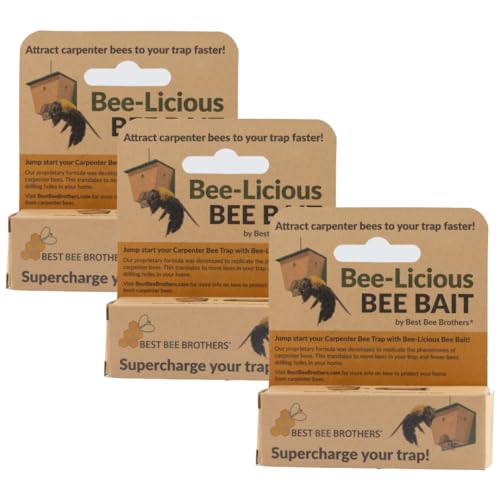
The 3‑pack is for big jobs or long seasons. Think wraparound porches, long fences, or multiple outbuildings. You get the same all‑natural pheromone lure, but with more flexibility. I like the 3‑pack for HOAs, rentals, or farm sites. It lets you prime every hot spot at once. You can also set a reserve tube for late summer flights.
Carpenter bees often return to old sites. A strong lure helps pull them off the wood and into traps. Dose traps lightly and evenly. More is not always better, so stick to small beads. Reapply based on weather and activity. If you want to lock in supply, this bundle is one of the best carpenter bee baits for full‑property coverage.
Pros:
- Three tubes cover large properties or many traps
- Strong value for season‑long maintenance
- All‑natural, targeted pheromone blend
- Ideal for property managers and short‑term rentals
- Supports pre‑treat, peak‑treat, and late‑season plans
- Lets you standardize dosing across zones
- Reduces emergency reorders during busy months
Cons:
- Upfront cost is higher than single tubes
- Correct storage matters to maintain potency
- Requires planning to rotate tubes before they expire
My Recommendation
Go 3‑pack if you manage more than one structure. It shines for farmsteads, lake homes, or vacation rentals. It also suits anyone who wants a full season plan in one buy. You will have enough to prime, refresh, and finish strong. For me, this sits high among the best carpenter bee baits when the property is large or the season is long.
Use a log or simple calendar. Note when you apply and where. This avoids overuse and helps you track results. The 3‑pack makes this easy because you will not run short at a bad time.
| Best for | Why |
|---|---|
| Large properties | Enough bait to cover many traps at once |
| HOA or property managers | Standardize treatment across units and seasons |
| Season planners | Set‑and‑forget supply prevents bait gaps |
Bountiful Bees Bee Bait Swarm Lure

This two‑pack trap set is built for real‑world use. The clear, external bee vault lets you see results fast. The spring‑loaded door helps keep bees inside. The footprint is compact at 4.2” D x 5.8” W x 7.5” H. I like that you can place one at each corner of a porch. This creates a draw from both sides. Add a pheromone bait and it turns into a strong system.
Placement is key. Hang traps near active holes or sunny facias. The angled entry points mimic wood galleries. That design makes it easy for bees to enter and hard to escape. Empty the clear vault as needed. Keep traps clear of obstructions. If you pair this set with one of the best carpenter bee baits above, you get steady, visible control.
Pros:
- Two traps let you cover both sides of a structure
- Clear external vault shows catches at a glance
- Spring‑loaded door helps retention
- Compact size fits eaves, pergolas, and sheds
- Pairs well with all‑natural pheromone bait
- Non‑toxic trapping approach for targeted control
- Good for early spring through late summer flights
Cons:
- Performance depends on correct placement
- May need several units for very large areas
- Works best when baited and maintained
My Recommendation
Pick the 2‑pack if you have a wide porch or two hot zones. One trap per corner pulls bees off trim. The clear vault makes inspection simple. I suggest priming each trap with a pheromone bait. That combo is among the best carpenter bee baits and traps setups I use. It balances simplicity and strong draw.
Control is a process, not a single event. Start at the first warm spell. Keep traps clear and bait fresh. This two‑trap set helps you build coverage fast. It is a strong value for most homes.
| Best for | Why |
|---|---|
| Porches with two corners | Place one trap on each side for coverage |
| Visual monitoring | Clear vault shows activity and timing |
| Trap‑and‑bait combo | Works well with pheromone lure for faster draw |
Sancodee Carpenter Bee and Hornet Catcher

This single trap is a simple start for most homes. You get the clear external vault and spring‑loaded door. The compact body works in tight eaves and small pergolas. I like it for focused problem spots. Place it by old holes or fresh frass. Add a few drops of pheromone bait to speed results. The size makes it easy to move and test locations.
Use the trap early to disrupt new nesting. Check the vault often at first. Once activity slows, you can shift it to a new spot. Keep bait fresh and the entry points clear. Combine with wood repair and paint to seal old holes. A single trap can punch above its weight with the right lure. That is why I pair it with the best carpenter bee baits listed above.
Pros:
- Compact and easy to place in tight areas
- Clear vault for quick, no‑guess checks
- Spring‑loaded door helps hold bees
- Great starter trap for first‑time users
- Pairs well with pheromone bait for faster draws
- Moveable for testing the best location
Cons:
- May not cover large areas alone
- Needs steady baiting for peak performance
- Requires periodic emptying and upkeep
My Recommendation
Start here if you have one main hot spot. It fits under eaves and near beams. Prime the trap with a pheromone lure. I consider that combo one of the best carpenter bee baits and trap pairs for tight budgets. If you later need more coverage, add a second unit. Keep the first in the busiest spot and rotate the second as needed.
This trap shines for small decks, gazebos, and pergolas. It is also ideal if you want to learn placement. It gives you direct feedback with the clear vault. That makes it easy to dial in your plan.
| Best for | Why |
|---|---|
| Single hot spot | Target one area with focused trapping |
| First‑time users | Simple, visible results build confidence |
| Tight mounting spaces | Compact body fits eaves and small beams |
FAQs Of best carpenter bee baits
Do carpenter bee baits work without a trap?
Baits work best with a trap. The lure draws bees in. The trap handles capture. Using bait alone often shifts activity but does not stop damage. Pair bait and trap for the best results.
Where should I place traps and bait?
Place traps near active holes, sunny facias, and high‑traffic beams. Hang them under eaves at eye level or slightly higher. Add small beads of bait near entries. Keep nearby wood sealed and painted to reduce new drilling.
How often should I reapply pheromone bait?
Reapply every few weeks during peak season or after heavy rain. Use light, even beads. Watch activity and add more if new frass appears. Store spare tubes in a cool, dry place.
Are pheromone baits safe for homes with pets and kids?
All‑natural pheromone baits are low odor and designed for targeted use. Apply inside traps, out of reach. Always follow label directions. Keep tubes stored safely.
When should I start using the best carpenter bee baits?
Start early in spring as temperatures rise. That is when scouts fly. Early baiting helps redirect them to traps. It reduces drilling and long tunnels later.
Final Verdict: Which Should You Buy?
For simple, fast control, pair the Ultimate Pro Trap with Bee‑Licious pheromone bait. That combo ranks high among the best carpenter bee baits and trap setups.
Choose a single bait tube for small jobs. Pick the 2‑ or 3‑pack for season‑long coverage. Scale traps based on area size and hot spots.