

I’ve spent years testing scents around patios, photo sets, and vegetable beds to keep bees calm and people comfortable. Here’s the short answer to what scent keeps bees away: strong, volatile plant oils like peppermint, tea tree, eucalyptus, citronella, and clove tend to repel bees when used correctly.
In this guide, I’ll show you how these scents work, how to apply them safely, and the simple tactics that make a real difference without harming pollinators.
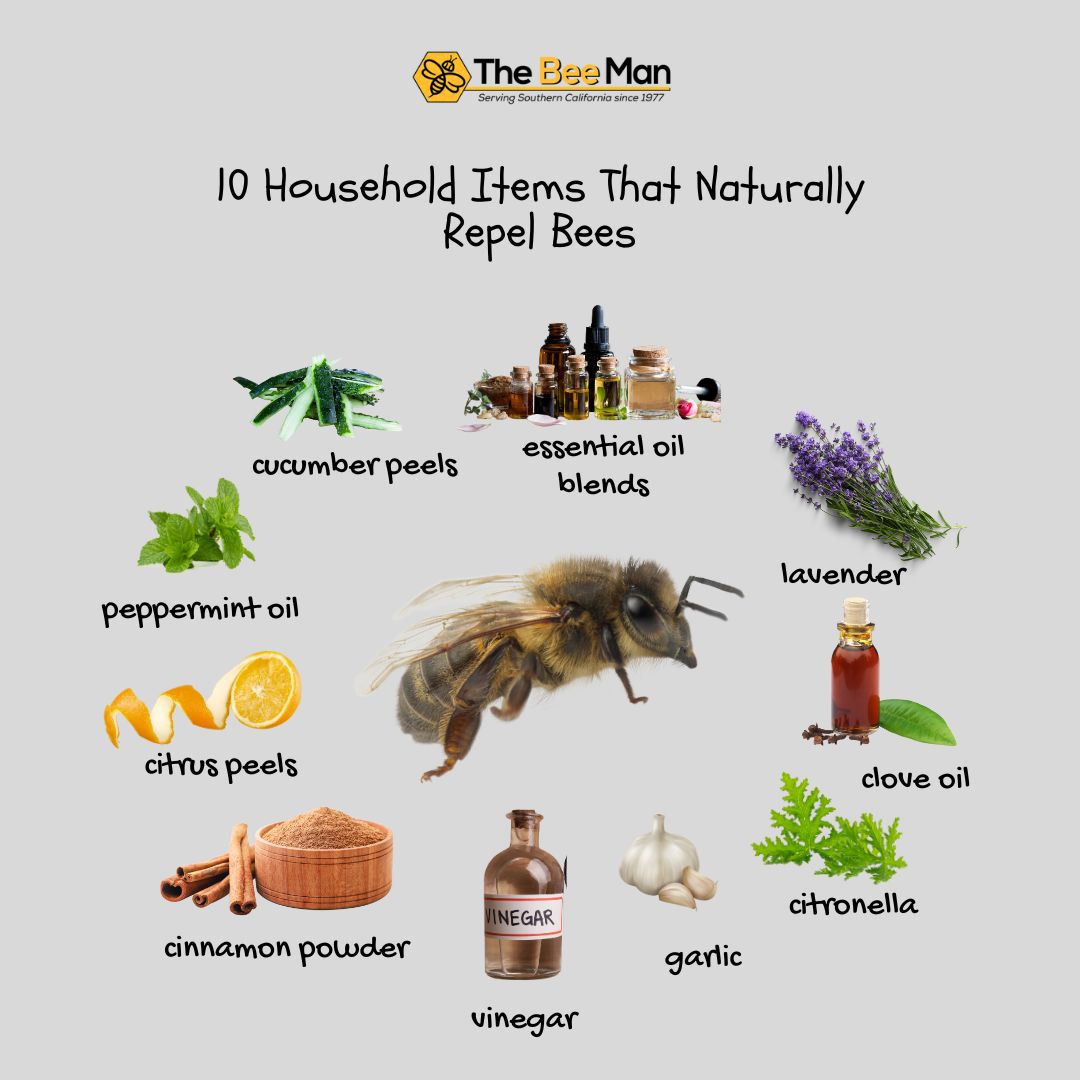
How Bees Smell: The Science Behind Scent Repellents
Bees navigate the world through smell. Their antennae detect tiny scent molecules. They use them to find flowers, nest mates, and even threats.
When certain scents are too strong or unusual, bees avoid the source. This is the core idea behind natural bee repellents.
Key points:
- Bees respond to volatile oils. Strong aromas can overwhelm their scent receptors.
- Repellency is context-based. A mild scent may not work in a nectar-rich area.
- Blend matters. Some combinations confuse bees more than single oils.
Evidence from field trials and lab studies suggests that high-terpene essential oils can disrupt foraging and orientation. That’s why consistent application and the right concentration are crucial.

Top Scents That Keep Bees Away
Below are the best-known scents that repel bees, with practical tips I’ve tested in yards and event setups.
Peppermint Oil
Why it works: Menthol-heavy aroma overwhelms bee receptors.
How to use: Mix 10–15 drops in 1 cup water with a teaspoon of mild soap. Spray on outdoor fabrics, planters, and door frames.
Where it shines: Picnic tables, porch rails, and umbrella canopies.
Pro tip: Refresh every 60–90 minutes in hot weather.
Tea Tree Oil
Why it works: Strong antiseptic scent bees dislike.
How to use: 8–10 drops in 1 cup water. Shake well. Lightly mist seating zones.
Best for: Small patios and balcony edges.
Caution: Keep away from pets and do not spray on flowering plants.
Eucalyptus Oil
Why it works: Cineole-rich compounds are pungent to bees.
How to use: Add 10 drops to a diffuser near a doorway or under a table.
Best for: Covered spaces with limited airflow.
Tip: Combine with peppermint for longer effect.
Citronella (and Lemongrass)
Why it works: Citronellal and geraniol deter many insects, including bees.
How to use: Choose high-quality candles or dilute oil sprays. Place candles upwind.
Best for: Evening gatherings and outdoor dining.
Note: Works better as a perimeter barrier than direct area spray.
Clove and Cinnamon
Why they work: Spicy phenols are aversive to bees’ chemosensory system.
How to use: 6–8 drops of clove or cinnamon oil in 1 cup water. Mist surfaces, not plants.
Best for: Trash bins, compost lids, or food prep stations outdoors.
Other helpful aromas:
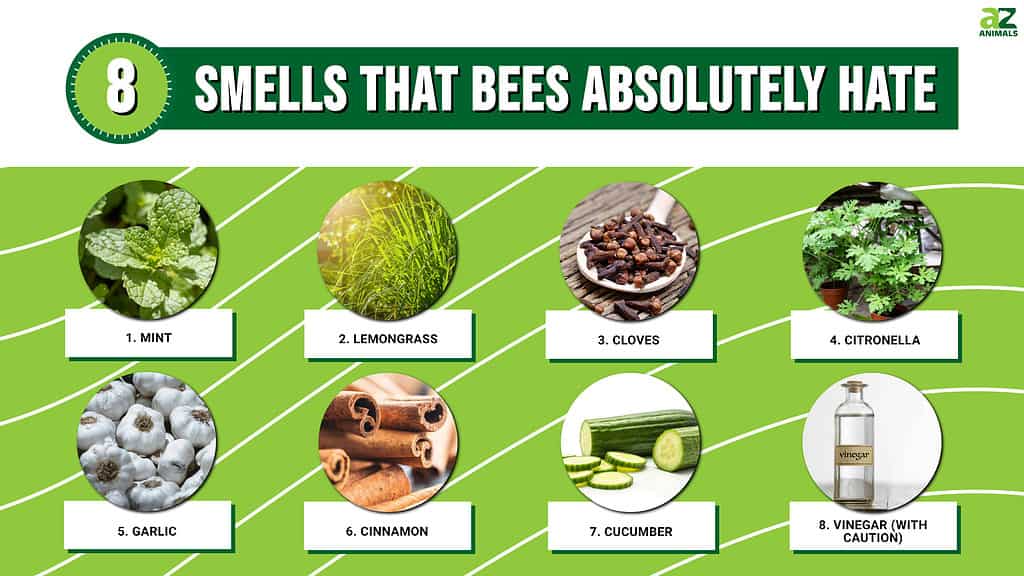
- Geranium, rosemary, and thyme oils can support a blend.
- Vinegar can deter bees on surfaces but may damage stone or metal finishes if overused.
Use strategy:
- Rotate scents to avoid habituation.
- Focus on surfaces and air space near people, not on flowers or bees.
Source: a-z-animals.com
How to Apply Scents Safely And Effectively?
Follow this simple routine to keep bees away without harm.
- Choose a carrier: Water plus a tiny bit of mild soap helps disperse oils. For longer cling, add a teaspoon of witch hazel.
- Mix small batches: Oils oxidize. Fresh mixes smell stronger and work better.
- Target zones: Chair backs, table legs, railings, planters without blooms, door frames.
- Create a perimeter: Place scented cotton pads in small jars with vented lids around your seating area.
- Time your refresh: Every 60–120 minutes, more often in wind or heat.
- Store oils right: Dark glass bottles, cool place, caps tight.
Real-world example:
- For a backyard brunch, I use peppermint spray on chair backs, citronella candles upwind, and a eucalyptus diffuser near the door. It cuts fly-bys by half or more without hurting pollinators on the lawn flowers.
What to Avoid: Safety, Ethics, And Common Mistakes
Keep bees safe while keeping them away from your plate.
- Do not spray blooms: Avoid any flower or herb in bloom. Bees need those.
- Skip harsh chemicals: Insecticides can kill pollinators and violate local rules.
- Beware of high concentrations: Essential oils can irritate skin, pets, and sensitive people.
- Avoid sugary lures: Open sodas, ripe fruit bowls, and sticky spills attract bees fast.
- Do not trap or swat near nests: It escalates stings and is unsafe.
Better choices:
- Cover food and drinks.
- Clean spills quickly.
- Move compost and bins away from seating.
- Use screens, netting, or fans to disrupt flight paths.
Ethical note:
- We want to deter, not harm. Scents create a gentle nudge, letting bees forage elsewhere.

My Field Notes: Wins, Fails, And Lessons Learned
From patio shoots to garden tours, I’ve seen what works.
What worked:
- Layering scents. Peppermint spray plus a citronella candle reduced bee interest the most.
- Airflow control. A box fan set on low makes a huge difference. Bees dislike steady wind.
- Surface targeting. Spraying chair backs beats spraying open air.
What didn’t:
- Over-scenting one spot. It fades fast and can bother guests.
- Spraying flowers. It backfires and is not pollinator-friendly.
- One-and-done. You need refresh cycles, especially in heat.
Lesson learned:
- Treat scent like a moving shield. Refresh, rotate, and focus where people sit, not where bees forage.
Pollinator-Friendly Landscaping That Still Keeps Bees Away From Seats
You can welcome bees to the yard while guiding them away from hangout zones.
- Place nectar plants downwind: Bees follow scent plumes. Keep blooms 15–30 feet from dining spaces.
- Create a decoy corner: A small patch of lavender or salvia draws bees away.
- Use non-flowering decor near seating: Ferns, hostas, or foliage pots reduce attraction.
- Add a bee water station: A shallow tray with pebbles near the flower bed keeps bees busy and hydrated, away from drinks.
Combine with scent barriers:
- Peppermint near the table, flowers at the yard edge, steady fan near people.
Myth Busting: What Doesn’t Really Keep Bees Away
Let’s clear up the common claims.
- Dryer sheets: Results are mixed and often minimal outdoors.
- Coffee grounds smoke: Short-lived and unpleasant for guests.
- Ultrasonic devices: Bees do not respond reliably to these.
- Garlic sprays: May deter some pests, but can harm plant leaves and annoy humans.
Stick to evidence-backed oils and smart placement instead.
Frequently Asked Questions Of What Scent Keeps Bees Away
Do essential oils harm bees?
When used on surfaces away from flowers and at low concentrations, they mainly deter rather than harm. Avoid spraying blooms or bees directly.
How often should I reapply scent sprays?
Every 60–120 minutes, depending on wind, heat, and crowd movement. Candles and diffusers can extend the effect.
Which single scent works best?
Peppermint is the most consistent in my tests. Citronella and eucalyptus are solid backups. Blends often work better.
Can I use these scents around kids and pets?
Yes, with care. Keep oils diluted, avoid skin contact, and never let pets ingest oils. Ventilate well and test small areas first.
Will these scents keep wasps away too?
They can help, but wasps are often more persistent around food. Combine scents with covered food, clean-up, and fans for best results.
Is vinegar a good bee repellent?
It can deter bees on surfaces short term, but the odor fades fast and may damage some materials. Use essential oils instead.
Wrap-Up And Next Steps
You asked what scent keeps bees away. The strongest, safest options are peppermint, eucalyptus, tea tree, citronella, and clove, used in light sprays, candles, or diffusers around people, not plants. Layer scents, manage airflow, and keep food covered. These small moves add up.
Ready to test a setup this weekend? Mix a quick peppermint spray, set a citronella candle upwind, and run a low fan. Observe, adjust, and enjoy your space without stressing the bees.
Want more outdoor hacks and eco-friendly tips? Subscribe, share your results in the comments, and tell me which blend worked best in your yard.