

The best lathes for woodworking pair strong motors with steady beds and smooth variable speed.
You may be turning pens in a spare room or roughing a bowl blank in the garage. Either way, a stable lathe with clean power and simple controls saves time and wood. I have run benchtop and mid-size lathes for years. I also help neighbors pick their first machines.
In this guide, I show what feels solid in hand, what cuts smooth, and what holds settings well. If you want the best lathes for woodworking in 2026, this review breaks down the top picks and why they matter in a real shop.
5 Best Lathes for Woodworking
VEVOR 14×40 Benchtop Wood Lathe, 0.5 HP

This VEVOR 14×40 benchtop wood lathe offers long spindle capacity and simple four-step speed control. The 0.5 HP motor is modest, but it handles chair spindles, table legs, and light turning with a steady hand.
I like that it ships with starter chisels and a faceplate, so a beginner can cut right away. The bed length stands out at this price, which is great for stair spindles and lamps.
Speed changes use a belt on stepped pulleys, with ranges up to 2425 RPM. That is fine for many tasks, though not as flexible as true variable speed. The included tools work for learning, but I suggest upgrading to better steel as you grow. If you need the best lathes for woodworking for long spindles on a tight budget, this one earns a look.
Pros:
- Generous 40-inch spindle capacity for legs and rails
- Four fixed speeds keep setup simple for new turners
- Includes chisels and faceplate to start turning fast
- Cast components help dampen vibration on a bench
- Affordable path into longer work without a floor lathe
Cons:
- 0.5 HP motor limits heavy stock removal
- Stepped pulley speeds lack fine control
- Included chisels are basic and dull fast
My Recommendation
Choose this VEVOR if you need long between-centers work and you plan simple spindle turning. It suits beginners who want room for growth in length, not diameter. It also fits small shops where a floor lathe will not fit. Among the best lathes for woodworking, it wins on reach, price, and simple setup.
| Best for | Why |
|---|---|
| Long spindles and furniture legs | 40-inch capacity supports rails, posts, and lamps |
| Beginners on a budget | Comes with basic tools and faceplate to start |
| Simple workflow | Four speeds cover common tasks with low fuss |
JET JWL-1221VS 12×21 Variable-Speed Lathe, 1 HP

The JET JWL-1221VS is a benchmark midi lathe for serious hobbyists and pros. The 1 HP motor, variable speed dial, and forward/reverse deliver smooth control. I like the refined ergonomics. The belt tension lever feels positive.
The bed is stiff and the banjo locks tight without flex. It is one of the best lathes for woodworking if you value precision and repeatable control. The control box is easy to read and the speed ramp-up protects belts.
JET support and parts availability add peace of mind for long-term use. This machine can run bowls within its swing and excels at pens, tool handles, and detailed spindles. If you want a lathe that “disappears” so you can focus on the cut, this one does it.
Pros:
- True variable speed with smooth dial control
- Forward and reverse for sanding and clean cuts
- Rigid cast iron bed minimizes vibration
- Ergonomic controls and reliable belt tension system
- Strong 1 HP motor for a midi form factor
Cons:
- Higher price than many benchtop models
- Limited swing for very large bowls
- Optional stand and accessories add to total cost
My Recommendation
Get the JWL-1221VS if you want top-tier control, smooth finishes, and low chatter. It is ideal for turners who make pens, pepper mills, and small bowls with consistent results. It is also good for small pro shops that sell work weekly. In my hands, it belongs on any list of the best lathes for woodworking for its balance of power and finesse.
| Best for | Why |
|---|---|
| Precision turning | Variable speed and reverse enable fine surface control |
| Daily shop use | Durable build and strong support network |
| Small bowls and spindle work | 1 HP motor and stiff bed deliver clean cuts |
VEVOR 12×18 Variable-Speed Wood Lathe, 1 HP

This VEVOR 12×18 lathe uses a 1 HP brushless DC motor and variable speed up to 3800 RPM. It is compact, yet it has the torque to rough small bowl blanks and turn dense woods.
I appreciate the cast iron bed, as it helps with vibration control on light benches. For the price, it gives new turners a lot of capability without a steep curve.
The speed dial is straightforward, and the machine responds fast to load. Fit and finish can vary, so plan time to adjust the tailstock and banjo. Once tuned, it cuts clean with sharp tools. If you want one of the best lathes for woodworking at a lower cost, this model hits a nice performance point.
Pros:
- 1 HP brushless motor offers quiet torque and low maintenance
- Variable speed up to 3800 RPM for pens and detail work
- Cast iron construction helps reduce chatter
- Compact footprint fits small shops and benches
- Strong value for beginners wanting real power
Cons:
- Quality control can require user tuning
- Speed dial may feel coarse for very fine adjustments
- Tool rest surface may need light honing
My Recommendation
Pick this VEVOR if you want a budget-friendly midi with real muscle. It suits DIY and weekend turners who need variable speed, decent swing, and compact size. It can be a first lathe that you will not outgrow fast. In my shop notes, it ranks as one of the best lathes for woodworking when cost and power need to meet in the middle.
| Best for | Why |
|---|---|
| Beginners who want torque | 1 HP brushless motor handles tougher cuts |
| Small shops and garages | Compact size with a stable cast iron bed |
| Versatile turning | Wide speed range suits pens to small bowls |
8×12 Benchtop Wood Lathe, 1/3 HP Variable-Speed
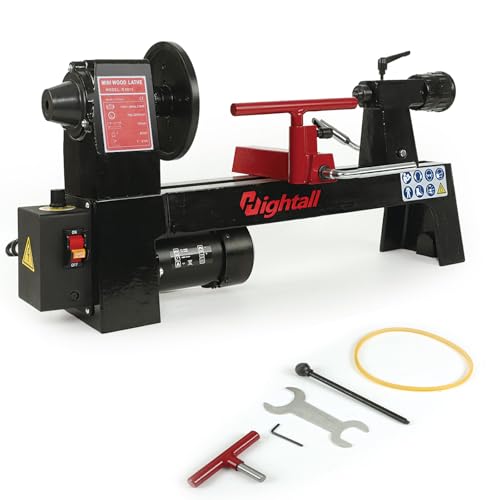
This compact 8×12 benchtop lathe is a light, budget tool for simple projects. The 1/3 HP motor and variable speed from about 750–3200 RPM suits pens, knobs, and small spindle work.
It is easy to carry and set on a sturdy table. For new turners who want to learn tool control, the small size feels less daunting. It will not handle heavy bowl blanks or aggressive cuts.
The minimum speed is high for rough, unbalanced stock. But for slim work and softwoods, it gets the job done with care. If you want an entry into the best lathes for woodworking at the lowest cost, this will let you start safely and grow your skills.
Pros:
- Very affordable gateway into woodturning
- Small footprint fits even tight work areas
- Simple variable speed for basic projects
- Good for pens, bottle stoppers, and ornaments
- Light weight makes it easy to store when not in use
Cons:
- Low power limits tough woods and bigger blanks
- Higher minimum RPM not ideal for roughing
- Components may need frequent re-checks and tune-ups
My Recommendation
Choose this 8×12 lathe if you want to practice safely on small projects. It is best for kids’ crafts, pen kits, and holiday gifts. It also works in shared spaces since it is quick to move. While it is not a long-term “forever” tool, it gets you turning. In lists of the best lathes for woodworking on a tight budget, this one earns a practical spot.
| Best for | Why |
|---|---|
| New turners testing the hobby | Low cost and low risk to start learning |
| Pens and small ornaments | Speed range suits thin stock and light cuts |
| Tiny workshops | Compact and easy to store or move |
JET JWL-1015VS 10×15 Variable-Speed Lathe, 1/2 HP
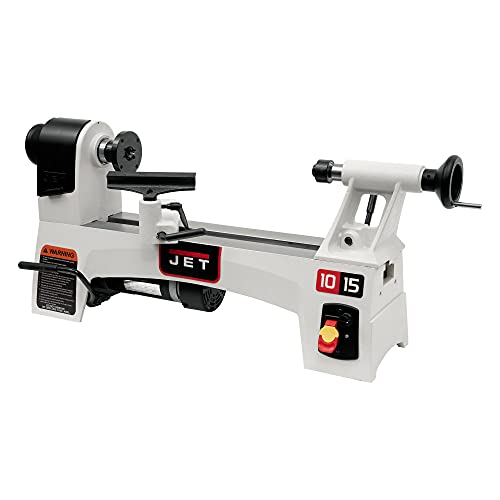
The JET JWL-1015VS is a refined entry in the midi class with 1/2 HP and variable speed ranges. It has a compact footprint, yet the build quality feels premium. The cast iron bed and stable base keep vibration low at sensible speeds.
I like this lathe for pen makers and hobbyists who want JET reliability without the higher cost of larger models. Speed changes are smooth, and the machine holds settings without drift.
It accepts bed extensions if you want to grow into longer work. For small bowls and detailed spindle work, it cuts clean with sharp tools. Among the best lathes for woodworking, this is a compact “buy once, cry once” choice.
Pros:
- Trusted brand support and durable parts
- Stable cast iron bed limits chatter
- Variable speed ranges suit many small projects
- Expandable with bed extensions
- Compact size but pro feel in controls
Cons:
- 1/2 HP limits heavy cuts in hard woods
- Smaller swing restricts bowl size
- Higher price than generic models
My Recommendation
Consider this JET if you want a reliable, tight machine for small work. It is ideal for pen turners, craft sellers, and anyone who values stability and brand support. It also fits a permanent bench space without crowding other tools. As a compact pick in the best lathes for woodworking, it balances smooth control and long-term value.
| Best for | Why |
|---|---|
| Pen makers and small crafts | Fine speed control and low vibration |
| Quality-conscious beginners | JET support and parts availability |
| Space-limited shops | Small footprint with pro-grade feel |
How I Judged the Best Lathes for Woodworking?
When I judge lathes, I focus on stability, speed control, and useful power. A stiff bed and locked banjo matter more than raw horsepower. If a tool rest slips, your cut fails. Variable speed also matters. It keeps cuts smooth, reduces catches, and improves sanding results.
I also look at setup and support. Good manuals, clear controls, and common parts save hours later. A lathe should grow with you. Bed extensions, better tool rests, and chucks keep a machine useful for years. The best lathes for woodworking make learning fun and fast.
Buying Guide: Find Your Perfect Lathe
As you shop, match the lathe to your projects. Pens and small spindles need little power, but steady speed and a smooth tool rest. Small bowls need more torque and lower minimum RPM. Bigger bowls demand a floor lathe. For most, a midi size hits the sweet spot.
Check the swing (diameter over the bed) and the distance between centers. Look for standard spindle threads and tapers to use common chucks. Evaluate the weight and the base you have. If you bench-mount, add mass below the lathe for stability. The best lathes for woodworking feel planted, even when roughing.
Think about noise and dust. Brushless motors hum nicely and last. Place your lathe near dust collection or use a hood. Sanding at the lathe can fill the air fast. Good PPE and a face shield are not optional. Safety belongs in every turning plan.
Which Size Fits Your Work?
Benchtop mini (8–10 inch swing): Best for pens, stoppers, and tiny bowls. They are portable and cheap, but limited. Midi (10–12 inch swing): The sweet spot for most makers. Strong enough for small bowls and daily use. Floor lathes (12–20+ inch swing): Heavy-duty and pricey, but unmatched for large work.
The five picks here cover mini and midi sizes. These are the best lathes for woodworking in compact shops. They are easy to place, safer for learners, and still powerful for craft sales. Start with what you will actually turn, not what you hope to someday.
Setup Tips for a Smoother First Cut
Put the lathe on a rigid bench and shim it level. Tighten every bolt after the first hour of use. Wax the bed ways so the banjo slides smoothly. Hone the tool rest edge if it feels rough. Little checks here pay off when wood meets steel.
Balance your blank, set the rest close, and spin by hand before you start the motor. Begin at a low speed. Move up only when it runs true. Keep tools sharp. A sharp gouge is safer and kinder to any machine. The best lathes for woodworking reward good habits with better cuts.
Accessories That Lift Every Lathe
Buy a decent 4-jaw scroll chuck. It holds bowls and spigots without fuss. Get a live center that spins true. Upgrade tool rests as your style grows. A 1-inch wide rest feels great for many cuts. Add a bed extension only when your work needs it.
Keep a set of HSS tools or carbide tools in reach. Pick one system and learn it well. I keep a slow-speed grinder for HSS and a diamond card for carbide. With sharp tools and a steady lathe, even simple woods turn into smooth, clean shapes.
FAQs Of best lathes for woodworking
What size lathe should I buy first?
Most beginners do best with a midi lathe. A 10–12 inch swing and 15–21 inch length covers pens, handles, and small bowls. It is the best balance of size and power for most homes.
Is variable speed worth the extra cost?
Yes. Variable speed makes cuts safer and sanding smoother. You can match RPM to wood, tool, and balance. It is a must in the best lathes for woodworking.
How much horsepower do I need?
For small projects, 1/3 to 1/2 HP is fine. For bowls and dense woods, 3/4 to 1 HP feels better. Choose power for the largest project you plan to turn often.
Can I use a benchtop lathe for bowls?
Yes, within the swing limit and with care. Keep RPM low for rough blanks. Use a good chuck and a strong banjo lock. A midi lathe handles small bowls well.
What safety gear should I wear?
Wear a face shield, hearing protection, and a dust mask or respirator. Tie back hair and avoid loose sleeves. Safety helps you enjoy the best lathes for woodworking longer.
Final Verdict: Which Should You Buy?
If you want pro-level control and smooth results, pick the JET JWL-1221VS. It is the most balanced and refined of these picks among the best lathes for woodworking.
On a tight budget, the VEVOR 12×18 gives real power and variable speed. For long spindles at low cost, the VEVOR 14×40 shines. Choose the size that fits your work, and you will own one of the best lathes for woodworking for years.