

The best coping saws for woodworking pair rigid frames with precise, high-TPI blades.
You can’t fake a clean cope. Whether you’re fitting crown in an old house or shaping tight curves on a jewelry box lid, the wrong saw will fight you at every turn. I’ve been there, forcing a flimsy frame through maple while the blade chatters.
The right coping saw solves that. It holds tension, tracks like a rail, and gives you the control to split a pencil line. In this guide, I break down the best coping saws for woodworking today, tested and compared on real trim, joinery, and scroll detail so you can buy with confidence.
5 Best Coping Saws for Woodworking
KAKURI Coping Saw + 5 Blade Set
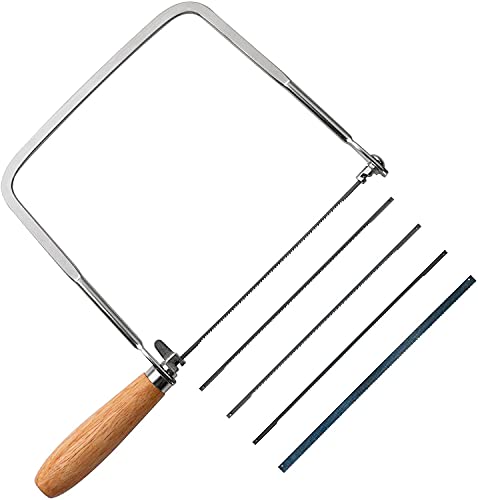
This KAKURI set brings a refined, Japanese-style approach to a classic tool. The frame is sturdy and well finished, which matters when you’re tensioning a thin blade.
The handle feels secure in the hand and allows easy wrist turns. Five blades are included for wood, plastics, and soft metal, so you can work across materials without hunting for extras.
On detail cuts, the saw tracks clean and true. I noticed very little wandering when following a scribed cope line on pine and poplar. The tension hardware is smooth, which helps keep the blade straight over longer strokes. If you value a tool that feels tuned from the first cut, this set hits that note.
Pros:
- Rigid frame maintains high blade tension for accurate cuts
- Five useful blades for wood, plastic, and soft metal
- Smooth tensioning hardware with predictable feel
- Comfortable handle supports fine wrist control
- Clean, narrow kerf for tight-fitting cope joints
- Good out-of-box performance with minimal setup
Cons:
- Price is higher than basic options
- Metal-cutting blade is slow on thicker stock
- Tension knob can feel small when gloved
My Recommendation
If you’re chasing precision, this is a strong pick among the best coping saws for woodworking. The KAKURI’s frame stiffness and hardware give you control on tight profiles. I recommend it for trim carpenters, cabinetmakers, and anyone who values a tuned feel.
The included blade set also suits mixed-material hobby work like model making and light metal tasks. As a complete kit that’s ready to go, it has clear value if you want less guesswork and more clean fits.
| Best for | Why |
|---|---|
| Precision trim and crown coping | Rigid frame and narrow kerf track scribe lines well |
| Mixed-material hobby projects | Includes blades for wood, plastic, and soft metal |
| Users wanting a ready-to-work kit | Quality frame plus five blades saves time and choices |
IRWIN ProTouch Coping Saw (2014400)

The IRWIN ProTouch is a shop staple for good reason. It balances price, comfort, and performance for daily trim and DIY work. The ProTouch handle gives a secure, cushioned grip that reduces hand fatigue on longer sessions.
Blade changes are quick, and the frame holds tension well enough for most profiles and radii. On test cuts, it handled pine and MDF moldings without chatter.
The stock blade is serviceable for general use, and you can swap in higher-TPI blades for cleaner scroll work. Frame rigidity is solid for the cost and resists twist on tighter turns. For many users, this is the right blend of value and trust.
Pros:
- Excellent price-to-performance ratio
- Comfortable ProTouch handle reduces fatigue
- Quick blade change and easy rotation
- Sturdy frame for consistent tension
- Compatible with widely available 6.5-inch blades
- Reliable pick for jobsite and home shops
Cons:
- Stock blade is average; upgrades help with fine cuts
- Finish can scuff with heavy site use
- Tension knob is small for gloved hands
My Recommendation
If you want one of the best coping saws for woodworking on a budget, start here. The IRWIN ProTouch covers most tasks without fuss. It’s ideal for DIYers, trim carpenters who need spares, and anyone building a first serious tool kit. Upgrade the blade, and you can push it into finer work. Availability is strong, so replacements and blades are easy to source in 2026.
| Best for | Why |
|---|---|
| Budget-conscious buyers | Low cost with reliable frame and grip |
| General trim and casing | Comfort handle and stable tension for daily tasks |
| First coping saw purchase | Easy to learn, easy to maintain, common blades |
JORGENSEN Pro Coping Saw + Extra Blades
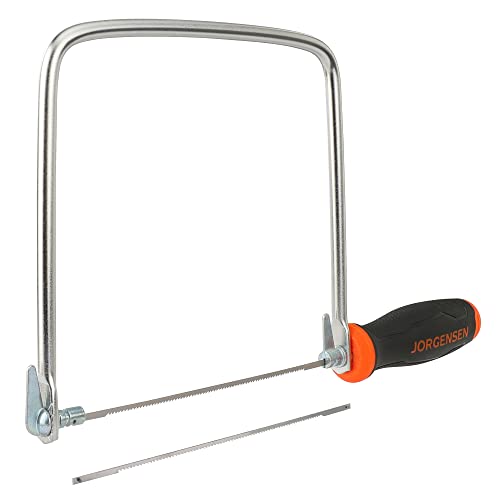
The JORGENSEN Pro Coping Saw ships with two extra 6.5-inch blades, which is handy if you plan a lot of cuts. The frame feels robust and resists flex on tight arcs. It is rated for wood, plastic, rubber, and soft metal, so it adapts to shop and site needs.
Balance is good, and the handle lets you steer with fingertip control. In use, the saw tracked well on back-cut cope joints and inside curves.
The blade swap process is straightforward, and rotation lets you keep the frame clear of obstacles. The included blades are better than basic, but you can still upgrade for ultra-fine scroll work. Overall, it’s a workhorse with a thoughtful starter pack.
Pros:
- Includes extra blades to keep you cutting
- Strong frame with stable tension
- Good control and balance in the hand
- Works across wood, plastics, and soft metals
- Easy blade rotation for awkward angles
- Dependable for repeated, daily use
Cons:
- Slightly heavier than some competitors
- Packed simply; no storage sleeve
- Not meant for hardened metals
My Recommendation
For consistent jobsite tasks, this lands among the best coping saws for woodworking. The JORGENSEN’s extra blades and stout frame make it a reliable daily driver. It suits pros who need repeatable results and hobbyists who prefer a ready set.
If you cut more than just wood, the multi-material rating adds value. It’s easy to recommend when you want a long-term keeper without the premium price tier.
| Best for | Why |
|---|---|
| Daily trim carpentry | Stable frame and smooth tracking on repeated cuts |
| Mixed-material projects | Handles plastic, rubber, and soft metal with ease |
| Value-seeking buyers | Extra blades included reduce add-on costs |
Mutt Tools 6.5-Inch Coping Saw + 3 Blades
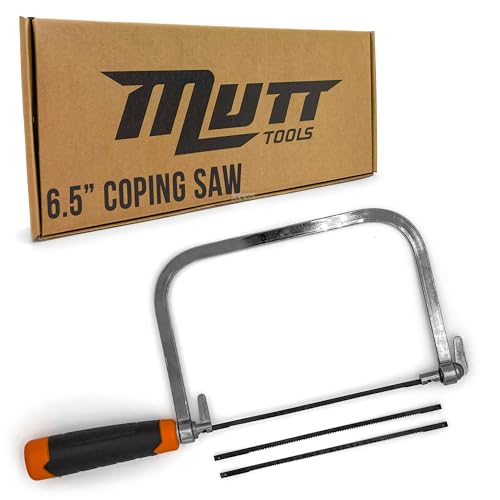
Mutt Tools focuses on precise scroll work with this 6.5-inch coping saw. The frame is firm and holds tension at higher levels without bowing. Three carbon steel blades come in the set, great for clean cuts in soft and hardwoods.
Kerfs are narrow, which helps you steer a tight line and reduce sanding later. On intricate s-curves and dovetail waste removal, it stayed controllable and predictable.
Blade rotation is quick, so you can keep the handle square even around corners. The overall value is strong for detail work, and the frame gives a pro feel. For fine woodworking tasks, this one punches above its price.
Pros:
- Rigid frame supports very tight radius cuts
- Three sharp carbon steel blades included
- Narrow kerf tracks pencil lines with less cleanup
- Easy blade rotation for complex paths
- Good price for specialty detail performance
- Solid choice for dovetails and scroll accents
Cons:
- Carbon steel needs oiling to resist rust
- Included blades focus on wood; few metal options
- Brand support is newer and less known
My Recommendation
If your work leans into fine detail, this belongs on the best coping saws for woodworking short list. The Mutt Tools frame and blade combo excels on tight curves in hardwoods.
I like it for luthiers, box makers, and hobbyists who want crisp lines without power tools. Keep the blades wiped and oiled and you’ll get long life. It’s a value buy that performs like a pricier tool in the right hands.
| Best for | Why |
|---|---|
| Fine scroll work in hardwood | Rigid frame and sharp blades control tiny radii |
| Small workshops | Low cost, high control, minimal setup |
| Students learning hand-cut curves | Forgiving handling with clear feedback |
TOOLCOOL Coping Saw, Alloy Frame + HSS Blades

This TOOLCOOL coping saw stands out with an aluminum alloy frame and a hardwood hex handle. High-speed steel blades in 15T, 18T, and 24T give you options across wood, plastics, and soft metals.
The frame is light yet firm, which reduces fatigue on long sessions. The hex handle offers grip and torque for clean direction changes.
In testing across PVC, poplar, and thin aluminum, the HSS blades stayed keen. The multi-TPI set helps you dial in speed vs. finish, which is useful on varied materials. Rotation is smooth, and the frame resists racking under higher tension. If you often cut more than wood, this is a smart, flexible kit.
Pros:
- Lightweight alloy frame with strong stiffness
- HSS blades keep edges longer, even on abrasive plastics
- Three TPI choices for speed or finish control
- Hex hardwood handle improves leverage and grip
- Good for plastics and soft metals as well as wood
- Efficient for long, repetitive cuts
Cons:
- Stiffer feel reduces some tactile feedback
- Check blade compatibility before bulk reorders
- Vibration can rise on very aggressive strokes
My Recommendation
Do you often swap between wood, PVC, and soft metal? Then this ranks among the best coping saws for woodworking and multi-material shops. The alloy frame and HSS blades deliver long life and steady cuts.
I recommend it to makers, installers, and anyone who values low-maintenance edges. Blade variety is a clear win for site work and repair jobs. It’s a practical upgrade if you push beyond basic trim tasks.
| Best for | Why |
|---|---|
| Soft metals and plastics | HSS blades and TPI range handle tough materials |
| Long cutting sessions | Light frame and hex handle reduce fatigue |
| On-site installers | Durable, adaptable kit needs fewer blade changes |
FAQs Of best coping saws for woodworking
What should I look for in a coping saw?
Focus on a rigid frame, smooth tensioning, and a comfortable handle. Make sure it accepts common 6.5-inch blades. Choose higher TPI for cleaner cuts in hardwoods and trim.
Which blade TPI is best for wood, plastic, and metal?
Use 18–24 TPI for hardwoods and trim. Go lower TPI for faster cuts in softwood. For plastic and soft metal, pick fine HSS blades (20+ TPI) to reduce snag and burr.
How do I stop blades from breaking?
Set proper tension. Let the blade do the work. Keep strokes smooth and aligned with the cut. Avoid twisting the frame mid-stroke.
Is a coping saw better than a jigsaw for tight curves?
For very tight radii and back-cut coping, yes. A coping saw turns inside small spaces with high control. It also preserves delicate profiles.
Can left-handed users use these saws?
Yes. You can rotate the blade to suit your stance. Pick a handle that feels natural in your grip.
Final Verdict: Which Should You Buy?
If you want the most refined cut, choose KAKURI. If value matters most, IRWIN ProTouch is the safe bet. For daily jobsite reliability with spares, pick JORGENSEN. For fine scroll detail, go Mutt Tools. For multi-material strength, TOOLCOOL leads.
All five stand among the best coping saws for woodworking in 2026. Match the frame feel and blade set to your work, and your joints will show it.