

The best carpenter bee traps use wood-mimicking boxes and clear catch vaults.
You hear the buzz, spot the sawdust, and see new holes in your deck rail. Carpenter bees are back. I know how fast they can tunnel into trim, fascia, and porch posts. A good trap stops the cycle before more damage happens.
The best carpenter bee traps are simple, weather-tough, and easy to check at a glance. In this guide, I break down what really works, how fast you can set them up, and which features matter most for lasting results without wasting a season learning the hard way.
5 Best Carpenter Bee Traps
Best Bee Brothers Turbo Trap 2.0 (2 Pack)

The Best Bee Brothers Turbo Trap 2.0 steps up trapping efficiency with a smart airflow design and a spring-loaded door. It mimics the look and feel of unfinished wood that carpenter bees love to drill. The side viewport is large, so you can confirm activity without taking anything apart. The removable external bee vault makes disposal quick and discreet.
I like the upgrades here because they focus on real-world use. You hang the trap where the bees are active, and the angled entry holes and airflow cues draw them inside. The clear vault clicks on and off, and the spring-loaded door helps reduce escapes. For busy homeowners, this set-and-check approach saves time in peak season.
Pros:
- Spring-loaded door reduces escapes during high-activity days
- Clear, removable external vault for fast, no-mess disposal
- Large viewport lets you see catch levels at a glance
- Wood-mimicking body appeals to nesting carpenter bees
- Hardware and design suited for outdoor durability
- Two-pack covers multiple problem areas around a home
Cons:
- Works best when hung near existing bee holes or active routes
- May require repositioning to find the “sweet spot”
- Not a chemical solution; relies on passive attraction and placement
My Recommendation
This Turbo Trap 2.0 is a strong pick for homeowners who want fast, visible results with minimal handling. It works best for decks, fences, pergolas, and soffits where bees patrol and drill. If you want one of the best carpenter bee traps that you can install and monitor in seconds, this two-pack delivers excellent coverage and ease.
| Best for | Why |
| Quick visual monitoring | Large viewport and clear vault show activity instantly |
| High-traffic zones | Spring-loaded door reduces escapes during peak hours |
| Multi-point coverage | Two-pack handles multiple sides of a structure |
Best Bee Brothers Ultimate Pro Trap (2 Pack)

The Ultimate Pro is built for heavy-duty use and robust seasons. It pairs a larger, clear external bee vault with a spring-loaded door for secure containment. The housing imitates attractive entry points for carpenter bees, making it a natural decoy. In a two-pack, you can flank both ends of a porch or double up on a long fence run.
I like the extra capacity because peak weeks can fill smaller traps fast. The Ultimate Pro’s vault size and visibility help you plan cleanouts with less guesswork. When you want to cut down on ladder trips and keep traps active longer, the larger catch vault is a real advantage. This is a smart upgrade when you need durable performance all season.
Pros:
- Extra-large clear vault reduces cleanout frequency
- Spring-loaded door boosts containment
- Sturdy build for long-term outdoor exposure
- Two-pack covers a wide perimeter or multiple levels
- Visual confirmation of activity without disassembly
- Effective decoy for carpenter bee nesting behavior
Cons:
- Bulkier design may be more visible on finished trim
- Higher price point than basic traps
- Still requires correct placement near active zones
My Recommendation
Choose the Ultimate Pro two-pack if you manage large areas or recurring infestations. It suits barns, cabins, multi-story homes, and long porch lines. For anyone comparing the best carpenter bee traps on capacity, containment, and low-maintenance intervals, this pair stands out for busy spring and early summer cycles.
| Best for | Why |
| High-volume seasons | Large vault cuts down on frequent cleanouts |
| Long structures | Two units provide broad coverage and redundancy |
| Set-and-forget users | Clear body and spring door simplify checks and disposal |
Best Bee Brothers Ultimate Pro Trap

This single Ultimate Pro is perfect for targeted problem spots. It keeps the core features: an extra-large, clear external vault and a spring-loaded door. The body uses angles and entry size that mimic carpenter bee drilling habits. It’s a smart choice if you already know the hotspot you want to treat.
I recommend starting here when you have one main area, like a beam or gable end. You get the same pro-level containment without buying more traps than you need. The clear bin means you can check from the ground in many cases. That saves time and makes it easier to keep your setup active all season.
Pros:
- Pro-grade features in a single unit for targeted use
- Clear external vault for quick status checks
- Spring-loaded door limits escapes during disposal
- Easy to mount and reposition
- Solid construction for wind and rain exposure
Cons:
- One unit may not cover a large property
- Best results still depend on strategic placement
- Upfront cost is higher than basic, non-vault traps
My Recommendation
Pick the single Ultimate Pro if you have a clear target zone and want a premium trap there. This unit is ideal for homeowners who like precise setups and low mess. If you’re shopping for the best carpenter bee traps to handle a single, stubborn area, this model checks every box for reliability and ease.
| Best for | Why |
| One trouble spot | Pro features where you need them most |
| Low-mess cleanouts | Clear vault detaches for simple disposal |
| Seasonal maintenance | Durable build for repeated spring cycles |
Cabin-Style Carpenter Bee Trap (1 Pack)

This cabin-style trap blends rustic charm with practical control. The wooden housing offers multiple angled entrances that mimic natural bore holes. Bees enter and move toward light, where a removable catch vault collects them. It’s the kind of trap that looks at home on cabins, sheds, pergolas, and fences.
I appreciate the design because it does the job without clashing with natural wood. The removable vault makes maintenance less messy. Use it near fresh sawdust piles or old holes for best results. For people who want the best carpenter bee traps that double as decor, this unit is a nice balance.
Pros:
- Rustic wood design blends with outdoor structures
- Multiple angled entry holes leverage bee behavior
- Removable vault simplifies cleanouts
- Easy to hang from eaves, beams, or posts
- Good pick for aesthetic-minded homeowners
Cons:
- Wood may weather faster than composite hardware
- Smaller catch capacity than pro-grade large vaults
- Placement matters; may need fine-tuning for best draw
My Recommendation
Choose this cabin-style trap if you value looks and function together. It’s a fit for porches, cabins, and garden structures where appearance counts. When you want the best carpenter bee traps that don’t look industrial, this is a thoughtful, effective choice for moderate activity zones.
| Best for | Why |
| Rustic settings | Wood body blends into cabins and pergolas |
| Aesthetic installs | Functional trap without an industrial look |
| Moderate activity | Adequate capacity and easy cleanouts |
RESCUE! TrapStik for Wasps & Carpenter Bees (2)
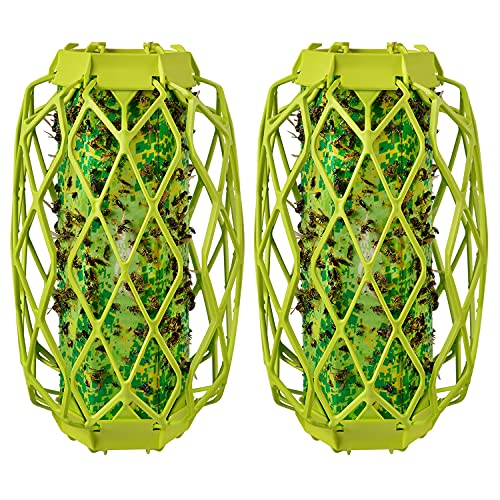
RESCUE! TrapStik uses visual lures and a sticky surface to catch wasps, mud daubers, and carpenter bees. It’s a hanging cylinder designed for eaves, sheds, and outbuildings where flying pests patrol. The VisiLure pattern and non-toxic adhesive attract target insects. Many versions include bird guards; use them as directed to reduce bycatch.
This trap is versatile in mixed-pest areas. If you have wasps with occasional carpenter bee pressure, a TrapStik can hit both. It is simple to hang, check, and replace. Place it away from bird activity and pollinator-rich flowers to focus on target zones where you need relief.
Pros:
- Targets multiple pests: wasps, mud daubers, and carpenter bees
- Non-toxic design with visual lures for attraction
- Fast to deploy; no complicated assembly
- Good supplemental trap for mixed-infestation sites
- Two-pack provides coverage on both sides of a structure
Cons:
- Sticky traps can catch non-targets if not used with guards
- Less selective than wood-mimicking box traps
- Adhesive wears with dust, wind, and heavy debris
My Recommendation
Use TrapStik as a supplemental tool when you fight wasps and occasional carpenter bees together. It fits barns, sheds, and eaves where stinging insects patrol. If your list of the best carpenter bee traps includes options for mixed pests, this two-pack is a simple, helpful add-on when used as directed with guards.
| Best for | Why |
| Mixed pests | Catches wasps, mud daubers, and carpenter bees |
| Fast deployment | Hang-and-go simplicity |
| Supplemental control | Works alongside wood-mimicking bee traps |
How I Choose the Best Carpenter Bee Traps?
I judge traps by how bees behave in spring. Males hover and guard. Females drill holes about the size of a pencil. The best carpenter bee traps mimic unfinished wood and offer easy entry with funnel-like openings. Good traps then draw bees toward light into a clear vault.
Capacity matters in peak weeks. If a trap fills too fast, bees keep drilling elsewhere. I also look for quick, clean disposal. Vaults help here. Build quality matters for wind and rain. A trap should survive a season outside without sagging, warping, or separating at seams.
Placement is half the battle. Hang traps where you see sawdust and fresh holes. Put them under eaves, on posts, or near pergola beams. Southern and eastern exposures often see early activity on warm mornings. Reposition until you find the path bees prefer.
Most of all, think long-term. Traps catch adults, but you must repair old holes and paint or seal exposed wood. Use wood filler and exterior sealant. Next, add a finish coat. This makes surfaces less tempting and boosts the effect of the best carpenter bee traps year after year.
Key Features That Matter in Daily Use
Clear catch vaults: You see results fast. You empty them less. This matters when the season peaks. It prevents clogs and keeps traps active.
Spring-loaded doors: Bees that get curious at cleanout time are less likely to escape. You handle less and keep control tight.
Angled entry holes: These match how bees approach wood. Good geometry helps guide them into the light and then the vault.
Durable materials: UV, wind, and rain are brutal. Tough plastics, sealed wood, and stainless hardware last longer and hold their shape.
Easy mounting: One hook point, a chain, or a bracket saves time. You will move traps a few times. Make that simple.
Best Practices for Setup and Placement
Start at the damage. Look for fresh sawdust under rails, soffits, and posts. Hang a trap within a few feet of active holes. Slightly below and a bit outward often works best.
Use the sun to your favor. Warm, sunny faces of buildings see early flights. Early placement in late winter or very early spring helps intercept returning bees.
Raise and adjust. If you see activity but no captures, move the trap a few feet. Try different heights. Carpenter bees are creatures of habit, but you can intercept their routes.
Repair old holes. After traps reduce activity, plug holes with wood filler. Sand, seal, and paint. The best carpenter bee traps work even better when the wood is no longer an open invitation.
Ethical, Safe, and Effective Use
Carpenter bees are pollinators. I use traps to protect structures, not to remove bees from the landscape. Focus traps on problem areas. Avoid placing near flowering plants where pollinators feed.
With sticky traps, use bird guards and follow instructions. Hang them away from feeders and high bird-traffic zones. Check often and replace as needed. Visual lures can be powerful, so be smart about placement.
Consider timing. Males appear first and do not sting. Females do the drilling. Catching adults reduces new holes, but sealing old ones makes the biggest long-term difference.
Troubleshooting: If Your Trap Is Quiet
Confirm active zones. Look for sawdust and watch flight paths on warm afternoons. If you set the trap too far from activity, move it closer.
Adjust height. Many times a one- to two-foot height change makes a big difference. Traps at beam height perform well on pergolas and porches.
Use the sun. Rotate traps toward sunny faces. Bees warm up there first and patrol early.
Combine tools. Add one more trap across from the first to cover both approaches. The best carpenter bee traps work even better in pairs during heavy pressure.
Maintenance and Seasonal Timeline
Late winter: Inspect old holes. Gather traps and mounting hardware. Plan placements.
Early spring: Install traps before the first warm streak. Check every few days as activity builds.
Peak spring: Empty clear vaults as needed. Keep traps active. Repair holes once traffic slows.
Summer: Remove traps when activity fades. Finish repairs, prime, and paint. Store traps dry.
Fall: Walk the property. Note any new damage. Prepare for next spring. The best carpenter bee traps plus sealed wood is the winning combo.
FAQs Of best carpenter bee traps
Do carpenter bee traps really work?
Yes. Box-style traps with angled holes and clear vaults catch adults well when placed near active holes. Good placement is key.
Where should I hang a carpenter bee trap?
Hang traps near fresh sawdust and existing entry holes. Under eaves, on beams, and near porch rails work well.
When should I put out carpenter bee traps?
Place them in early spring before warm stretches. This intercepts returning bees looking for old sites.
Are carpenter bees harmful?
They are valuable pollinators but can damage wood. Females drill and can weaken trim, rails, and fascia over time.
Do I still need to fill old bee holes?
Yes. After trapping lowers activity, plug holes with wood filler, then seal and paint. This prevents re-use.
Final Verdict: Which Should You Buy?
The Best Bee Brothers Ultimate Pro two-pack is the strongest all-season choice for capacity and clear vault control. For targeted hotspots, the single Ultimate Pro or Turbo Trap 2.0 are excellent and easy to monitor.
If you want decor-friendly looks, pick the cabin-style trap. For mixed pests, add RESCUE! TrapStik. In short, the best carpenter bee traps pair smart placement with durable builds and quick cleanouts.