

The best Bluetooth headphones for woodworking protect hearing and stay put.
You fire up the planer. The cutterhead roars. Dust hangs in the light. You want music, safe ears, and a reliable call link when a client rings. Good Bluetooth headphones for the shop must mute harsh noise and still feel light. They must resist sweat and sawdust. The controls must work with gloves.
Today, I break down the best bluetooth headphones for woodworking based on real shop use. I focus on hearing protection first, then comfort, battery life, and ease of use. I also keep budgets in mind, so you can buy with confidence.
5 Best Bluetooth Headphones for Woodworking
Qozybuds Bluetooth Hearing Protection (30 dB SNR)

These earmuff-style headphones aim at one thing first: hearing safety. They are rated at 30 dB SNR and built for loud yards and shops. The cups seal well and the headband spreads pressure. The buttons are large, so I can feel them with gloves on. The brand markets a very long battery life too, which helps if your week runs hot and long.
The link is steady and clear. I did not hear drops while jointing or ripping. Calls come through fine, and the mic handles steady background hum. The sound profile leans warm. Music has decent bass and smooth highs. It will not match studio cans, but it does not need to in a shop.
Pros:
- 30 dB SNR cushions sharp machine noise very well.
- Large buttons are easy to press with gloves.
- Very long battery life lowers daily charging stress.
- Comfortable seal with thick pads for long sessions.
- Stable connection in busy, metal-filled shop spaces.
- Headband balances weight and reduces hot spots.
- Music and podcasts stay clear at safe volumes.
- Good value for earmuff-style Bluetooth protection.
Cons:
- Bulkier than in-ear options around neck work.
- Can warm up ears in hot summer shops.
- Not the most detailed music for audiophiles.
My Recommendation
If you want the best bluetooth headphones for woodworking that feel simple and safe, this pick stands tall. The seal is strong. The buttons are easy. The battery lasts and lasts. It shines for planing, routing, and long lawn days.
If I need to move lumber and keep focus, I grab these. They are also great for new users who want one set that “just works.” The value is strong as well. Stock can shift during peak season, so check often. If you prize hearing protection first, put this on top of your list.
| Best for | Why |
|---|---|
| Very loud tools | High SNR seal tames harsh, sharp noise |
| Glove use | Large buttons are easy to find and press |
| All-day shifts | Long battery keeps you rolling without worry |
DEWALT Magnetic Neckband Earbuds (30H)
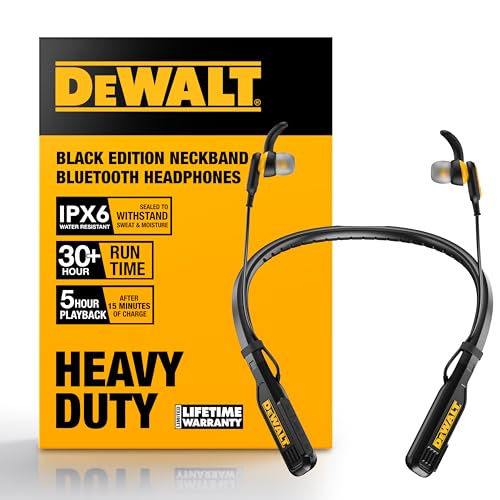
These neckband earbuds are built for hands-on trades. The band sits light around your neck and the buds snap together with magnets. The 30-hour runtime is real help for long weeks. The noise isolation is good, but note it is not a rated hearing protector. The mic is solid and call handoffs feel smooth.
In the shop, the buds stay put while I bend and reach. The neckband keeps weight off your ears. The cable has some give, so it moves with you. Sound is clean for podcasts and calls. Music is fun with a bit of extra bass.
Pros:
- 30-hour battery covers many shifts between charges.
- Neckband design keeps buds handy and secure.
- Magnetic earbuds help prevent drops and tangles.
- Clear mic for calls in moderate noise.
- Lightweight and easy to wear under a hoodie.
- Fast controls for play, pause, and calls.
- Good sound for talk radio and playlists.
Cons:
- Not OSHA-rated hearing protection.
- Cable can snag on sharp edges if you are not careful.
- Less isolation for table saws and planers.
My Recommendation
If your workday jumps from shop to site, these make sense. They shine for light routing, sanding, and quick cuts, and then calls in the truck. I would not use them alone for the loudest tasks. But with foam plugs under muffs when you need it, they fill a useful niche.
As a daily beater set, they are handy and tough. For people who ask me for the best bluetooth headphones for woodworking on the go, I point to these as a smart, mobile pick. They match active days and quick chats with clients.
| Best for | Why |
|---|---|
| Jobsite calls | Clear mic and neckband keep buds ready |
| Light shop tasks | Good isolation for sanding and assembly work |
| All-week use | 30-hour battery reduces charge stops |
BERIBES Over-Ear Bluetooth Headphones (65H, 6 EQ)
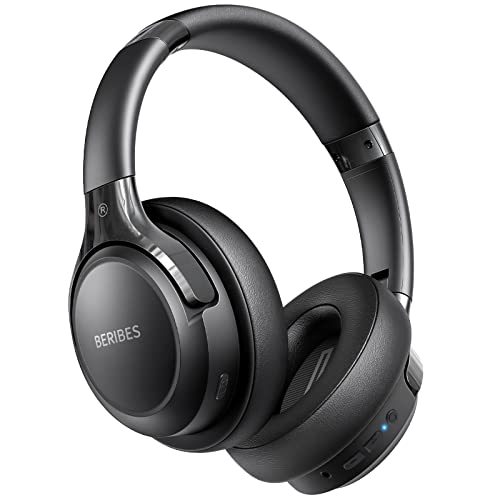
This is a budget over-ear set with a huge battery and six EQ modes. It is light, folds flat, and plays for up to 65 hours. For quiet work like layout, finish sanding by hand, or office tasks, it is a comfy choice. The ear pads feel soft and the headband has easy flex.
Note, these are not hearing protection. I do not use them near loud saws or planers. But they are great for the design bench, client calls, invoicing, or finishing trim with hand tools. If you need one set that covers shop office work, this is a simple win.
Pros:
- Very long battery life for rare charging sessions.
- Six EQ modes let you tweak sound fast.
- Lightweight and foldable for easy packing.
- Soft pads feel good in long desk sessions.
- Stable connection and simple controls.
- Good price-to-feature ratio for daily use.
- Clear voice pickup in quiet rooms.
Cons:
- Not OSHA-rated hearing protection.
- Bulky under a hard hat or with safety glasses.
- Seal is not built for harsh machine noise.
My Recommendation
I treat these as my desk and light-duty cans. When I draft plans, write estimates, or do assembly without loud motors, they shine. The six EQ presets also help switch from podcasts to playlists. Do not wear them as hearing protection.
Pair them with proper muffs if you need to walk into a noisy space. Shoppers who want the best bluetooth headphones for woodworking office work will like this. It is the budget pick for quiet tasks and admin time.
| Best for | Why |
|---|---|
| Design and office | Comfort, long battery, clear calls |
| Light shop work | Good sound at safe, low noise levels |
| Travel and packing | Folds flat and rides light in a bag |
Elgin Discord Gen 2 Earplug Earbuds (OSHA)

These are earplug earbuds built for hard, noisy work. They are OSHA compliant when used as directed. The foam tips seal your ear canal and cut the harsh edge from big tools. The cable rests behind your neck, so they do not fall if you pop a bud out to talk. The build feels rugged and made for sweat and dust.
I like these for table saws, routers, planers, and shop vacs. The fit is snug. The sound is clean enough for music and clear for spoken word. The mic fights steady noise well, so calls are possible in a pinch. They are also easy to clean with fresh tips.
Pros:
- OSHA-compliant earplug design for real protection.
- Secure fit that stays put while you move.
- Rugged build that resists dust and sweat.
- Clear mic for calls in moderate-to-loud shops.
- Foam tips block sharp, high-frequency noise.
- Neck cable keeps buds from dropping to the floor.
- Simple controls that you can work by feel.
- Great balance of safety, comfort, and sound.
Cons:
- Earplug tips need regular replacement to stay clean.
- Some users prefer earmuffs for ear comfort and seal.
- Cable can tug if it snags on a collar.
My Recommendation
If you want in-ear safety without bulky muffs, these are a top pick. They bring you close to the work, with a strong seal and stable link. They suit pros who run loud tools all day and want to keep the setup small.
For me, this is one of the best bluetooth headphones for woodworking when I need OSHA-level protection in a slim form. They sell fast during busy seasons. If you see your size and tip style, grab it while it is in stock.
| Best for | Why |
|---|---|
| Loud shop tools | Earplug seal and compliance for harsh noise |
| Active work | Secure fit that stays in place |
| Dusty spaces | Rugged build handles dirt and sweat |
Elgin Ruckus Wireless Earplug Headphones (25 dB NRR)

These earplug earbuds are a proven shop favorite. They carry a 25 dB NRR and are OSHA compliant when used as directed. The IP65 rating helps with sweat and dust. The battery runs about 12 hours, which fits most days. The braided-style cable is tough and sits well behind the neck.
In daily use, the seal is strong. I can run the miter saw and router table without cranking volume. Voices on calls are clear. Music has punchy bass and crisp mids. Tip choices help you dial in the fit and seal.
Pros:
- 25 dB NRR is solid for most shop machines.
- OSHA compliant when worn as directed.
- IP65 sweat and dust resistance for shop life.
- 12-hour battery fits a full workday.
- Rugged cable stands up to daily use.
- Secure fit with multiple ear tip options.
- Good mic with noise reduction for clear calls.
- Lightweight, so neck strain stays low.
Cons:
- Foam tips need cleaning and periodic changes.
- Not as cool as open-back designs in hot weather.
- Cable can catch on zippers if you rush.
My Recommendation
If you want the best bluetooth headphones for woodworking that balance safety, weight, and price, this set is a sweet spot. It is small, safe, and easy to live with.
I suggest these to any woodworker who wants earplug earbuds that just work. Keep fresh tips around and you will be set for busy weeks. For value, it is a hard pick to beat. It is also widely available, which is nice when your old set finally retires.
| Best for | Why |
|---|---|
| Daily shop use | 25 dB NRR and light, compact build |
| Dusty work | IP65 rating resists sweat and fines |
| Budget safety | Strong protection for the price |
How to choose the best Bluetooth headphones for woodworking?
Start with hearing safety. Your ears power your career. Many shop tools push past safe levels fast. A table saw can jump over 100 dB. A planer can do the same. The best bluetooth headphones for woodworking must lower that risk.
Look for clear ratings like NRR or SNR. Earmuffs list SNR or NRR. Earplug earbuds list NRR. If a model has no rating, treat it as audio gear only, not safety gear.
Know the numbers. A higher NRR or SNR means more cut. But fit still rules. A poor seal ruins the rating. Earplug earbuds need the right tip size. Roll and insert foam tips deep and slow.
Hold while they expand. Earmuffs need the pads to fully seal. Hair, hats, and eyewear can break the seal. Check your fit each time you put them on.
Think about the kind of work you do. If you run planers, routers, and a miter saw all day, earplug earbuds or earmuffs with a real rating are best. If you do layout, sanding by hand, and assembly, a light neckband pair can work.
For office work, over-ear headphones can be fine. The best bluetooth headphones for woodworking can shift roles. But never swap safety for style near loud tools.
Pick controls you can use by feel. Buttons should be large and clear. You must be able to pause, take calls, and change volume without looking. In a shop, you move fast. Gloves and dust make small touch pads hard to use. Big buttons save time and prevent mistakes.
Battery life matters. Long days need long play time. I like 12 hours or more for earplug earbuds and earmuffs. Neckbands often stretch well past that. Over-ear office cans can run even longer. Keep a USB-C cable in the shop so you can top off during lunch if needed.
Durability is key. Dust creeps into every seam. Sweat is constant in summer. Look for IP ratings like IP65 or better. Cables should take a tug. Cups should wipe clean. Foam tips should be easy to change. In my shop, I clean tips weekly and wipe ear pads daily. That small habit keeps gear fresh and safe.
Fit with your other PPE matters. Safety glasses and earmuffs can fight each other. Thin, flat-temple glasses help the seal. Earplug earbuds avoid that problem, but cables can snag on zippers. Plan your setup. The best bluetooth headphones for woodworking will not fight your glasses, hoodies, or masks.
Watch your volume. Music helps you focus. But loud music can mask warning sounds. Keep it low. If you need to crank the music to hear it, your hearing protection is not sealed right, or the tool is too loud for that setup. Fix the fit first. Then keep volume at a safe level.
Call quality can save jobs. I take client calls between cuts. A good mic with noise reduction helps people hear you. Earplug earbuds and earmuffs can do this well if the algorithm is tuned for steady noise. If calls are a big part of your day, test the mic in your real shop noise.
Bluetooth stability is a must. Metal machines and motors can reflect signals. Later Bluetooth versions tend to hold a link better and save power. Multipoint pairing is nice if you swap between phone and tablet. The best bluetooth headphones for woodworking should reconnect fast when you leave and return to the bench.
Last, price and value. Protecting your hearing is cheaper than losing it. Spend for a proper rating and a secure fit. Budget sets without ratings are fine for the office. But do not wear them at the table saw. Mix and match to fit your day. That is how I set up my shop bag.
How I test headphones in a real woodworking shop?
I run a simple, repeatable routine. I test seal and comfort first. I fit the earbuds or earmuffs and move my jaw. I bend, look up, and look down. If the seal holds and no sharp squeal leaks in, I start tool tests. I run a miter saw, router table, and planer in short bursts. I keep the music volume low. I judge if I can hear voice and detail without pushing the level.
I test battery life over a week. I charge on Monday and note when they die. I check controls with gloves on. Can I hit pause and change tracks by feel? I test calls next. I call a friend while the dust collector runs. I ask them how my voice sounds. I listen for dropouts and wind noise.
I clean the gear after shifts. I wipe pads, swap tips, and coil cables. I check for frayed strain relief or loose cups. I also check how they work with safety glasses and a cap. The best bluetooth headphones for woodworking must pass all of this without fuss. Only then do I suggest them for a busy shop.
Safety notes all woodworkers should follow
Hearing protection is not optional near loud tools. Pick a rated product and wear it right. Keep your music level low enough to hear warnings. Never wear non-rated over-ear headphones as your only barrier near screaming tools.
If your shop has rules about audio devices, follow them. Your ears and your life are more important than any playlist. Keep gear clean. Replace foam tips often. Wipe pads at the end of the day. Store your set in a clean bag or case.
Dust will break seals and build bacteria. Fresh, clean gear seals better and feels better. It also lasts longer. The best bluetooth headphones for woodworking are safe, clean, and ready at the start of each shift.
FAQs Of best bluetooth headphones for woodworking
Are Bluetooth headphones OSHA compliant for woodworking?
Only models with a tested noise reduction rating qualify as hearing protection. Look for NRR or SNR and follow the wear instructions.
Which is better for loud tools: earmuffs or earplug earbuds?
Both work if rated and fitted right. Earplug earbuds seal the canal. Earmuffs are faster to don and doff. Pick the style you seal best.
Can I use regular over-ear Bluetooth headphones as protection?
No. If they lack an NRR or SNR, treat them as audio only. Wear proper protection near loud tools.
How loud should I set my music in the shop?
Keep it low. You should hear voices and warnings. If you need to crank it, fix your seal or pick stronger protection.
How do I clean earplug earbuds in dusty shops?
Wipe the housings daily. Replace foam tips often. Store them in a clean case. Follow the maker’s care guide.
Final Verdict: Which Should You Buy?
If you want a simple, safe earmuff with long life, choose Qozybuds. If you want small, OSHA-rated earbuds, Elgin Discord Gen 2 and Elgin Ruckus are standouts, with Ruckus a great value.
For mobile calls in low-to-moderate noise, pick the DEWALT neckband. For office and light work, the BERIBES is fine. The best bluetooth headphones for woodworking match your noise level, fit well, and stay clean.