

The best beginner woodworking table saws are safe, accurate, portable, and affordable.
You want clean, straight cuts without fear or fuss. Maybe you have a small garage. Maybe you share the driveway and need to roll your saw out and back. Or you want to rip plywood for a bookcase and cut a few bevels for trim.
The right beginner table saw makes this easy. It should set up fast, keep the fence true, and guard your hands. Below, I break down top picks I trust for new woodworkers, plus one smart hand saw and a mini saw for craft work.
5 Best Beginner Woodworking Table Saws
SKIL TS6307-00 10-inch Jobsite Table Saw + Stand
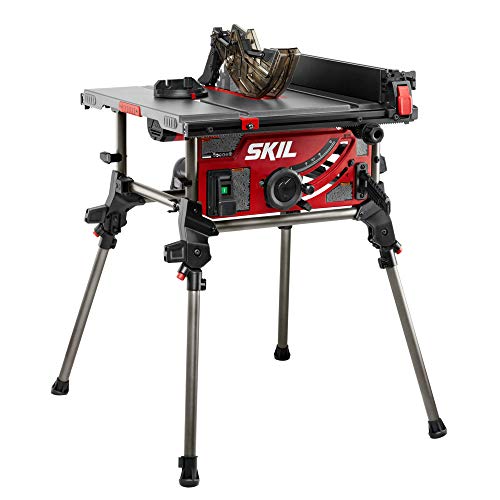
The SKIL TS6307-00 is the starter saw I suggest most. It is a true 10-inch, 15-amp jobsite table saw, and it ships with a folding stand. The rack-and-pinion fence stays square, which builds trust fast. Setup is quick, and the stand folds flat for a small garage or shed.
Rip capacity is generous for its class, so 3/4-inch plywood is no stress. Safety gear includes a riving knife, blade guard, and anti-kickback pawls. Bevel cuts are easy to dial and lock, and the miter gauge works for basic crosscuts. Dust collection is simple to hook to a shop vac.
Pros:
- Strong 15-amp motor handles framing lumber and sheet goods
- Rack-and-pinion fence tracks true for straight, repeatable rips
- Folding stand is stable, quick to set, and easy to store
- Riving knife and guard reduce kickback risk for new users
- Helpful onboard storage keeps tools and guards close
- Good rip capacity for cabinets, shelves, and DIY furniture
- Clear bevel scale with positive stops for common angles
- Friendly price for a first “real” table saw
Cons:
- Stock miter gauge can have a bit of play in the slot
- Stand is not as rugged as premium jobsite rigs
- Dust collection works, but not as tight as higher-end models
My Recommendation
If you want one of the best beginner woodworking table saws that nails accuracy, safety, and value, start here. The SKIL’s fence inspires confidence and the stand saves space. You can rip plywood, cut 2x stock, and bevel trim without pain. It is the right first step for DIY builds and first shop projects.
Pick it if you want a solid fence, a compact stand, and fair power at a smart price. I like it most for new homeowners, weekend builders, and students. It grows with you, and it does not crowd a small garage.
| Best for | Why |
|---|---|
| Tight budgets | High accuracy fence and stand at a friendly price |
| Small garages | Folding stand stores flat and sets up fast |
| Starter furniture builds | Enough rip capacity and power for plywood and 2x cuts |
DEWALT DWE7491RS 10-inch Saw with Rolling Stand
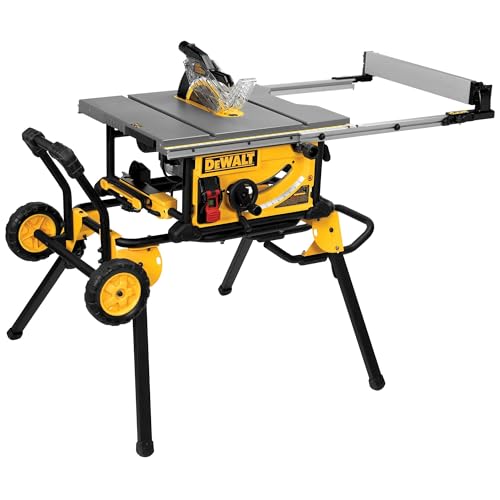
The DEWALT DWE7491RS is the upgrade beginner saw that can last for years. It has a 15-amp motor, a 10-inch blade, and a rack-and-pinion fence that glides like a pro tool. You also get a rolling stand that opens in seconds and moves well on rough driveways. With a 32-1/2-inch rip capacity, it handles wide plywood with ease.
Site-Pro Guarding makes blade guard changes fast, which helps you keep the guard on. The fence has a flip-over support for narrow rips and thin stock. It also accepts a dado stack, which gives room to grow into joinery. For many beginners, this is a “buy once” jobsite saw.
Pros:
- Top-tier rack-and-pinion fence is smooth and precise
- Big 32-1/2-inch rip capacity for full sheets and cabinet work
- Rolling stand is stable, fast to fold, and easy to move
- Dado stack compatible for future joinery needs
- Strong power for hardwoods and thicker rip cuts
- Modular guard system speeds safe setup and changes
- Great resale value and broad accessory support
- Durable build trusted by many pros
Cons:
- Higher price than basic beginner saws
- Heavier and larger; not ideal for very small spaces
- No flesh-sensing brake; you still need careful technique
My Recommendation
If you want the best beginner woodworking table saws that feel “pro” on day one, this is my top pick. The fence is excellent, the stand is a joy to use, and the big rip width unlocks cabinet projects. I also like that it supports dado blades, which lets you try box joints and shelves later.
Choose it if you plan to build furniture, kitchens, or built-ins. It is also perfect if you must roll your saw out and back every time. Yes, it costs more, but it removes friction from every cut. That keeps new woodworkers safe and happy.
| Best for | Why |
|---|---|
| Full-sheet plywood work | 32-1/2-inch rip capacity tames wide panels |
| Garage-to-driveway setups | Rolling stand moves and stores with no fuss |
| Beginners who want to grow | Dado support and pro fence carry you for years |
SKIL Compact Portable Jobsite Table Saw

This is not a table saw, but I include it for a reason. A Japanese pull saw solves many early tasks, from trimming to joinery. The double-edge blade gives rip and crosscut teeth in one tool, so cuts are clean both ways. It is quiet, safe, and precise, which is helpful when you are still learning.
You can use it to fine-tune cuts after your table saw pass. It also shines in tight spaces, apartments, or early practice on dovetails. A pull stroke tracks straight with less effort. For many beginners, this little saw builds skill and confidence fast.
Pros:
- Very clean cuts on both rip and crosscut edges
- Quiet, safe, and easy to control for new users
- Great for fine joinery, trim, and finish work
- Low cost and zero setup time
- Compact and easy to store in small shops
- Soft-grip handle improves comfort and control
- Flexible blade helps with flush trimming
Cons:
- Not a replacement for a table saw on big rips
- Learning curve for the pull stroke and thin blade
- No dust collection; all manual effort
My Recommendation
I always suggest pairing one of the best beginner woodworking table saws with a sharp pull saw. It cleans up shoulders and tenons. It trims end grain flush. It teaches line control. That small skill boost makes every table saw cut look better.
Buy it if you want fine, quiet cuts and more control. It also helps in small apartments or late-night projects. Your table saw will do the heavy lifting, and this saw will do the finesse work.
| Best for | Why |
|---|---|
| Joinery practice | Clean, accurate hand cuts build skill fast |
| Flush trimming tasks | Flexible blade and fine teeth leave smooth edges |
| Quiet or shared spaces | No power noise; easy to control and store |
Mini Craft Table Saw, Dual 795 Motors, 200W

This mini table saw serves crafters, makers, and model builders. Dual 795 motors drive a small blade at high speed for thin stock. The deck is tiny, yet it offers depth adjustment up to about 26 mm. For balsa, basswood, acrylic, and hobby materials, that is plenty.
Portability is a big win. It parks on a desk and tucks in a drawer. Many kits include fences, miter guides, and guards that boost control. It is not built for 2x lumber, but it is great for small, neat parts.
Pros:
- Very compact footprint for desks and small benches
- Dual motors deliver solid torque for hobby cuts
- Depth adjustment handles many craft materials
- High RPM leaves a clean edge on thin stock
- Lightweight and easy to move or store
- Often ships with a basic fence and miter guide
- Good pick for model making, jewelry, and toys
Cons:
- Not suitable for framing lumber or thick hardwoods
- Small table limits support on wider pieces
- Accuracy depends on careful setup and light feed
My Recommendation
This is not in the same class as the best beginner woodworking table saws for furniture. But it shines for craft work. If your projects are small, this saw gives control and speed on tiny parts. It is quiet enough for shared spaces and quick to set away.
Get it if you build models, toys, or jewelry. It also helps students learn safe setups on small stock. When you want to rip a 2x, use a full-size saw. For thin parts and acrylic, this mini saw is a delight.
| Best for | Why |
|---|---|
| Model and toy parts | Clean, small cuts with fine control |
| Apartment benches | Tiny footprint and easy storage |
| Acrylic and thin wood stock | High RPM and depth control suit light materials |
DEWALT DWE7485 8-1/4-inch Compact Table Saw

The DEWALT DWE7485 is a compact 8-1/4-inch table saw with a 15-amp motor. It is light, tough, and very accurate. The rack-and-pinion fence system is the star. It moves smooth, locks solid, and stays parallel to the blade.
Rip capacity is enough for most cabinet parts and trim. A sturdy roll cage protects the body, and onboard storage keeps guards close. Dust ports pair with a shop vac to keep the table clear. It is a strong choice for small shops and tight budgets.
Pros:
- Compact, portable, and easy to store
- Excellent fence accuracy with rack-and-pinion drive
- Plenty of power for 3/4-inch plywood and common hardwoods
- Durable metal roll cage for jobsite bumps
- Good dust collection with proper hookup
- Fast setup and simple guard changes
- Great value for a light, pro-feel saw
Cons:
- No dado blade support
- Smaller blade reduces max depth of cut
- Table is compact for very wide panels
My Recommendation
If you want the best beginner woodworking table saws for small spaces, put this on your list. It is easy to move, simple to set, and accurate enough for clean joinery. The fence is a cut above most entry saws. Power is strong for everyday plywood and trim.
Choose it if you work in a shed, a spare room, or a small garage. It is also nice if you carry a saw to class or a friend’s shop. You will miss dado support, but the payoff is size and speed.
| Best for | Why |
|---|---|
| Small workshops | Compact body with a precise, easy fence |
| Trim and cabinet parts | Strong power and clean rips on 3/4-inch stock |
| Beginner portability | Light weight and fast setup build habits |
FAQs Of best beginner woodworking table saws
What blade size should a beginner choose?
Most start with a 10-inch blade for depth and choice. An 8-1/4-inch blade works in small spaces and cuts most projects. Use a quality 40–50T combination blade to begin.
Do I need a dado blade as a beginner?
No. You can start with a single blade and a router for dados. If you plan shelves and joinery soon, pick a saw that supports dados.
How much rip capacity do I need?
At least 24 inches covers most cabinet parts. Over 30 inches feels better for full sheets. A track saw or circular saw can break down big panels first.
What safety features matter most?
Use a riving knife, blade guard, and push sticks every time. A good fence reduces binding. Keep the blade sharp and stand in a balanced stance.
Can a compact 8-1/4-inch saw cut hardwood?
Yes, for typical boards and 3/4-inch stock. Use a sharp, thin-kerf blade. Feed steady and support the work well.
Final Verdict: Which Should You Buy?
The DEWALT DWE7491RS is the best long-term pick. It has pro accuracy, a great stand, and big rip width. The SKIL TS6307-00 is the best value starter with a strong fence and folding stand.
For tight spaces, the DEWALT DWE7485 is small and sharp. Pair any of these best beginner woodworking table saws with a pull saw for fine trims. The mini craft saw is a smart add-on for tiny parts.